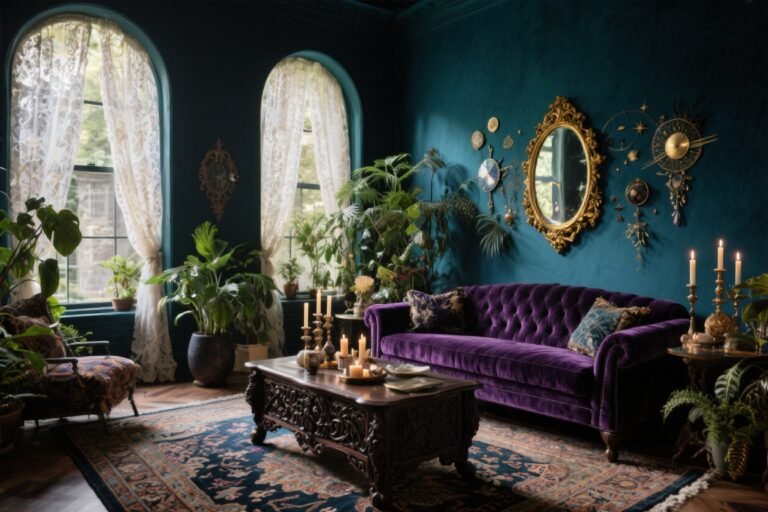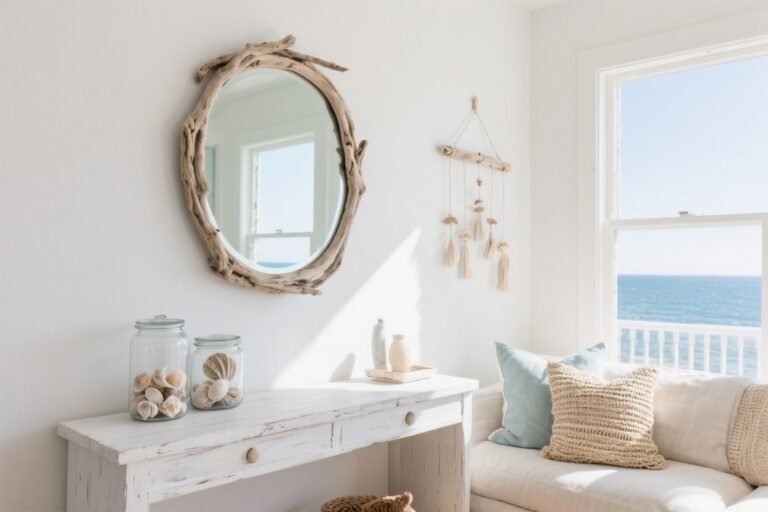
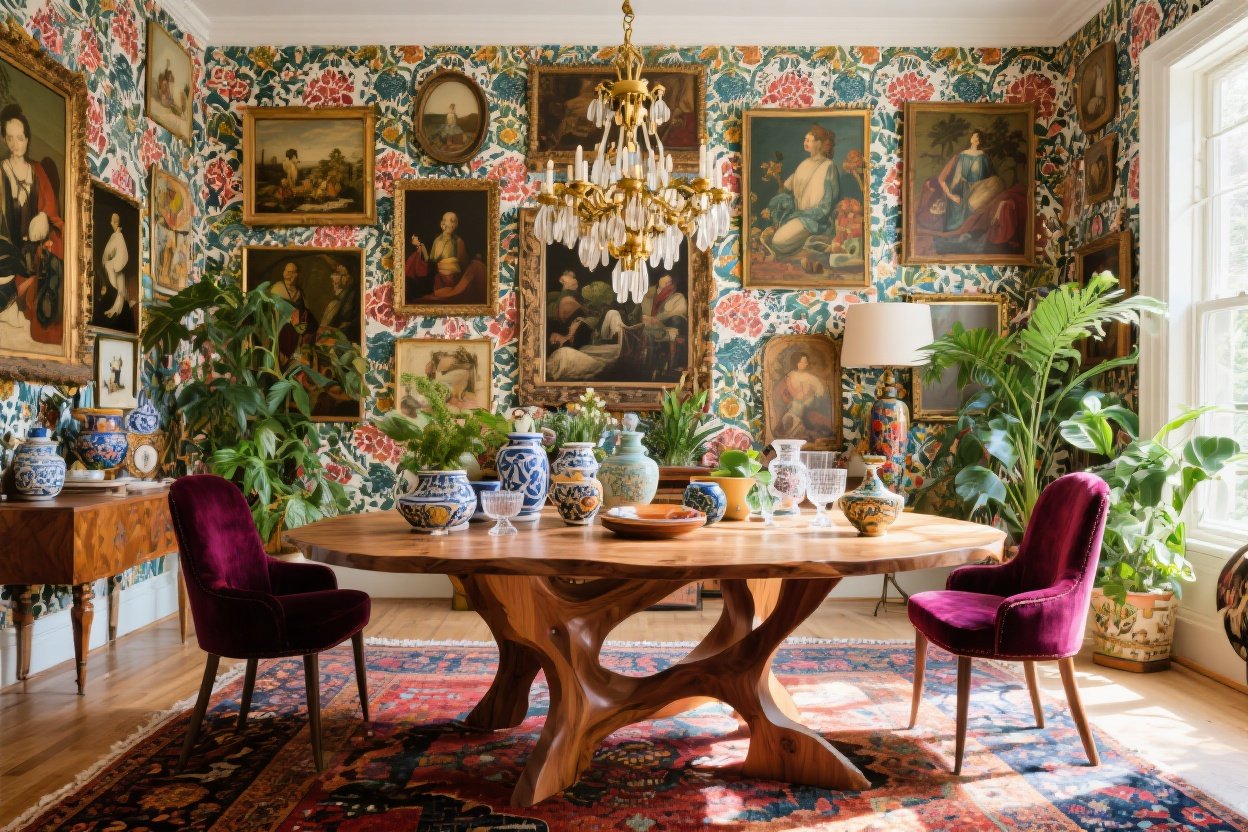
9 Maximalist Dining Rooms With Vintage Flair You’ll Want to Copy
Ready to give your dining room the personality of a charismatic dinner guest? Good. “Maximalist with vintage flair” is basically the design version of ordering everything on the menu—and then adding dessert. It’s bold, layered, and totally charming, with stories baked into every surface.
Let’s dive into nine ideas that make a dining room look collected-not-cluttered, dramatic-not-chaotic, and 100% unforgettable.
1. Wallpaper That Whispers “I’ve Been Here Forever”
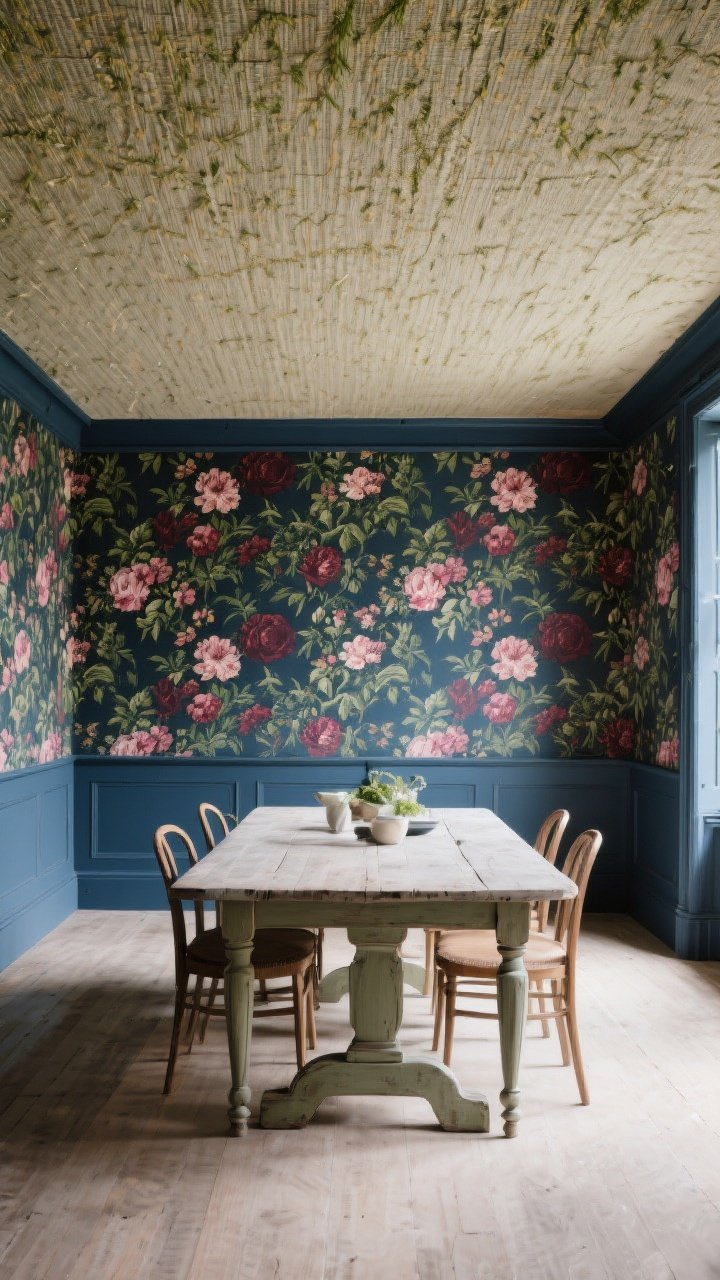
Maximalism and wallpaper are a match made in pattern heaven. Choose a print that feels like it could’ve lived in a European townhouse: toile, chinoiserie, moody florals, or an architectural stripe. The goal? A backdrop that looks storied without feeling stuffy.
How to nail it
- Go bold on the walls and keep the ceiling light—or flip it and do a pattern-clad ceiling for a surprise moment.
- Color match trim to the wallpaper’s background for a luxe, cohesive look.
- Vintage vibes: Look for traditional prints in modern colorways—think olive, oxblood, inky blue, or raspberry.
FYI: Grasscloth counts. It adds quiet texture if you’re pattern-shy but still want that old-world richness.
2. Mix-and-Mismatch Dining Chairs Like You Mean It
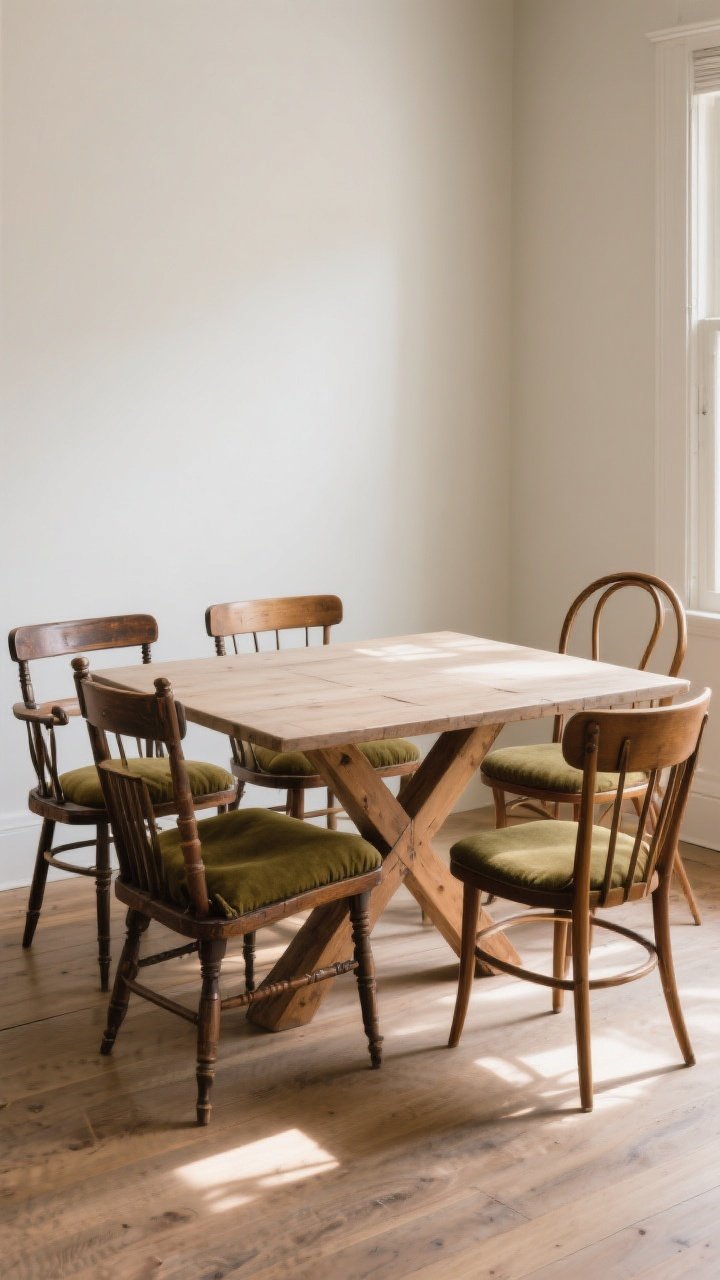
Uniform chairs? Cute, but we’re going for character. Blend vintage wood chairs with a couple of upholstered captains’ chairs, maybe toss in a bentwood number for good measure. The trick is keeping one element consistent so it looks intentional.
Keep it cohesive
- Choose a common thread: wood tone, seat height, or upholstery color.
- Reupholster seat cushions in the same fabric to unify wildly different frames.
- Anchor with the table: If your chairs are eccentric, pick a simple, solid table—farmhouse, trestle, or Parsons.
Pro tip: A pair of vintage head chairs instantly makes your dining space look curated and collected.
3. Create a Gallery Wall That Tells a Story
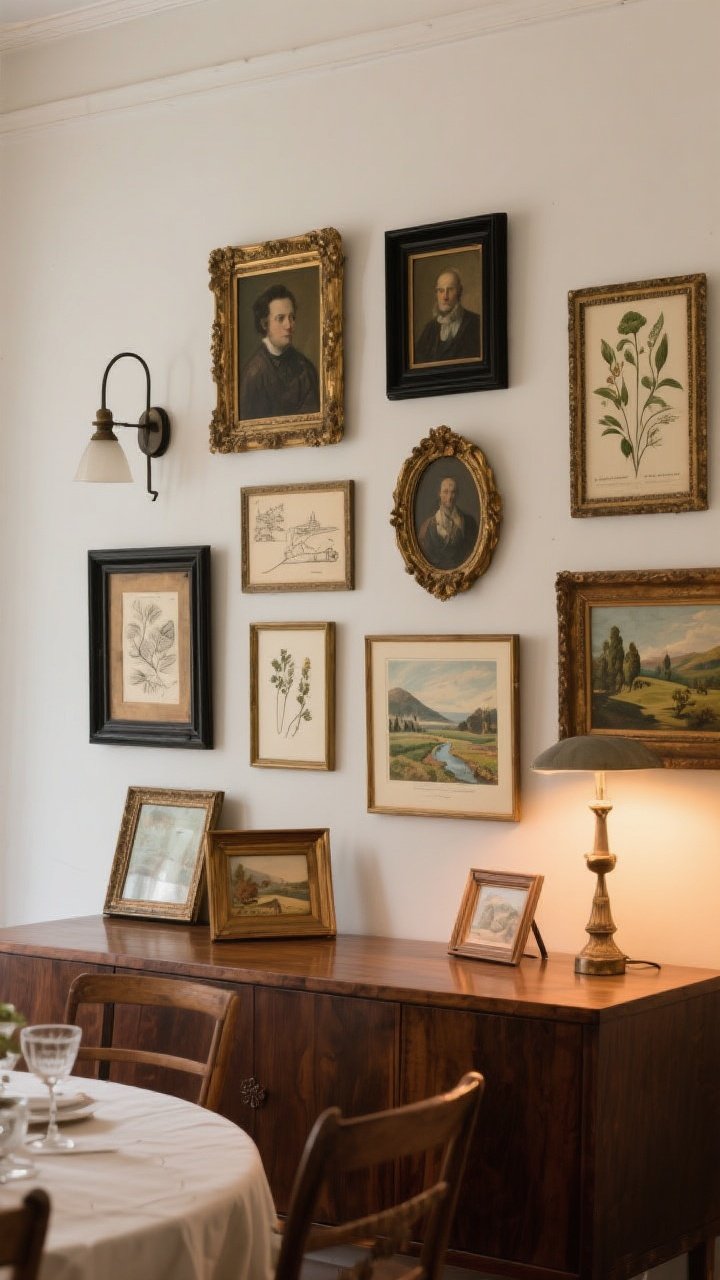
Gallery walls are maximalism’s love language. Mix oil paintings, botanical prints, portraits, and maybe a quirky landscape grandma would approve of. Bonus points for patina’d frames that look like they’ve lived three lives.
Curate, don’t clutter
- Stick to a mood: moody portraits, travel sketches, or floral studies.
- Frame mix: Gilt, black, and wood frames—repeat each at least twice to keep it balanced.
- Layer art on a sideboard, leaning against the wall for casual elegance.
IMO, nothing makes a dining room feel more “collected” than a wall of art and a single renegade sconce tucked between frames.
4. Pattern Play: Rugs, Drapes, Upholstery—Go Layered, Not Loud
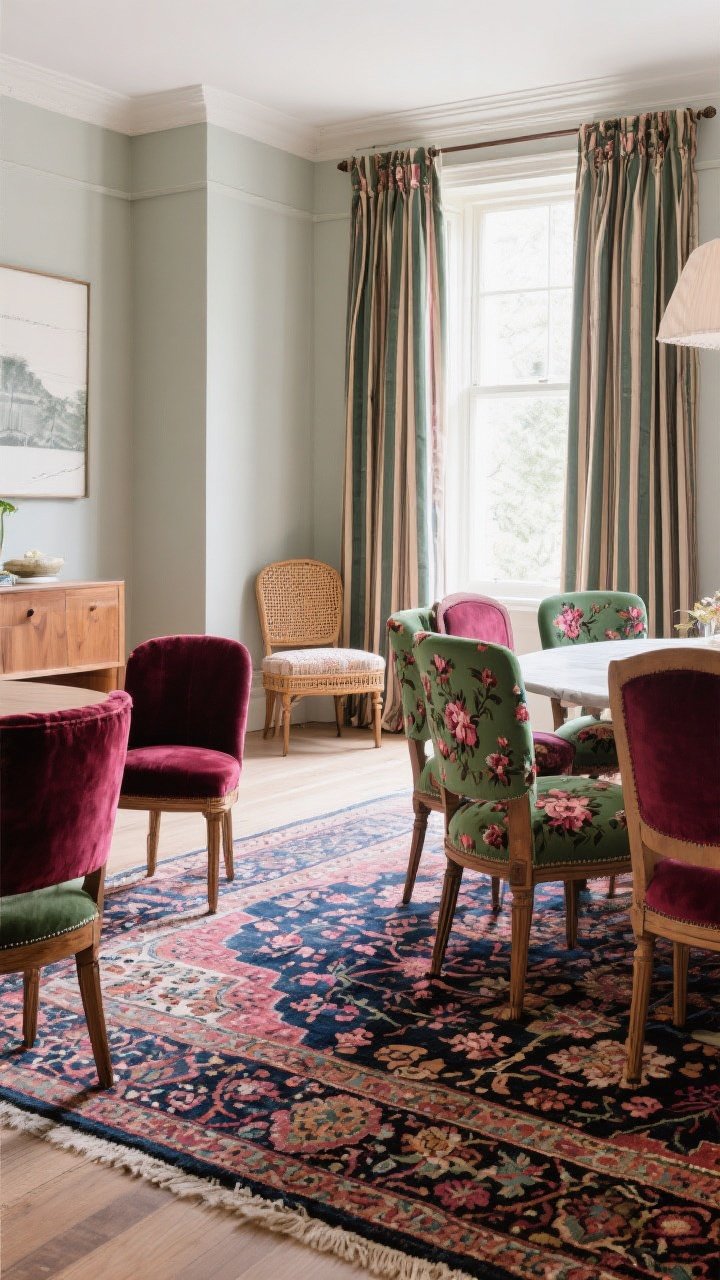
This is where maximalism really flexes. Pair a Persian rug with ticking stripe drapes and upholstered seats in a small-scale floral. Keep the scale varied so patterns don’t compete to be the main character.
Pattern pairing cheat sheet
- Scale it: 1 big print (rug), 1 medium (drapes), 1 small (chairs/napkins).
- Palette rules: Choose 3-4 colors and repeat them across the room.
- Texture matters: Velvet, linen, cane, and wood keep all that pattern from feeling flat.
Think of it like a dinner party: everyone gets to talk, but nobody yells.
5. Light Fixtures With Major Personality
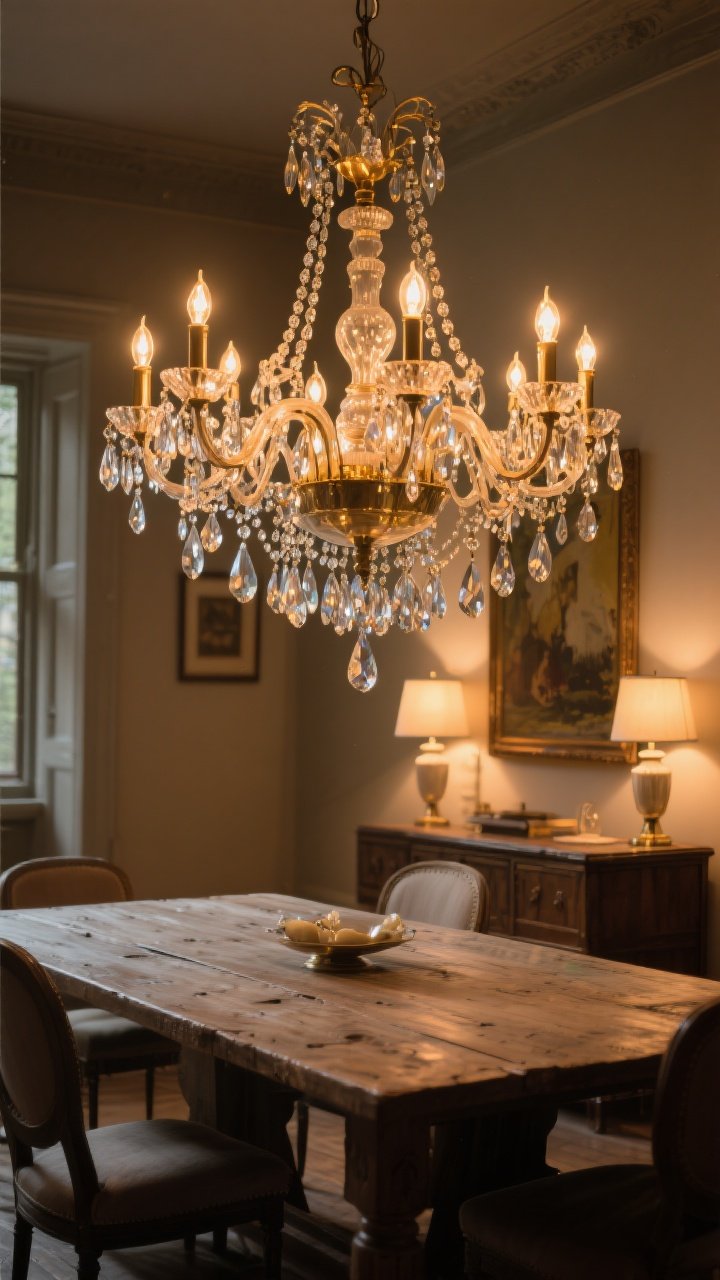
The chandelier is the jewelry. Go for a vintage crystal chandelier, a grand brass lantern, or layered pendants. If you find a quirky antique fixture, rewire it and make it the crown jewel.
Lighting layers = ambiance
- Mix sources: overhead chandelier + picture lights + a pair of buffet lamps.
- Dimmer switches are non-negotiable. Everything looks better at 60%.
- Warm bulbs only: 2700K or less so your dinner guests don’t look like they’re in a hospital.
One dramatic pendant over a rustic table? Chef’s kiss. Add crystal drops for sparkle and call it a night.
6. The Sideboard: Your Vintage Workhorse
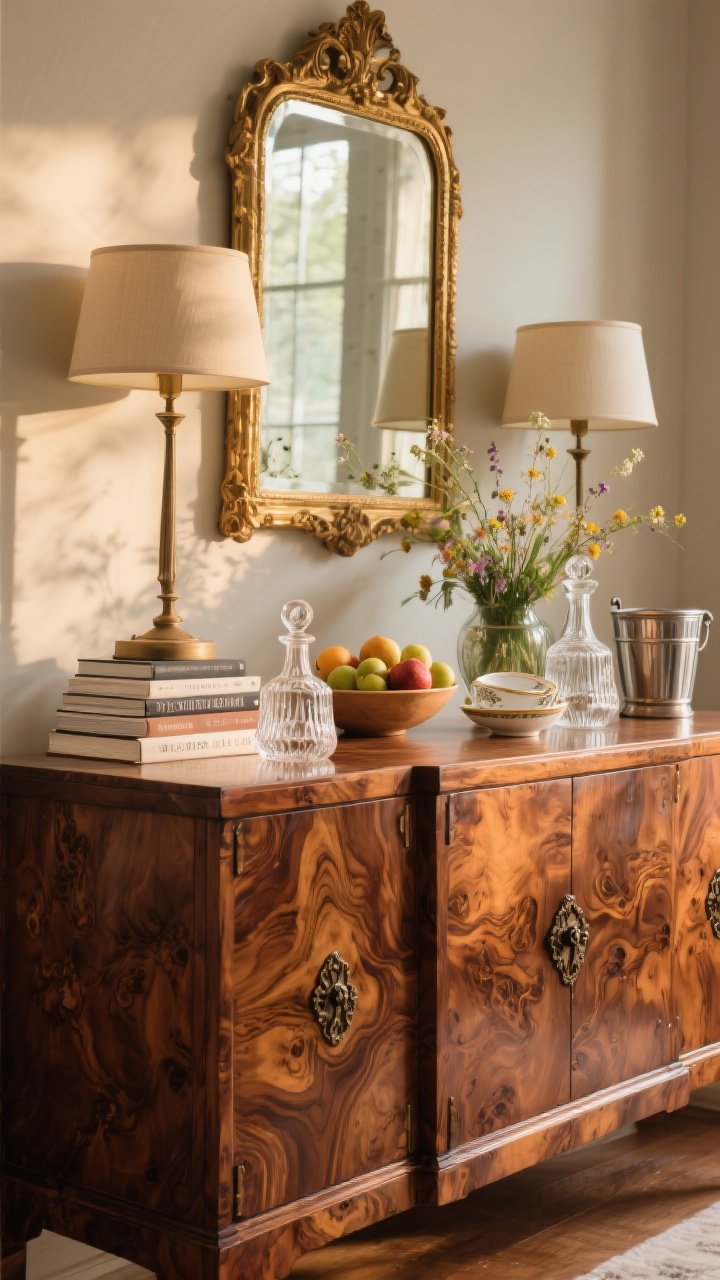
A vintage sideboard or credenza is the secret weapon of maximalist dining rooms. It’s storage, serving space, and a styling stage. Hunt for mahogany, burl wood, or something with curious hardware.
Style it like a stylist
- Anchor with art or a mirror above—gilt if you’re feeling fancy.
- Layer heights: lamps, stacked books, a bowl of fruit, and a vase of wildflowers.
- Show off pretty things: decanters, a vintage ice bucket, or heirloom china.
Inside, stash linens, candles, and that set of glassware you “accidentally” bought at the flea market. No regrets.
7. Tablescapes That Bring the Drama
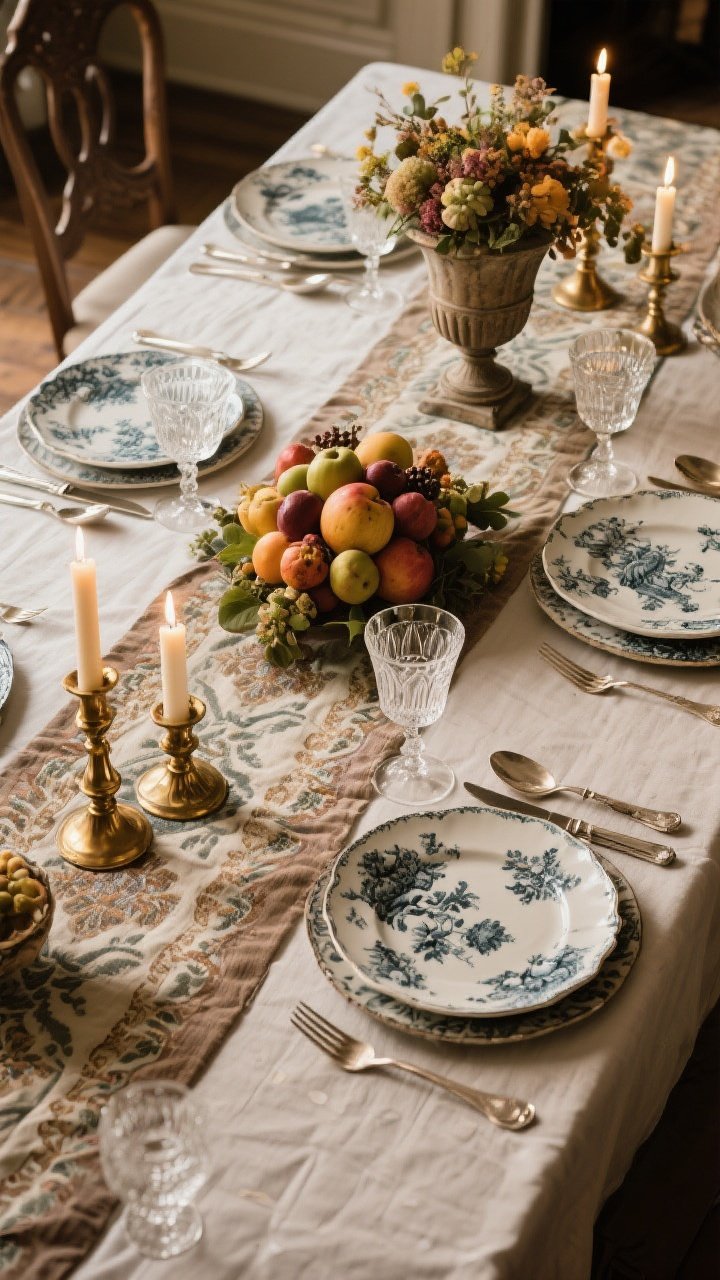
Maximalist doesn’t stop at the furniture—it lives on the table. Mix transferware, ironstone, cut crystal, and mismatched silver. If your table looks like a charming antique shop moment, you’re doing it right.
Set the scene
- Layer linens: patterned runner over a solid tablecloth, or vice versa.
- Mix metals: Brass candlesticks with silver flatware = lived-in elegance.
- Go sculptural: Fruit piled high, a low floral arrangement, or a vintage urn as centerpiece.
FYI: Cloth napkins instantly make dinner feel like an event. Bonus if they’re monogrammed or vintage.
8. Color-Drenched Trim, Doors, and Ceilings
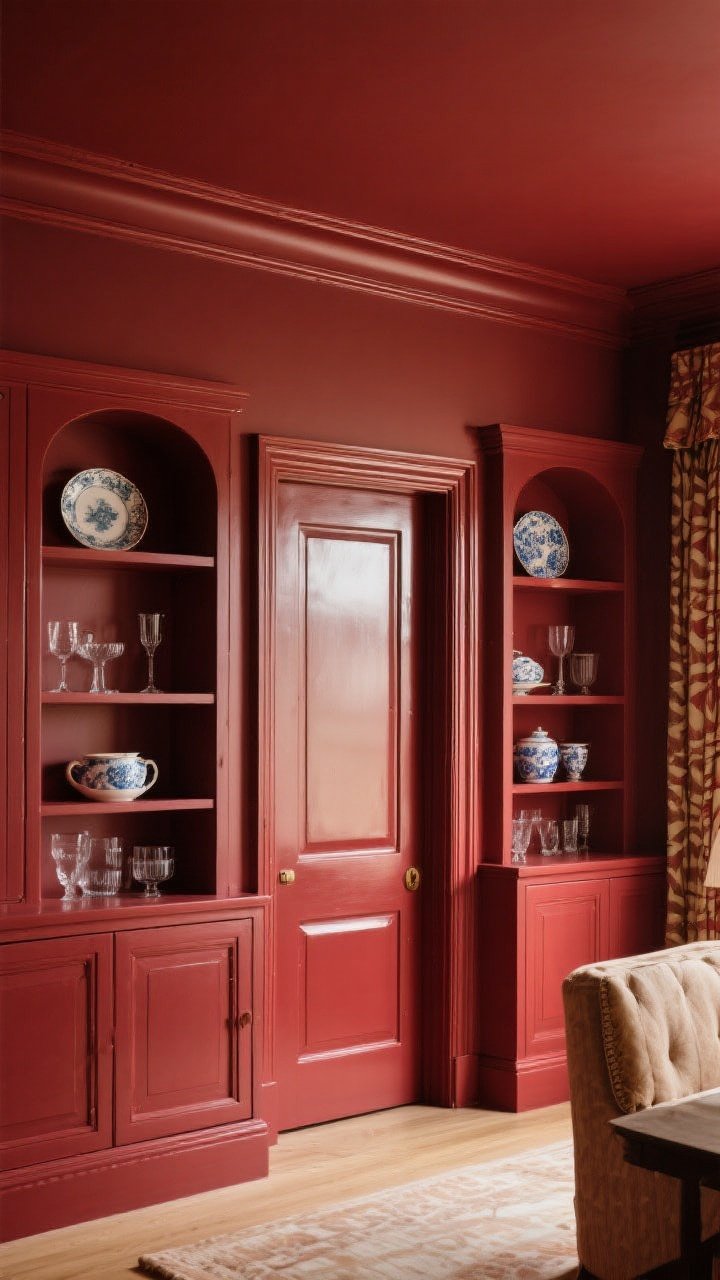
Want to push the look from “pretty” to “period-drama gorgeous”? Paint the trim and doors in a saturated tone—oxblood, bottle green, French blue, or tobacco brown. Gloss finishes bounce light and look like a million bucks.
Where to add color
- Ceiling: paint it one shade darker than the walls for a cocoon effect.
- Interior doors: lacquer them for a tailored, custom vibe.
- Built-ins: paint the inside a contrasting color to spotlight china and glassware.
Keep the palette tight and repeat it in your fabrics so the room feels intentional, not chaotic.
9. Curiosities, Books, and “Why Not?” Accessories
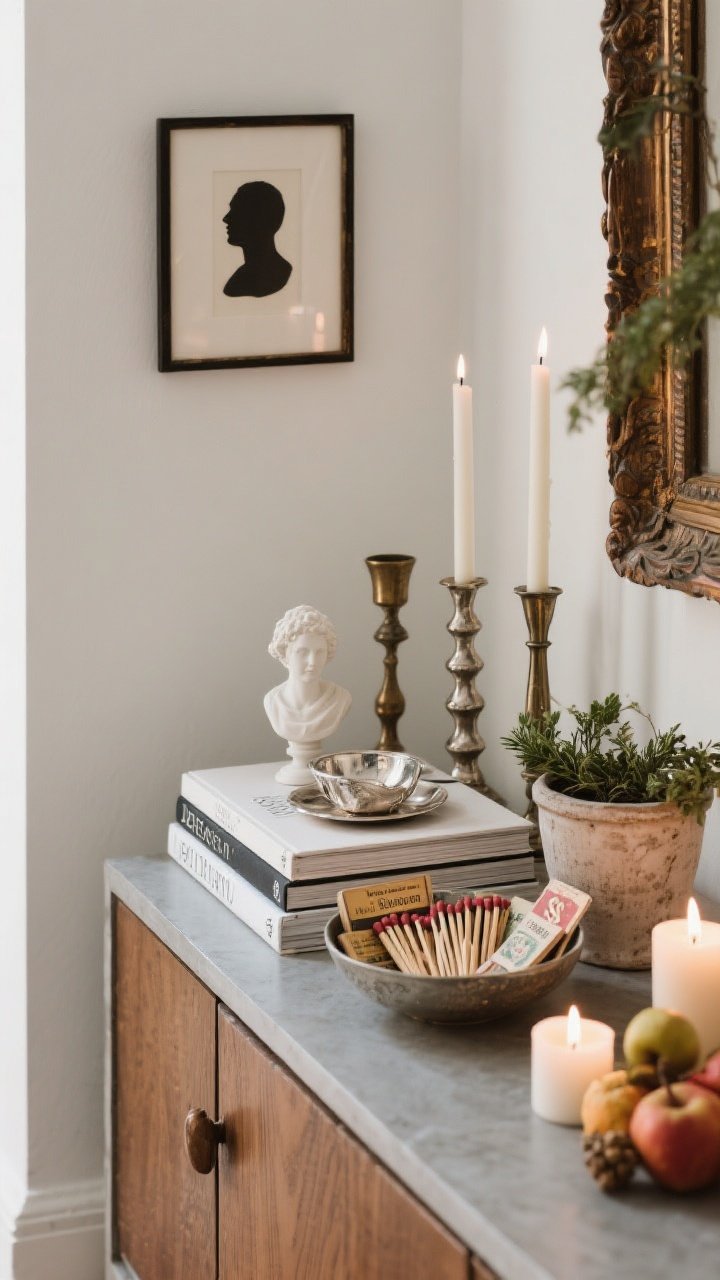
This is the soul of the maximalist vintage dining room: objects with stories. Stack design books on the sideboard, display inherited silver, keep a bowl of matchbooks, and hang that tiny framed silhouette you found for $8 at a yard sale.
Curate your curios
- Odd numbers for vignettes (3, 5, 7) so groupings feel organic.
- Mix heights and shapes: candlesticks, small artwork, petite busts, taper holders.
- Natural elements: branches, seasonal fruit, or a ceramic cachepot of herbs.
And please, light the candles on a Tuesday. Maximalism is a lifestyle, not a special occasion.
Quick Room-By-Room Checklist
- Walls: Patterned wallpaper or rich paint.
- Floors: Vintage rug with history (or at least looks like it).
- Table: Solid anchor piece; patina welcome.
- Chairs: Mixed styles, unified by color or upholstery.
- Lighting: Statement fixture + layers.
- Storage: Sideboard with entertaining essentials.
- Art: Gallery wall or layered pieces.
- Textiles: Drapes, seat cushions, napkins—repeat colors.
- Accessories: Books, candles, oddities, fresh flowers.
Where to Source the Good Stuff
- Estate sales and flea markets for chairs, art, and candlesticks.
- Online auctions for mirrors, sideboards, and lighting (rewire as needed).
- Thrift stores for transferware, glassware, and linens.
- Local upholsterers to refresh vintage frames with new fabrics.
One last thing: maximalism isn’t about buying more. It’s about telling a richer story with what you love. Start with one change—maybe wallpaper, maybe a mismatched chair pair—and build from there. Soon your dining room will look like the kind of place where every meal turns into a celebration.
Now go light the candles and pour something bubbly. Your maximalist dining room with vintage flair is ready for its close-up.