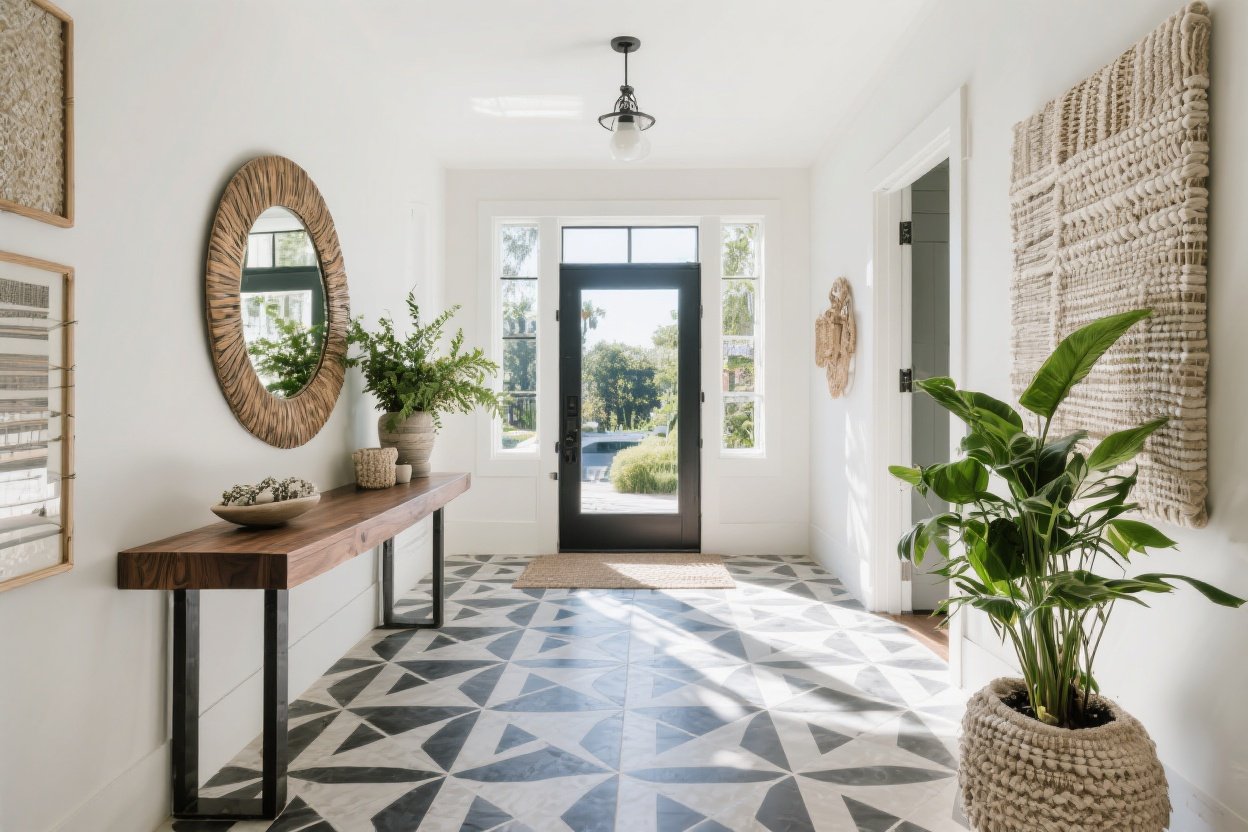
8 Patterned Tile Entryways That Wow Guests (and Survive Muddy Boots)
Your entryway sets the tone. It’s the house handshake, the first impression, the “Oh wow—did you hire a designer?” moment. Patterned tile is the secret weapon: durable, cleanable, and ridiculously good-looking. Ready to make your foyer a jaw-drop zone? Let’s dive into eight ideas that bring the drama—in a good way.
1. Bold Black-and-White Geometry That Owns the Room
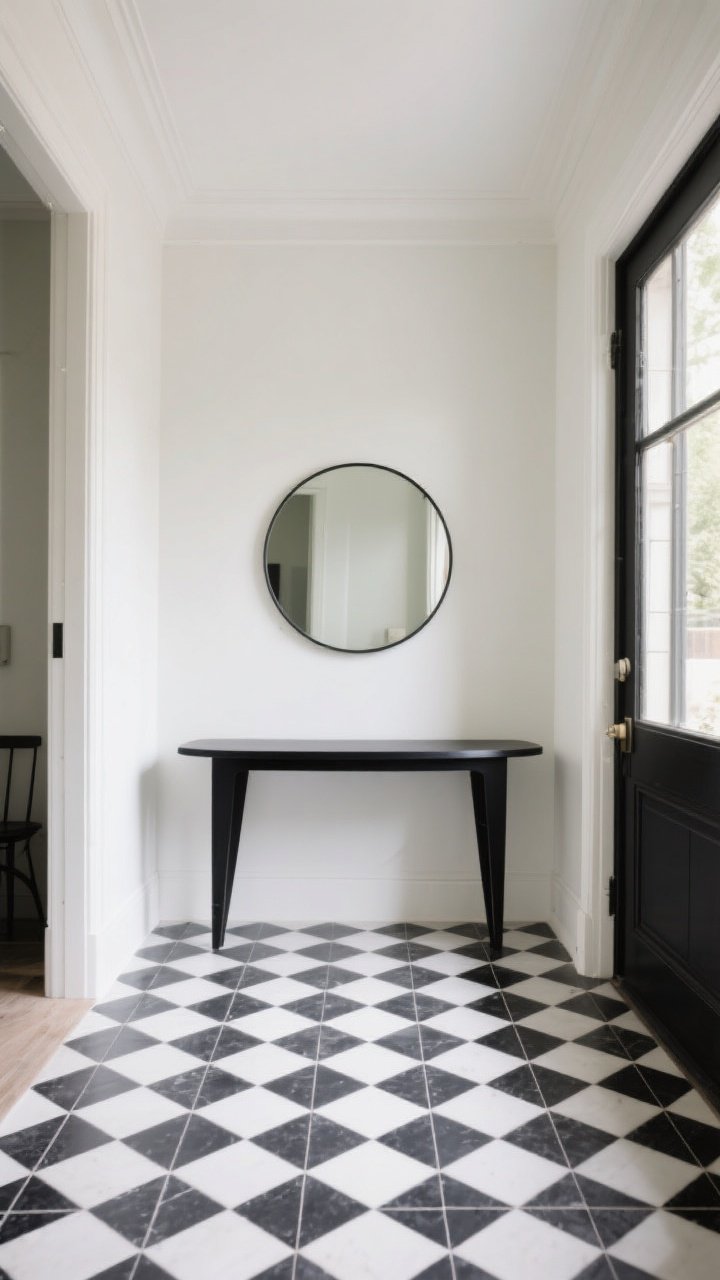
High-contrast black-and-white tiles are like a graphic tee for your floor—classic, punchy, and always cool. Think hexagons, chevrons, or checkerboards that instantly give your entry structure and style.
Why it works
- Timeless appeal: It looks intentional, not trendy-for-a-minute.
- Instant drama: The contrast makes small spaces feel curated.
- Easy to style: Works with modern, traditional, or eclectic decor.
Pro tips
- Pair with a matte black console and a simple round mirror for balance.
- Keep walls light so the pattern stays the star.
- Use charcoal grout to hide dirt and make the pattern pop.
2. Moroccan Encaustic Vibes (Without the Passport)
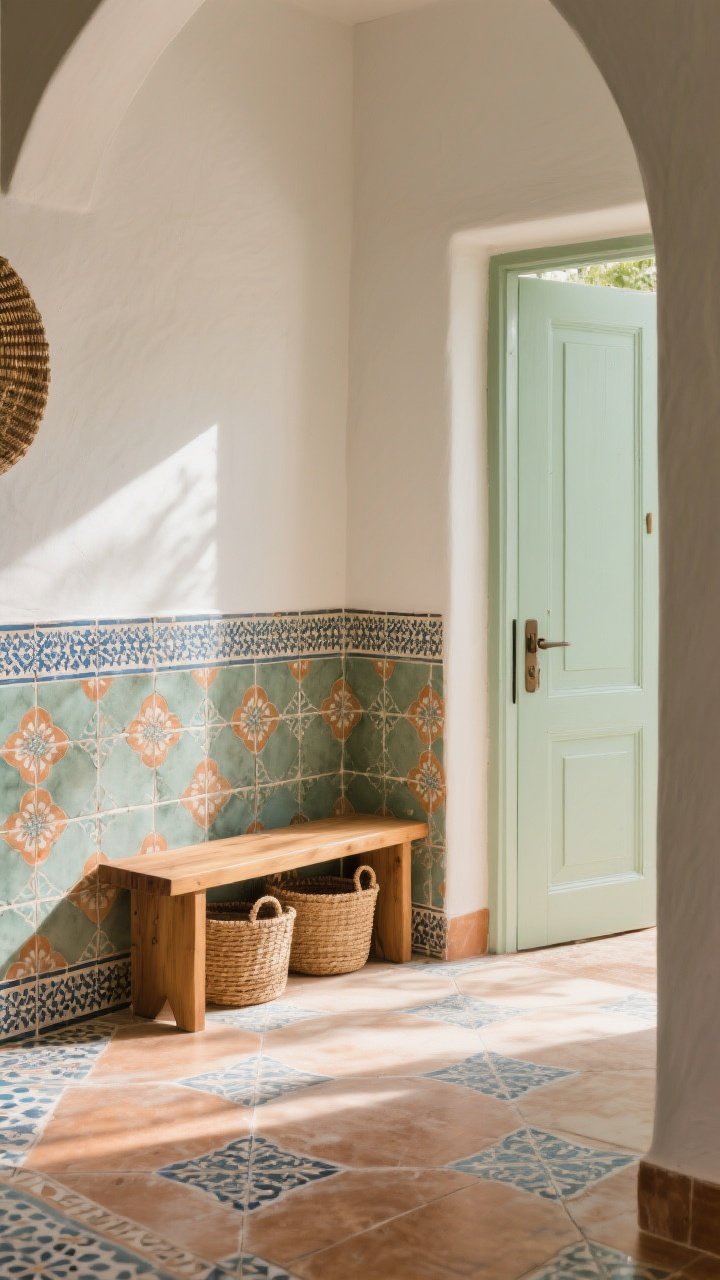
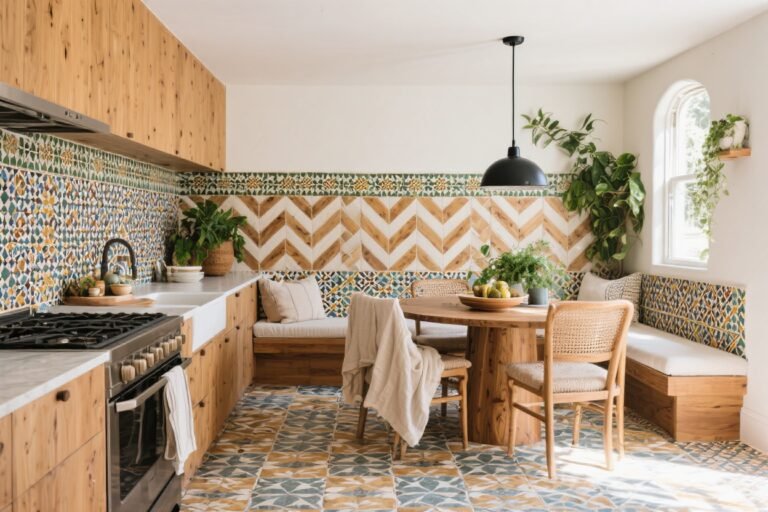
If you want warmth and soul, Moroccan-style encaustic tiles are your best friend. Their sun-washed motifs bring instant atmosphere—like your home smells faintly of citrus and good stories.
Why it works
- Soft color palettes: Sage, terracotta, and dusty blues feel cozy.
- Handcrafted look: Adds texture and character in one move.
- Pattern flexibility: Choose bold medallions or delicate repeats.
Pro tips
- Anchor with woven baskets and a warm wood bench.
- Seal cement or cement-look tiles ASAP for stain resistance (FYI: real encaustic is porous).
- Repeat a color from the tile in your door paint or artwork for cohesion.
3. Herringbone With a Twist (Yes, You Can Pattern the Pattern)
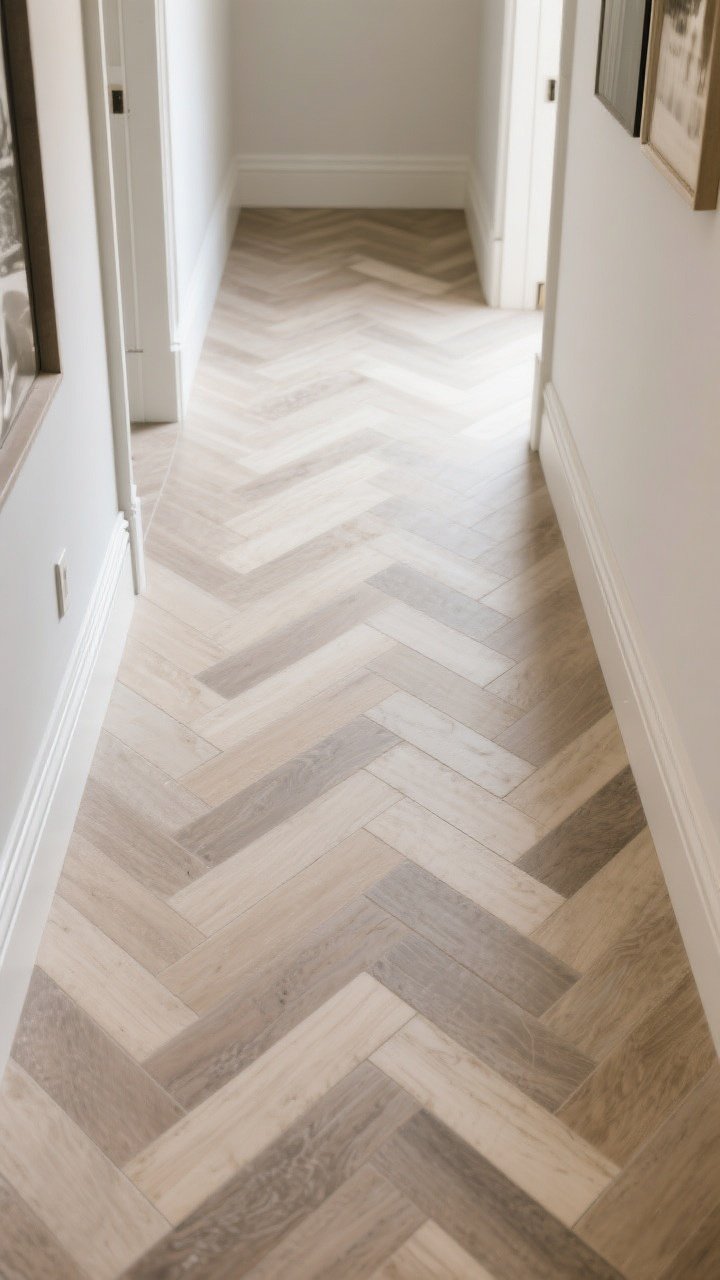
Take classic herringbone and spice it up with mixed tones or subtle stripes in the layout. It’s like the trench coat of tile—elevated and endlessly wearable.
Why it works
- Directional flow: The zig-zag pulls you into the home.
- Refined but interesting: Perfect for transitional styles.
- Great with narrow foyers: Lay the “V” pointing inward to elongate.
Pro tips
- Use porcelain planks in stone or wood-look for durability.
- Mix two tones—light and medium—for a subtle pattern that still reads luxe.
- Keep baseboards crisp; herringbone loves clean edges.
4. Color-Blocked Checkerboard That Feels Fresh, Not Fussy
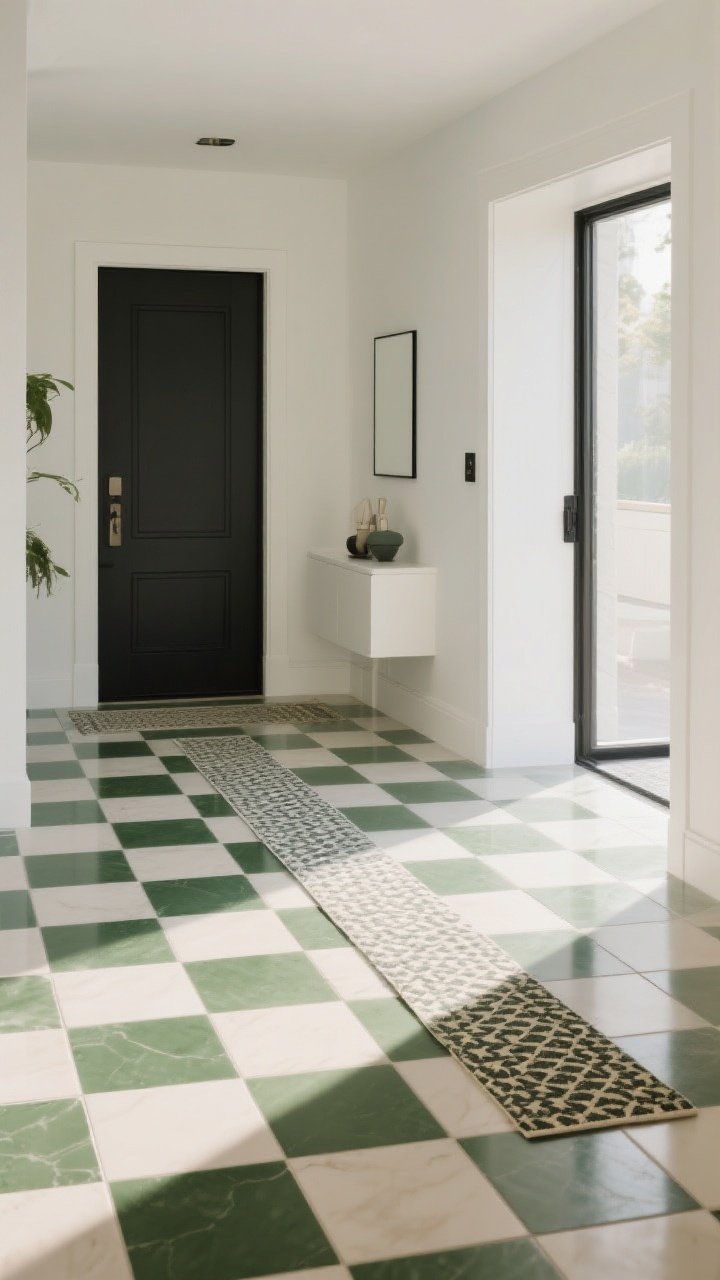
Checkerboard is back—but not just black and white. Try moss and cream, ink and sand, or charcoal and blush for a look that’s heritage-meets-Instagram-perfect.
Why it works
- Instant architecture: Creates structure in open plans.
- Surprisingly versatile: Works with vintage or ultra-modern pieces.
- Scale play: Large checks feel more modern; small checks read cottage-chic.
Pro tips
- Use large-format tiles in big spaces to avoid visual clutter.
- Keep grout lines tight (1/16–1/8 inch) so the color blocks stay clean.
- Bring in a patterned runner with a different motif for a styled, layered look.
5. Terrazzo Speckles for the Effortlessly Cool Look
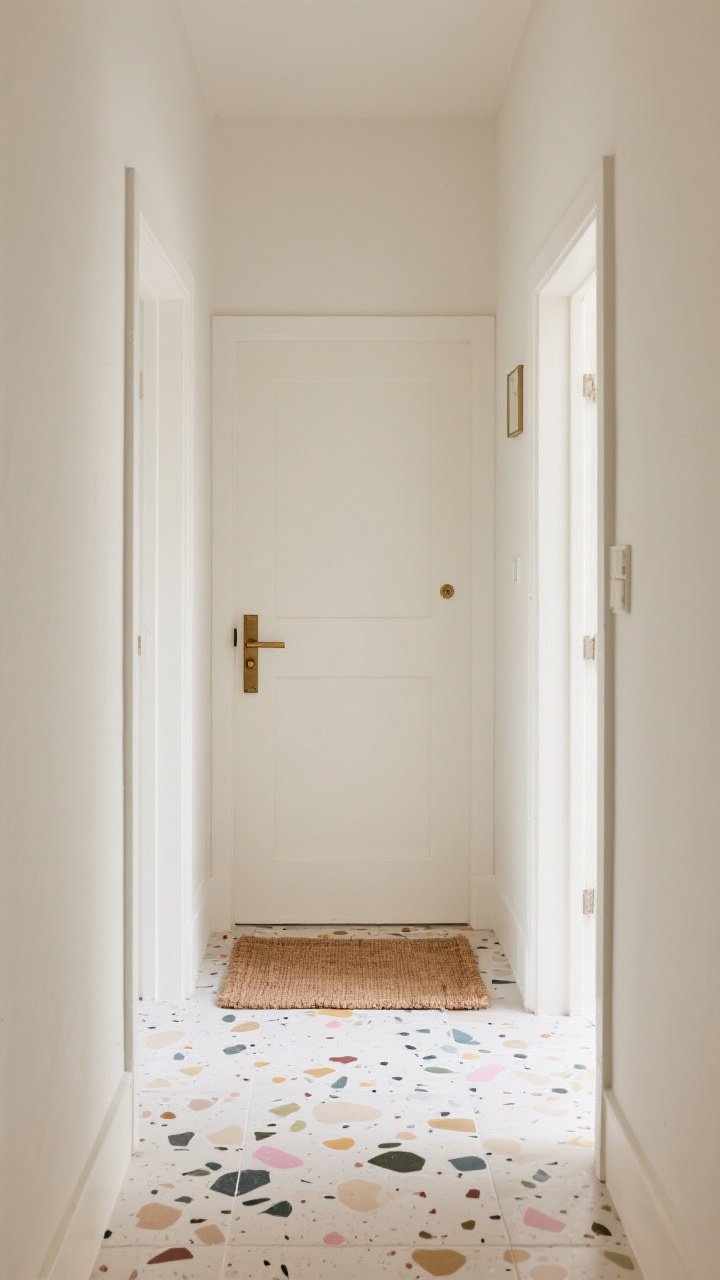
Terrazzo is the cool kid of flooring: playful but elevated. The flecks hide dirt like a champ (IMO, an underrated superpower) and make small foyers feel lively without screaming for attention.
Why it works
- Visual texture: Speckles add depth without a heavy motif.
- Color options: From neutral chips to candy-colored confetti.
- Durability: Porcelain terrazzo-look tiles are scratch- and water-resistant.
Pro tips
- Pick a tile with multicolor chips and echo one shade in your rug.
- Pair with brushed brass or black hardware for contrast.
- Use a matte finish for slip resistance and a modern vibe.
6. Border Magic: Frame Your Entry Like a Gallery
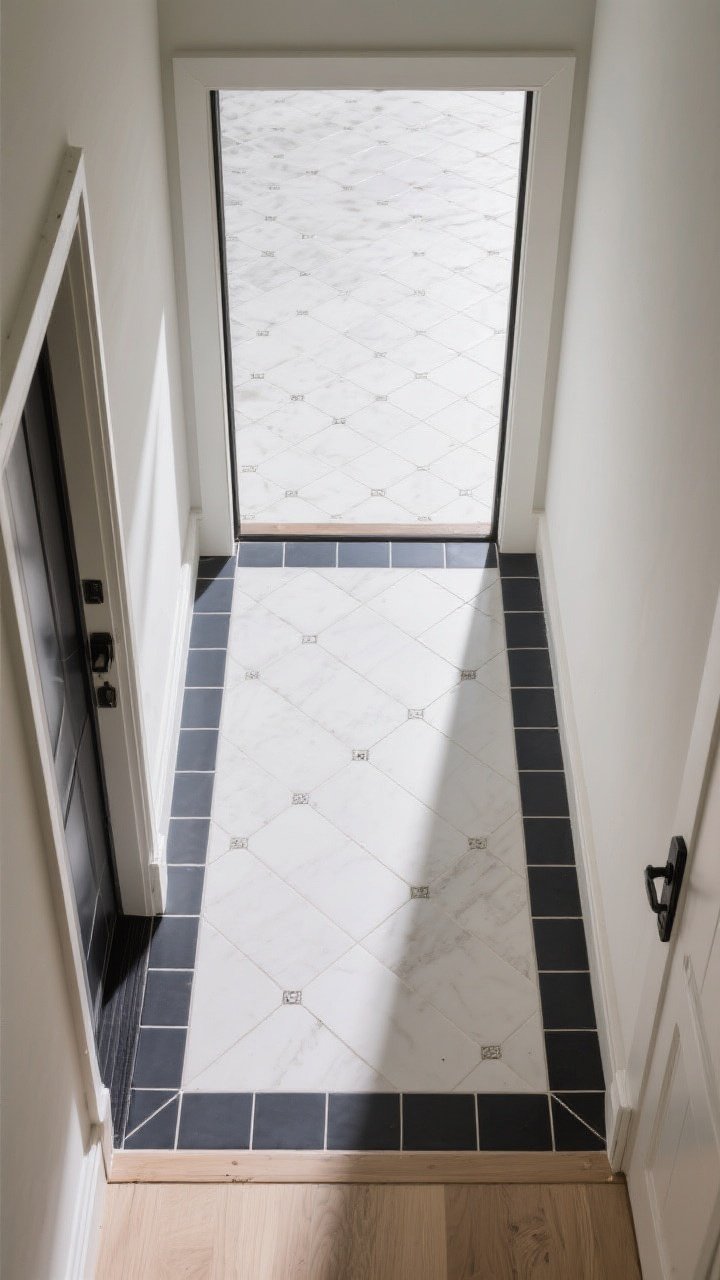
Want designer-level polish? Add a contrasting tile border that frames the main pattern. It’s a tiny detail with huge payoff—like eyeliner for your entryway.
Why it works
- Defines zones: Especially helpful in open plans or long hallways.
- Elevates simple patterns: A border makes basic fields look custom.
- Protects edges: Darker trim hides scuffs near baseboards.
Pro tips
- Try a 2–3 tile-wide border in charcoal, navy, or deep green.
- Angle the interior pattern (like diagonal squares) for visual tension.
- Repeat the border color in door hardware or a wall sconce.
7. Nature-Inspired Florals That Don’t Feel Grandma
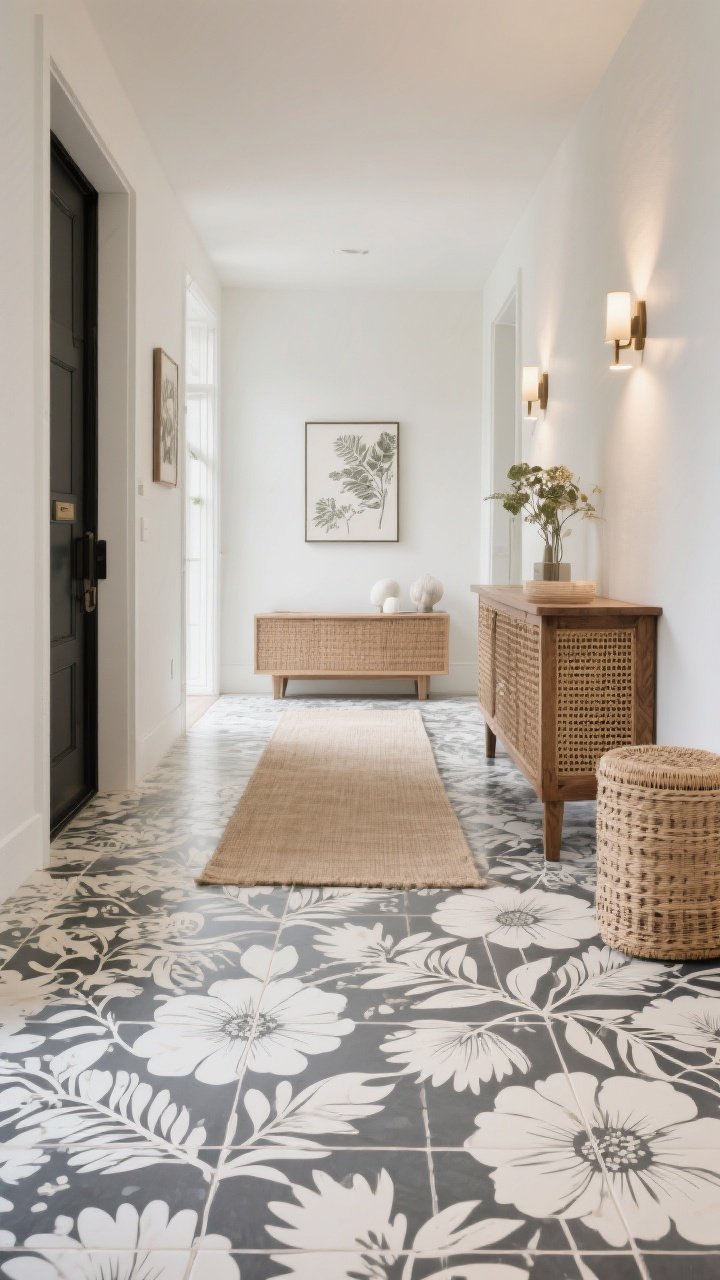
Florals can be chic when they’re graphic and oversized or vintage-inspired with modern colors. Think soft petals in slate and cream or botanical repeats in muted emerald—fresh, not fussy.
Why it works
- Warm welcome: Brings softness to hard surfaces.
- Great with natural materials: Rattan, linen, and oak sing with florals.
- Adds personality: Guests will remember your entry (and probably copy it).
Pro tips
- Keep wall art minimal so the floor is the feature.
- Choose porcelain with a matte glaze for durability and slip control.
- Layer a neutral runner down the center to soften the pattern and add comfort.
8. Monochrome Pattern Play for the Minimalist Maximalist
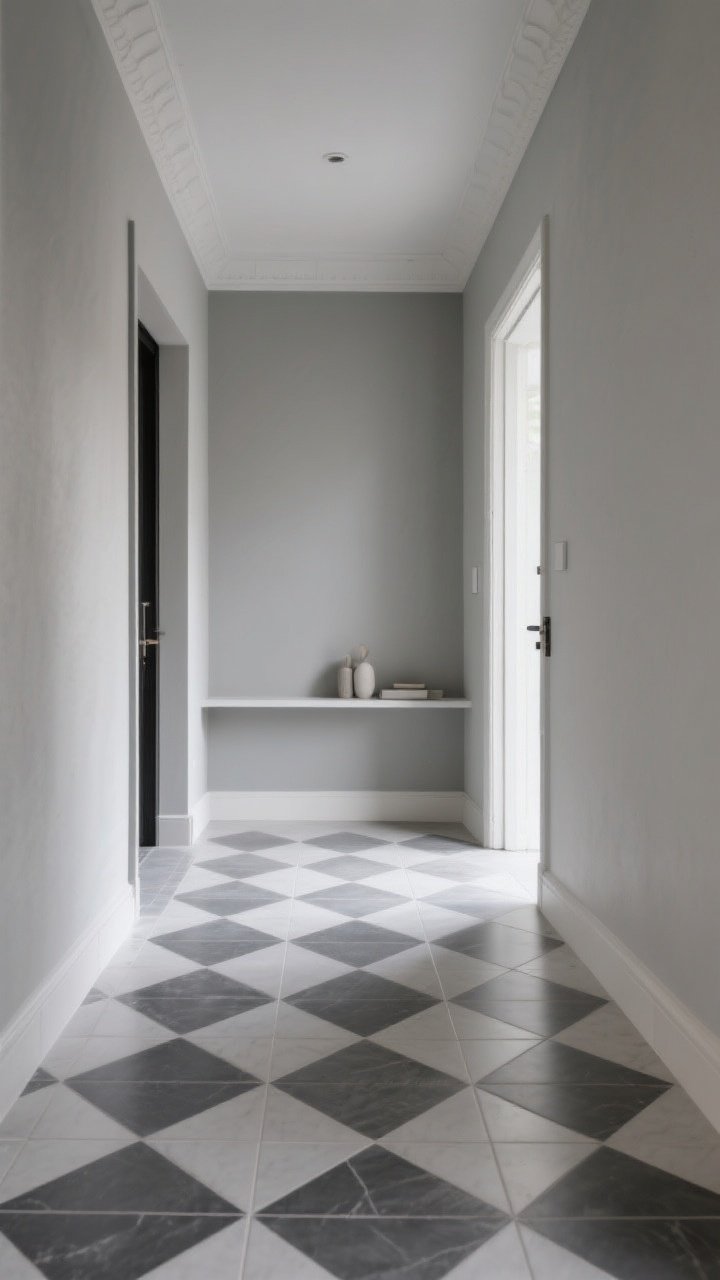
If you love pattern but crave calm, go monochrome. Use one color in varying tones—say, three shades of gray—in a repeating motif. It reads sophisticated, not shouty.
Why it works
- Low visual noise: Texture and pattern without color chaos.
- Design depth: Layers of tone feel expensive and intentional.
- Easy to accessorize: Add seasonal color with flowers or art, no clashing.
Pro tips
- Combine matte and satin finishes for subtle light play.
- Choose a large-scale motif in small spaces to avoid busyness.
- Match your wall paint undertone to the tile for a seamless look.
Entryway Essentials: Make Your Patterned Tile Practical
- Grout matters: Mid-tone or dark grout hides dirt. Use epoxy grout for stain resistance if you can.
- Sealing strategy: Natural stone and cement need sealing. Porcelain usually doesn’t, but check manufacturer guidelines.
- Rug rules: Choose a low-pile, indoor/outdoor runner with a non-slip pad. Clear vinyl mats are a no—let your tile breathe.
- Threshold transitions: A slim metal schluter or marble saddle makes a clean break into other flooring.
- Lighting: Pattern craves glow. Add a statement pendant or two wall sconces for even illumination.
Sizing, Layout, and Budget—Quick Hits
- Tile size: Small space? Try medium tiles (6×6, 8×8) for good pattern rhythm.
- Layout test: Dry-lay a few rows before committing. Take photos from the doorway—your guest POV.
- Budget saver: Put the pattern in a center “rug” with solid tiles around the perimeter.
- Maintenance: Keep a soft-bristle broom and pH-neutral cleaner by the door. Two minutes a day, sparkling forever—ish.
The bottom line: your entryway should make you smile the second you walk in. Whether you go maximal with Moroccan motifs or play it cool with monochrome geometry, patterned tile delivers personality and performance. Pick a look that matches your home’s vibe, commit to good grout and lighting, and get ready for the compliments to roll in. FYI: you’ll hear “Wow, where’d you get that tile?” a lot. Let them wonder.