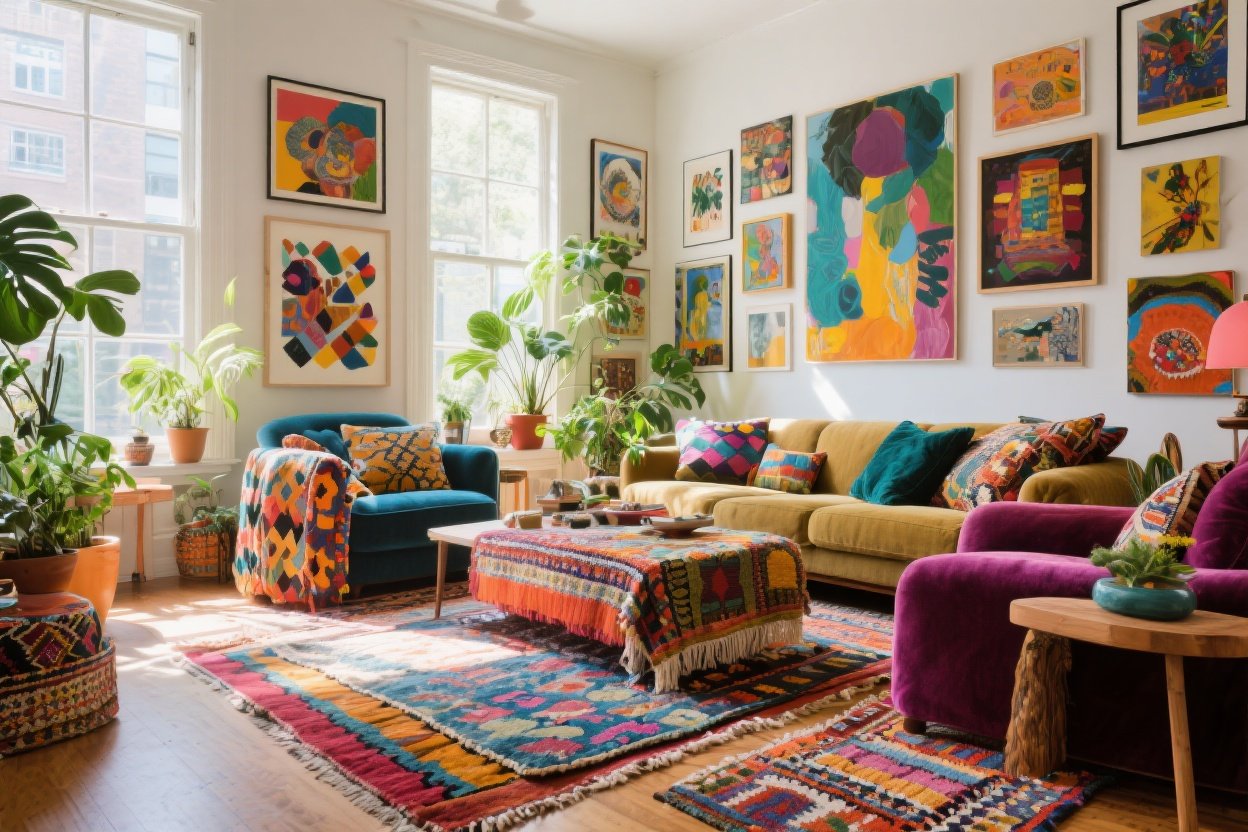
8 Colorful Rugs That Anchor a Maximalist Home and Turn Heads
Maximalism isn’t about “more just because.” It’s about layering personality, joy, and a little chaos—but the chic kind. And nothing grounds that gorgeous storm of pattern and color like the right rug. Think of rugs as the soundtrack to your room: they set the mood, tie the plot together, and make everything feel intentional instead of “I bought the whole thrift store.”
Ready to make your floors do the talking? Here are eight colorful rug ideas that anchor a maximalist home—without muting your style.
1. Kaleidoscope Patchwork That Tells A Story
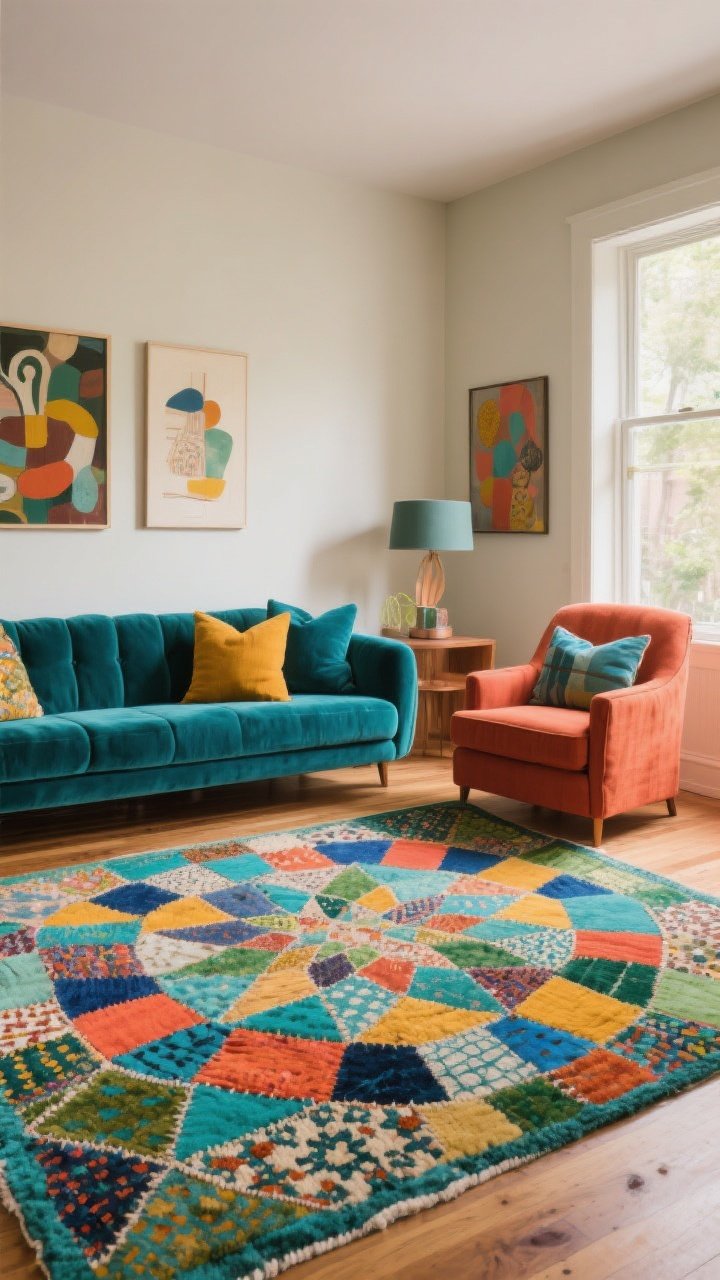
Patchwork rugs are like your favorite playlist—unexpected, eclectic, and somehow perfectly cohesive. They stitch together different patterns and hues into one bold foundation that instantly says, “Yes, I’m fun.”
Why It Works
- Built-in layering: Multiple motifs = visual depth without extra effort.
- Color playground: Pick any shade in the patchwork to echo in pillows or art.
- Distraction-proof: Spills and scuffs vanish into the pattern. Bless.
Styling Tips
- Repeat two to three key colors from the rug around the room for cohesion.
- Keep big upholstery solid but saturated—think teal velvet sofa or paprika linen.
- For small spaces, choose smaller-scale patches so it doesn’t read chaotic.
2. Overscale Florals With Big Main-Character Energy
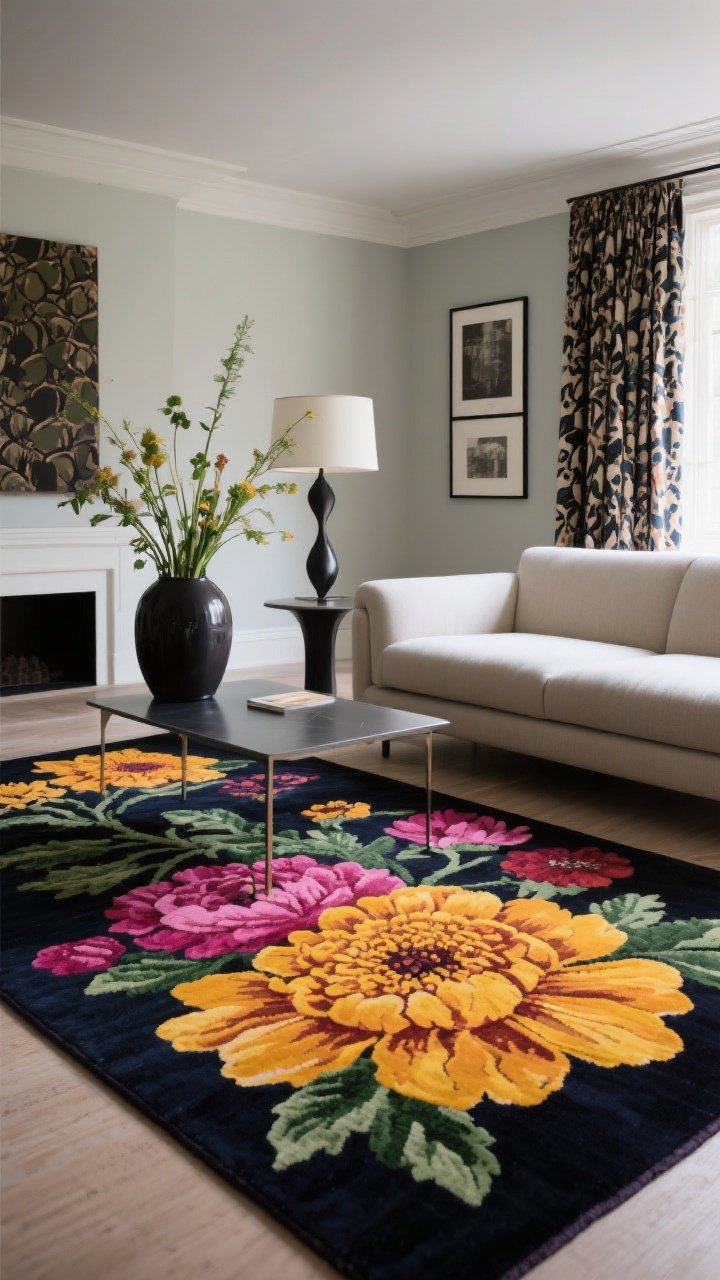
Florals are maximalism’s BFF, but go overscale. Giant blooms feel fresh, artsy, and a little rebellious—like your room’s wearing couture.
Why It Works
- Anchors busy walls: An oversize motif balances gallery walls and patterned drapes.
- Soft and bold: Florals add romance without losing the drama.
- Seasonless: Pick saturated tones (marigold, fuchsia, forest) for year-round wow.
Styling Tips
- Let the rug be the diva: pair with structured furniture and sculptural lighting.
- Echo flower tones in fresh stems or an oversized vase for a subtle nod.
- FYI: Avoid tiny florals nearby—they can feel fussy next to big blooms.
3. Moroccan Beni-Inspired With A Neon Twist
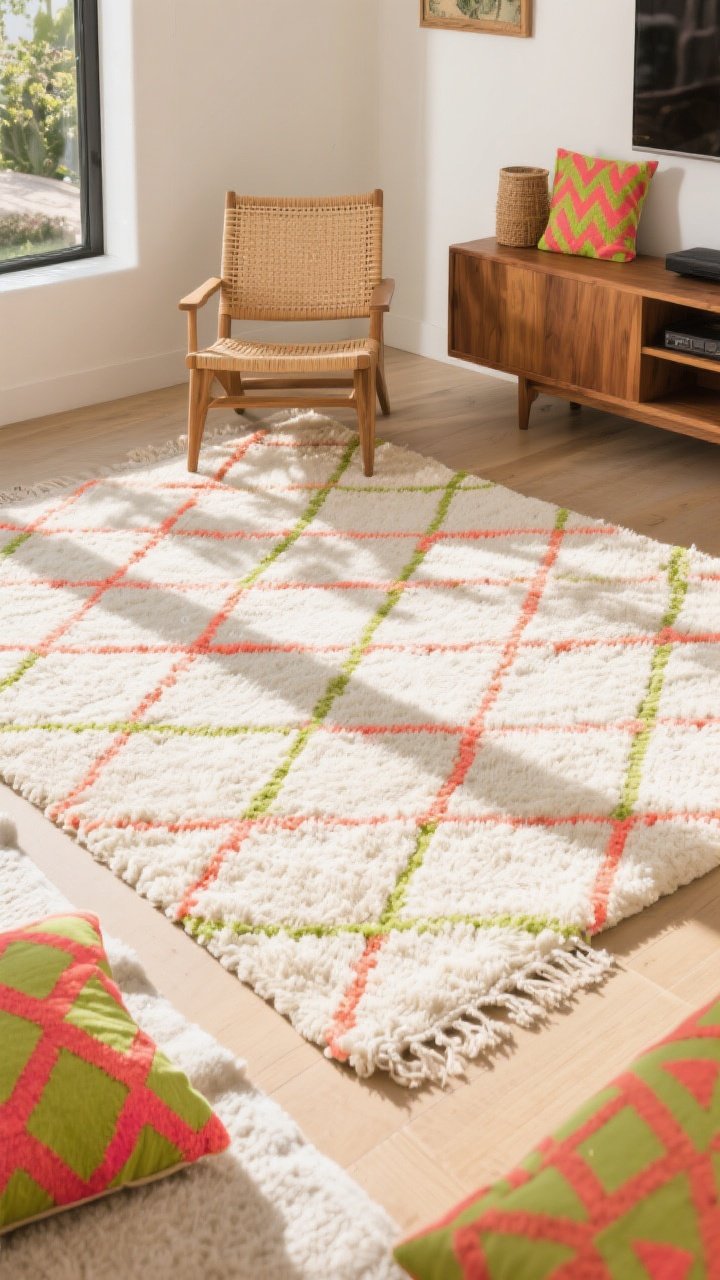
Take the cozy appeal of a Beni Ourain—then crank the color. Think classic diamond lattice but with neon coral, cobalt, or chartreuse. It’s tradition meets dance party.
Why It Works
- Texture + color: Plush pile adds warmth while bright lines energize the room.
- Pattern restraint: The simple grid keeps bold art and books from fighting.
- Zone control: Perfect for open plans—hello, instant “living area.”
Styling Tips
- Pair with earthy woods and rattan to ground the neon.
- Mix in graphic pillows that riff on the rug’s angles.
- Go one size bigger than you think—maximalism loves a generous footprint.
4. Psychedelic Swirls For Serious Flow
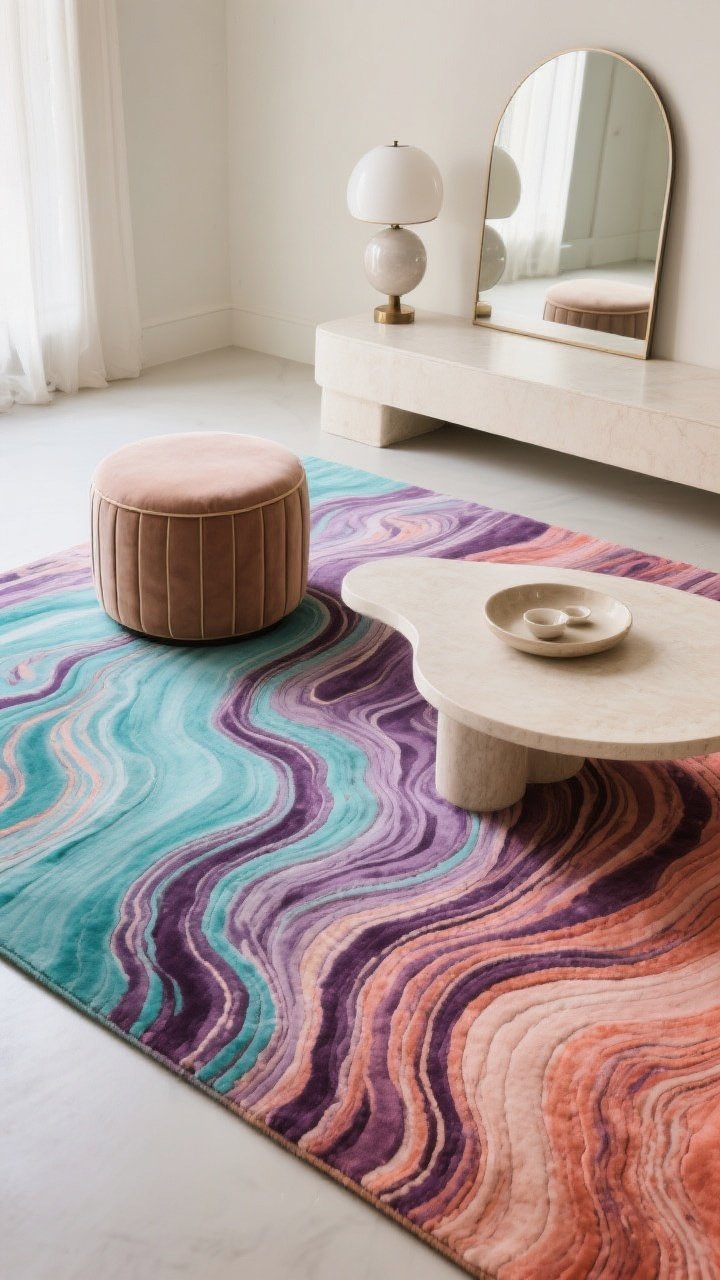
Wavy, marbled, or ripple rugs add movement your room didn’t even know it needed. They guide the eye and create flow—like visual jazz underfoot.
Why It Works
- Softens straight lines: Curvy patterns break up boxy furniture.
- Color gradient magic: Multiple shades make matching textiles a breeze.
- Instant focal point: You can keep the coffee table simple and still get drama.
Styling Tips
- Pick a rug with three dominant hues and build your palette around those.
- Lean into rounded silhouettes—sphere lamps, arched mirrors, drum ottomans.
- IMO, avoid busy striped curtains here. Let the swirls shine.
5. Jewel-Tone Overdyed Classics With A Glow-Up
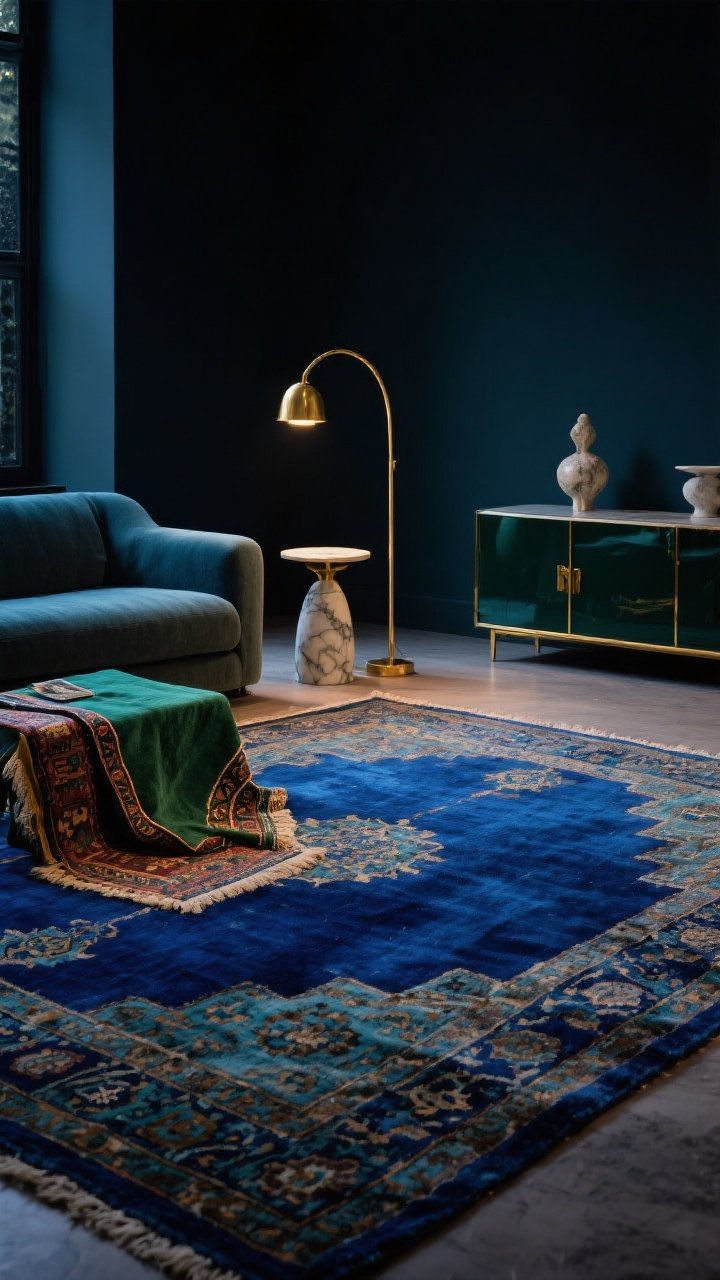
Take a Persian-style rug and wash it in saturated emerald, sapphire, or amethyst. Overdyed rugs give your room old-world detail with modern intensity—a perfect maximalist mashup.
Why It Works
- Heritage meets high-impact: Traditional motifs prevent the color from feeling wild.
- Depth on depth: Faded areas add dimension so your space doesn’t feel flat.
- Mix-friendly: Plays nicely with brass, marble, and lacquered finishes.
Styling Tips
- Match metals to the undertone: warm jewel tones + brass, cool tones + chrome.
- Layer a smaller kilim on top in an accent color for extra texture.
- Use dimmed lighting to make the colors smolder at night. Instant mood.
6. Candy-Stripe Runners That Energize The Edges
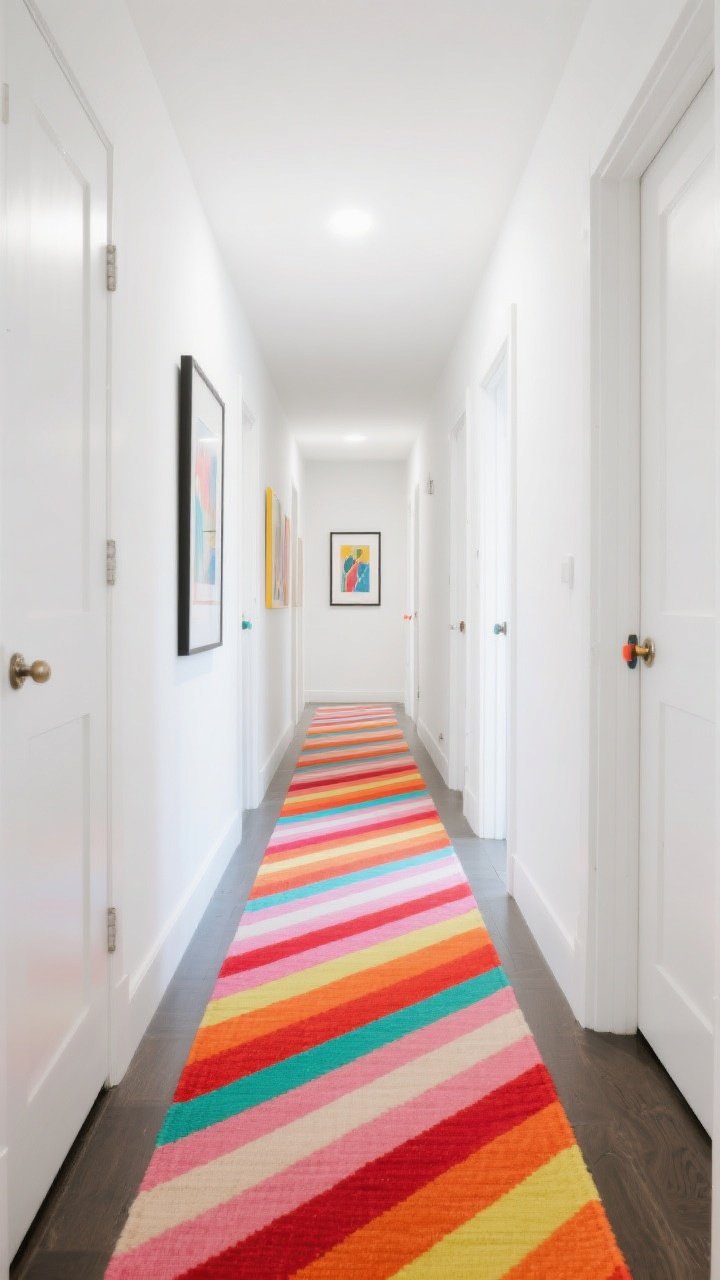
Hallways and kitchens deserve maximalist moments too. Candy-striped runners pump in color and make practical zones feel styled, not forgotten.
Why It Works
- Directional drama: Stripes pull you through a space—great for long corridors.
- Color coaching: Use the runner’s palette to plan door paint or cabinet hardware.
- High-traffic hero: Flatweaves are easy to clean and don’t mind crumbs.
Styling Tips
- Try diagonal or variegated stripes to avoid “boarding school” vibes.
- Repeat the brightest stripe color in art frames or a gallery wall mat.
- For kitchens, choose washable, low-pile options. Your future self will thank you.
7. Art-Deco Geometrics With Luxe Attitude
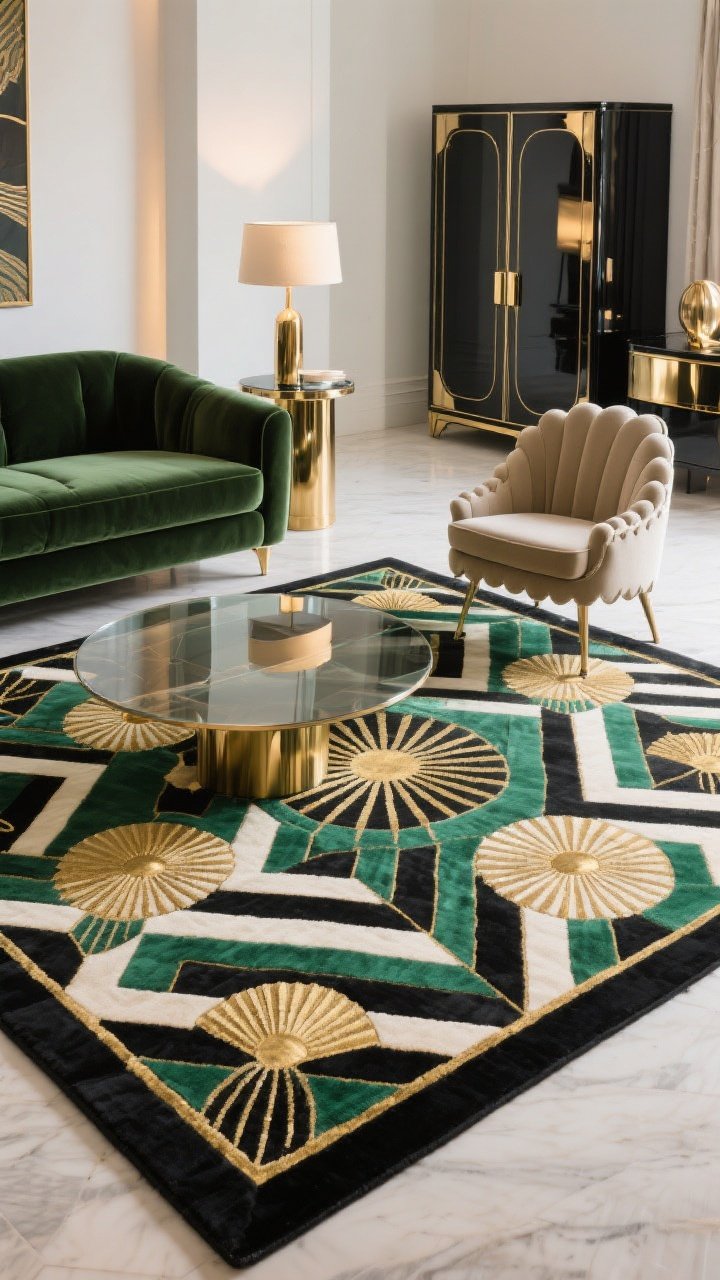
Think fan motifs, sunbursts, and angular repeats—then dial the color up to opulent. Deco geometrics bring polish to maximalist rooms so all that layering reads refined, not random.
Why It Works
- Graphic glamour: The symmetry keeps the room feeling chic.
- Color blocking made easy: Pull out one segment per furniture piece.
- Material mix champ: Loves velvet sofas, lacquered cabinets, and smoked glass.
Styling Tips
- Let one metal finish dominate for cohesion—brass, nickel, or blackened steel.
- Choose a rug with a defined border if you’re corralling an open-plan seating area.
- Balance hard angles with rounded coffee tables or scalloped edges.
8. Hand-Tufted Colorfields That Behave Like Art
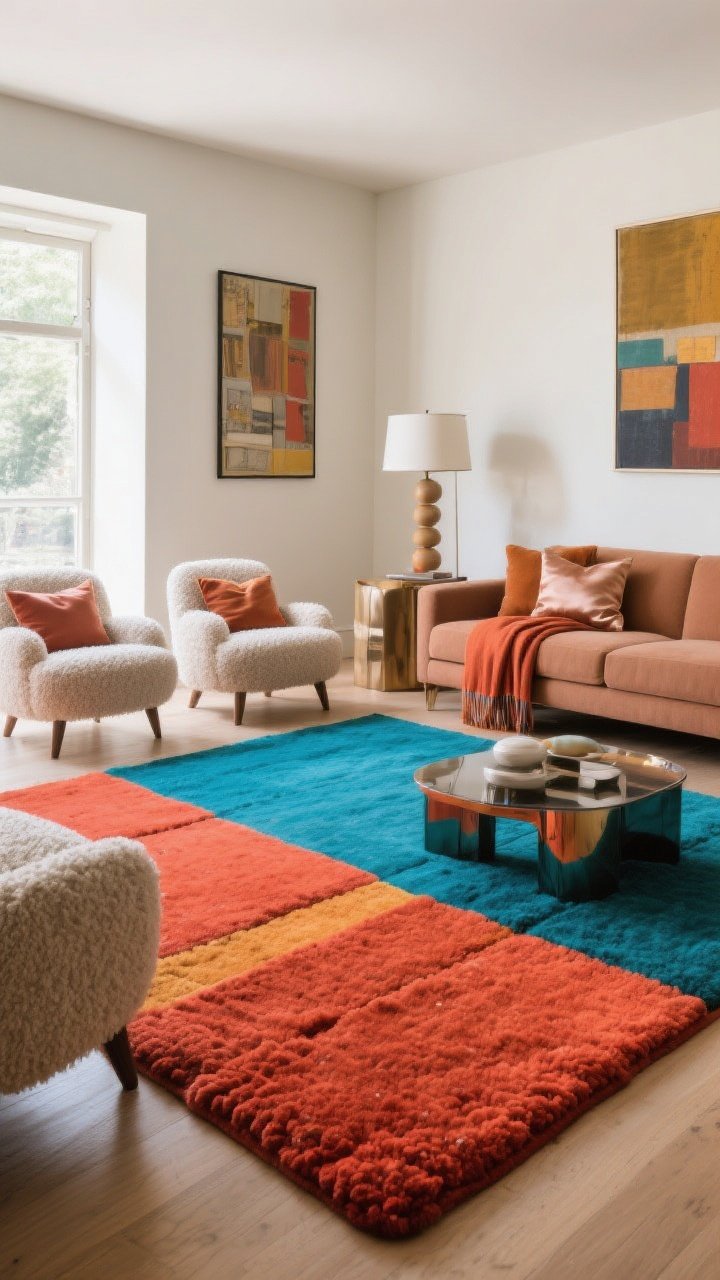
Colorfield rugs are basically paintings for your floor—blocks of saturated shades, soft edges, and unexpected combos. They anchor maximalist rooms by setting a strong palette without busy motifs.
Why It Works
- Palette driver: Choose your three hero colors and let the rug lead the room.
- Quiet boldness: Big color, minimal pattern—perfect with patterned drapery and wild pillows.
- Customizable: Many makers offer custom colorways, so you can nail that exact paprika-meets-peacock vibe.
Styling Tips
- Use color echoing: art, throws, lampshades that mirror the rug’s blocks.
- Mix high and low textures: bouclé chairs, silk cushions, glossy side tables.
- FYI: A colorfield rug shines with low-slung furniture so the hues stay visible.
How To Choose The Right Size (Quick Guide)
- Living room: Front legs of all seating on the rug, or go wall-to-wall minus 8–12 inches.
- Dining room: Extend the rug 24 inches beyond the table on all sides so chairs glide.
- Bedroom: 8×10 for queens, 9×12 for kings (or two runners flanking the bed for a graphic moment).
Material Matters (Because Spills Happen)
- Wool: Soft, resilient, naturally stain-resistant. Great for living rooms and bedrooms.
- Flatweave cotton/kilim: Lightweight, layered look, easy to rotate and clean.
- Synthetics (polypropylene, PET): Kid/pet-friendly, often washable, budget-wise.
- Viscose/silk blends: Lush sheen, but delicate. Best in low-traffic zones.
Layer Like A Maximalist
- Start with a jute or sisal base, layer a smaller statement rug on top for depth.
- Rotate angles: place the top rug slightly askew to break up boxiness.
- Mix pile heights—flat below, plush above—to avoid tripping and to add tactile interest.
Color Confidence Cheats
- Pick a three-color formula: one dominant, one supporting, one “spice.”
- Tie rooms together by repeating one color family from rug to rug across your home.
- When in doubt, let your rug be the brightest item in the space, then build around it.
Maximalism thrives on personality, and a colorful rug is the quickest way to plant that flag. Whether you go patchwork electric or jewel-tone regal, choose a piece that makes you grin every time you walk in. Your floors are prime real estate—let them host the party.