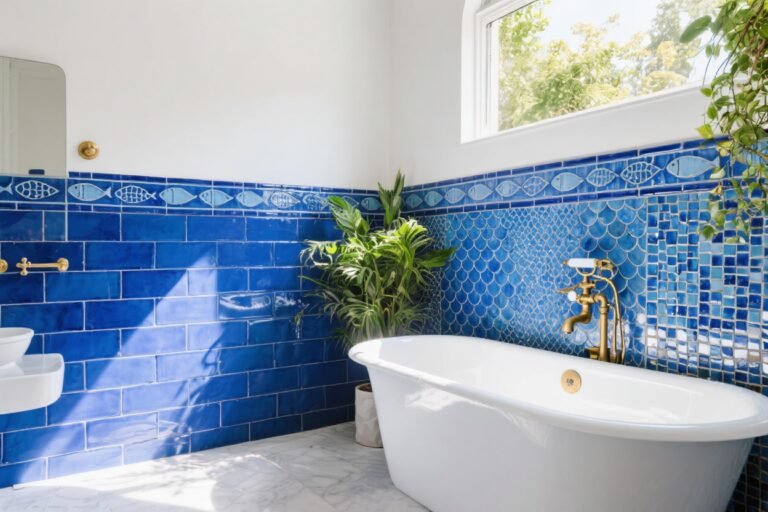
6 Maximalist Shelf Styling Ideas With Antiques That Steal the Spotlight
Ready to give your shelves main-character energy? Good, because maximalism loves a little drama—especially when antiques enter the chat. We’re talking rich textures, moody metals, oddball curiosities, and “wait, where’d you find that?” pieces that make your shelves feel curated, not chaotic.
Below are six punchy, practical ideas to help you layer antique charm into a high-impact, maximalist display. Keep your duster handy, and let’s play.
1. Mix Eras Like a Matchmaker (And Let Them Flirt)
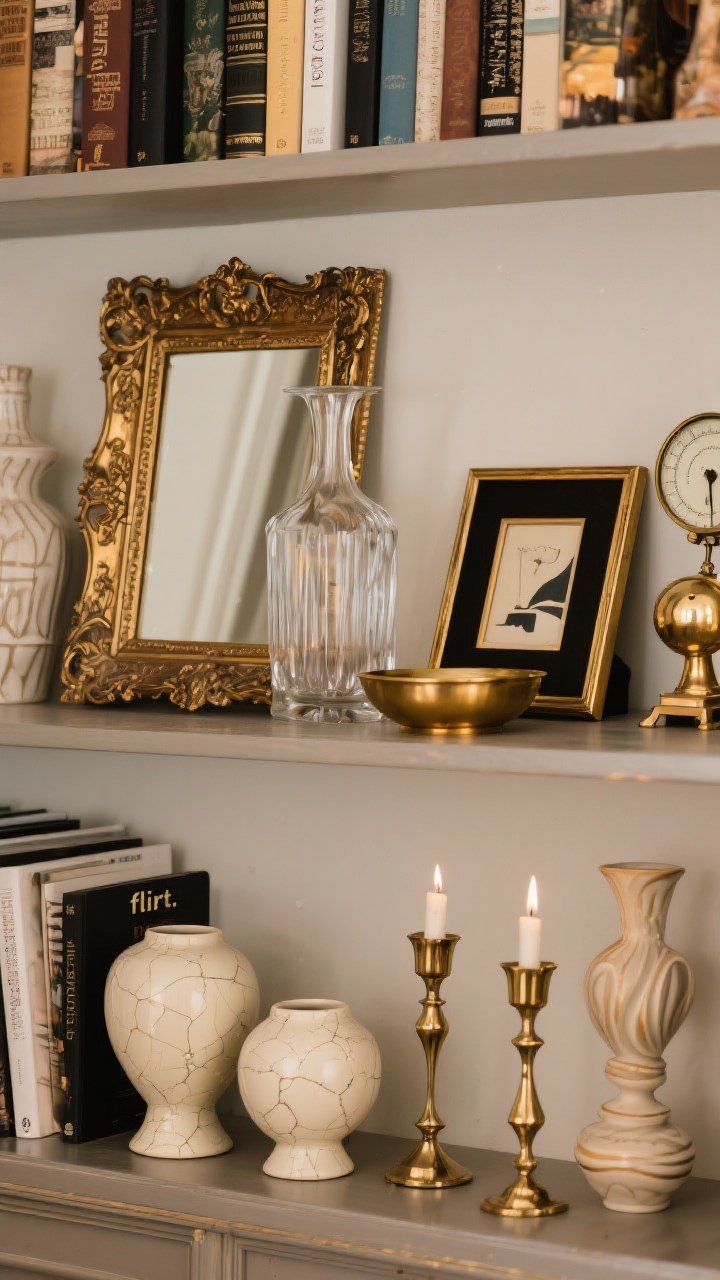
Maximalism isn’t about tossing everything you own onto a shelf. It’s about intentional abundance. Mixing eras—Victorian next to Mid-Century, Art Deco flirting with modern ceramics—creates visual rhythm and tells a richer story.
How To Pull It Off
- Marry opposites: Pair a heavy, ornate gilt frame with a sleek glass vase. The contrast makes each piece pop.
- Repeat a unifier: Use one consistent element—like brass accents, black frames, or cream ceramics—to tie it all together.
- Think in families: Keep two to three items from each era so it doesn’t feel random. Clusters read as intentional.
Got a quirky vintage scale? Put it beside a contemporary art book. That unexpected combo screams “collected,” not “cluttered.” IMO, it’s the fastest way to make your shelves look elevated and effortless.
2. Layer Heights, Depths, And Shadows For Drama
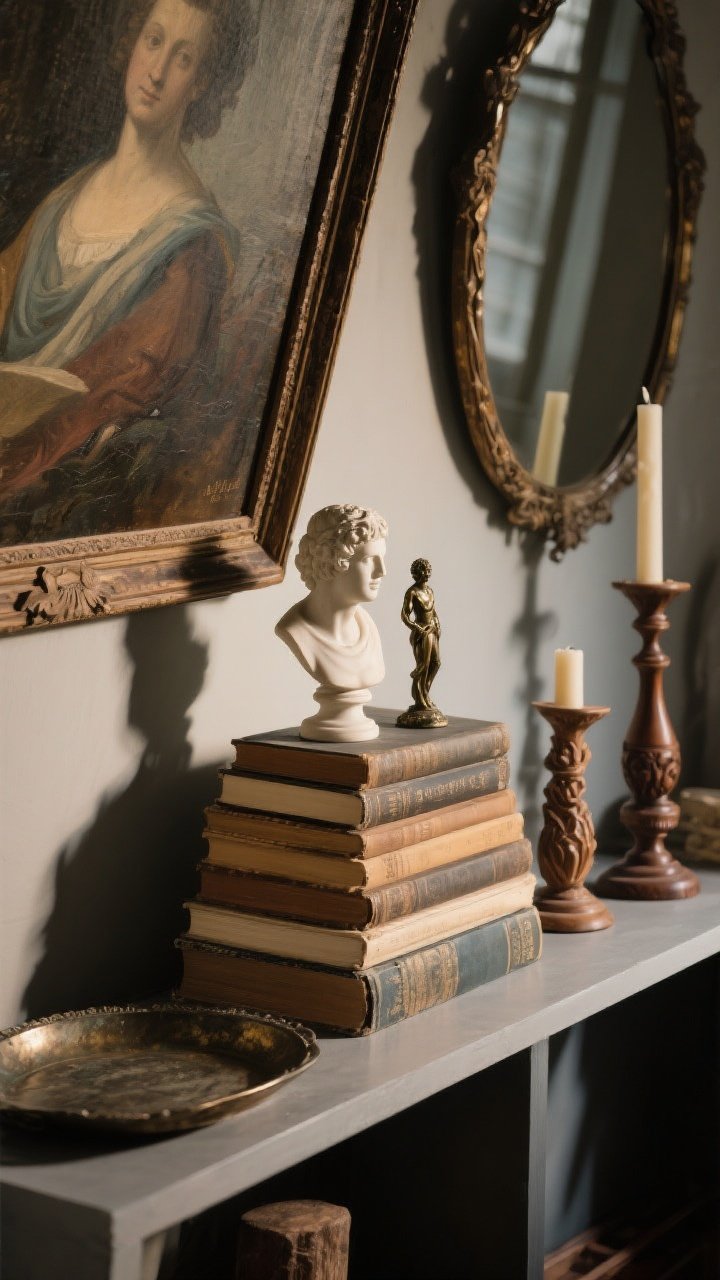
Flat shelves are boring. You want dimension—the kind that makes your eye travel and keep discovering new details. Depth is your new best friend.
The Three-D Rule: Depth, Drama, Dialogue
- Backdrops matter: Start with a large, flat piece—antique oil painting, botanical chart, even a vintage mirror—leaned against the back. Then layer in smaller objets.
- Play with height: Use stacked books as mini pedestals. Elevate a petite bust or a bronze figurine to break up the shelf line.
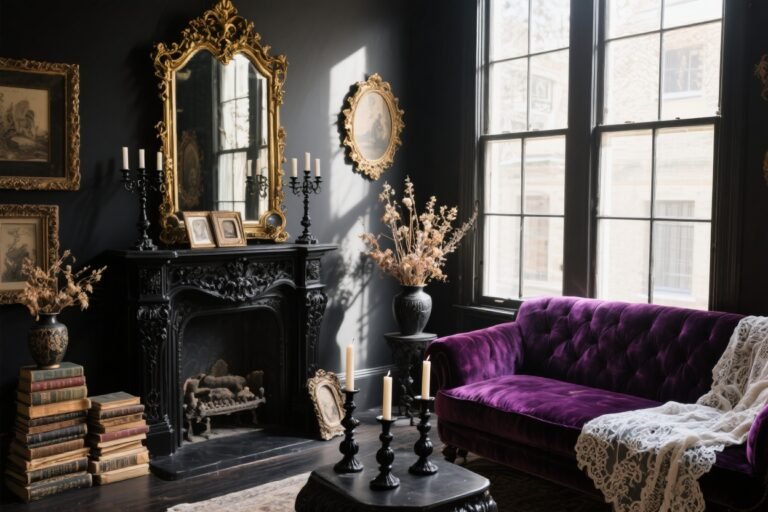
- Create shadow: Candlesticks, carved wood, and patinated metal introduce texture that throws interesting shadows and adds mood.
FYI: Leaning art instead of hanging it keeps the look casual and luxe. It also lets you swap things easily when your inner stylist gets restless (so, next Tuesday).
3. Curate Tiny “Museums” On Each Shelf
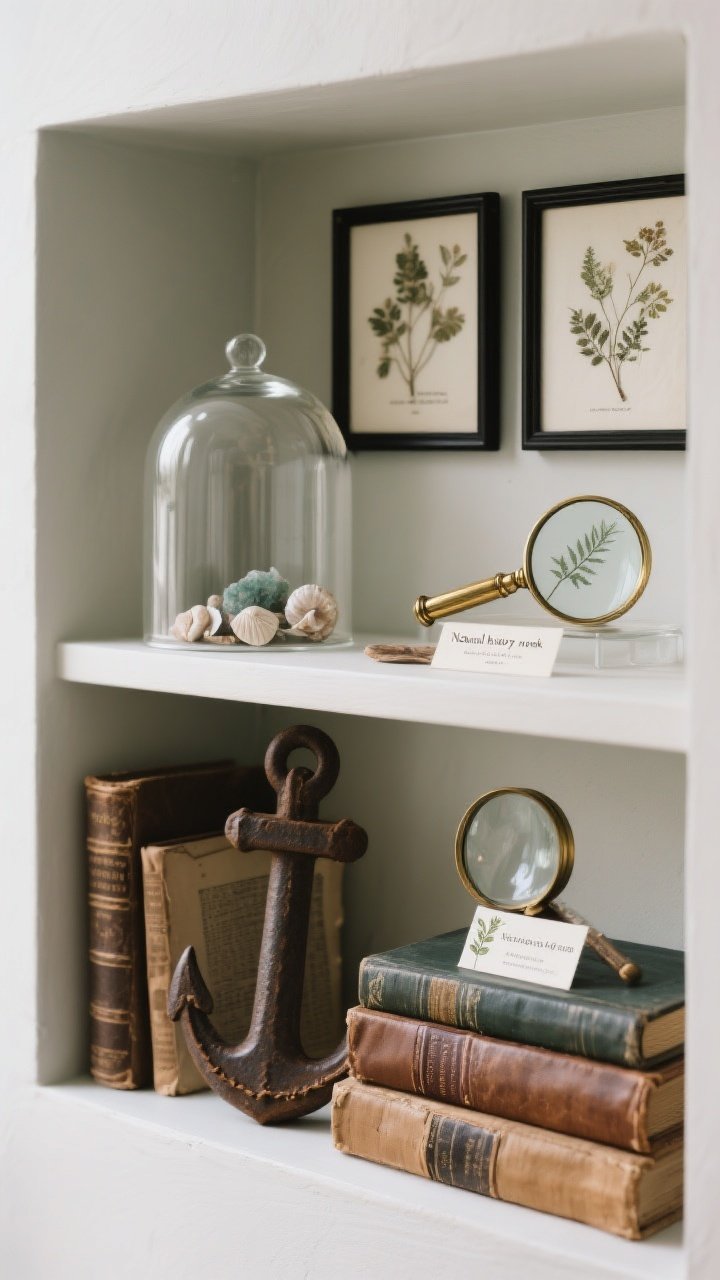
Think of each shelf as a small exhibit with a theme. It could be botanical studies, travel ephemera, or a mini shrine to old-world craftsmanship. Themes help maximalism feel collected rather than chaotic.
Micro-Collections That Work
- Natural history nook: Pressed botanicals in antique frames, a magnifying glass, a cloche with a mineral or shell collection.
- Writer’s shelf: Leather-bound books, brass letter opener, ink well, and a vintage portrait for gravitas.
- Global finds: Moroccan tea glasses, an indigo textile swatch, small carved box from a market trip, paired with an old map fragment.
Ground each vignette with one anchor piece—a tall urn, a chunky stack of books, or a framed print—then build around it. The anchor gives your eye a place to land so the rest can dance.
4. Go Bold With Color And Patina (No, You Don’t Need To Refinish)
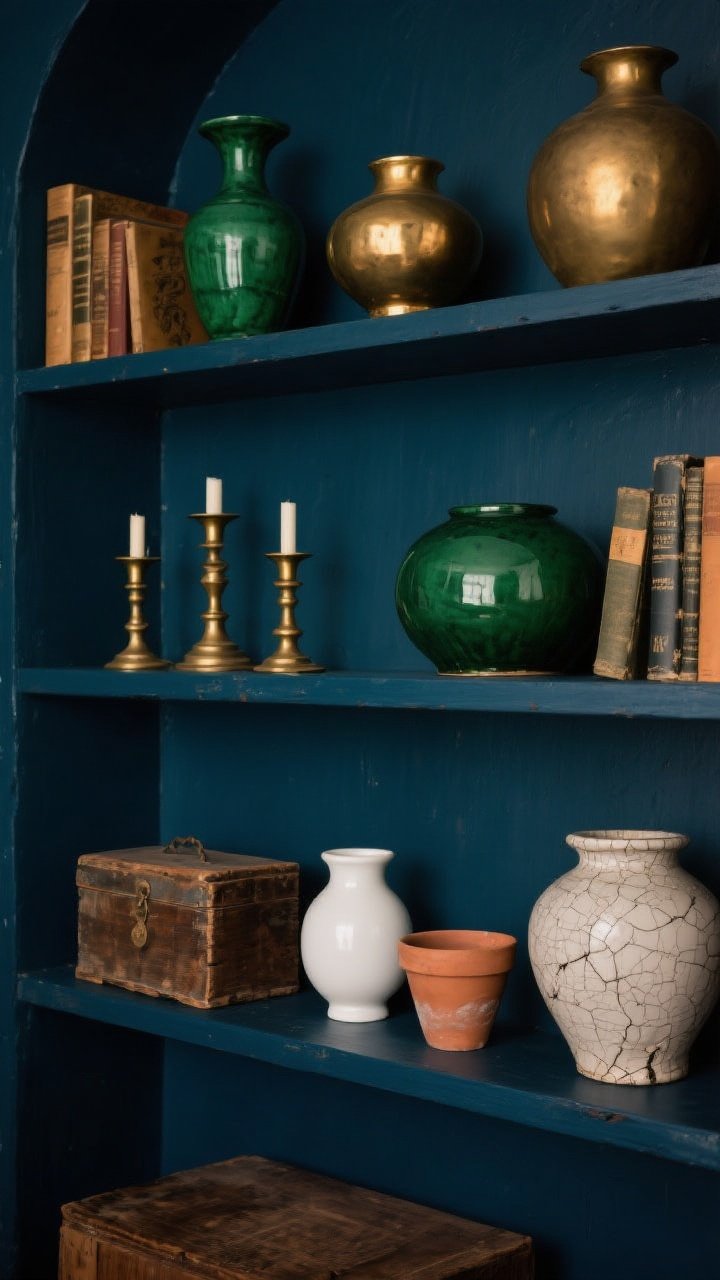
Maximalism thrives on rich color and lived-in finishes. That tarnished brass? Gorgeous. The crackled glaze? Chic. Let your antiques show their age—it’s their superpower.
Color And Finish Strategy
- Pick a hero hue: Choose one saturated color—emerald, oxblood, cobalt—and let it echo in book spines, ceramics, or textiles.
- Patina party: Mix shiny with matte: polished brass next to weathered wood, glossy porcelain with chalky terracotta.
- Dark backdrops: If your shelf backing is paintable, go moody (ink blue, charcoal). Antiques glow against deep tones.
Pro tip: Grouping like finishes reads as intentional. Three bits of brass in different shapes look curated; one lonely brass candlestick just looks, well, lonely.
5. Stack, Lean, And Layer Your Books Like a Stylist
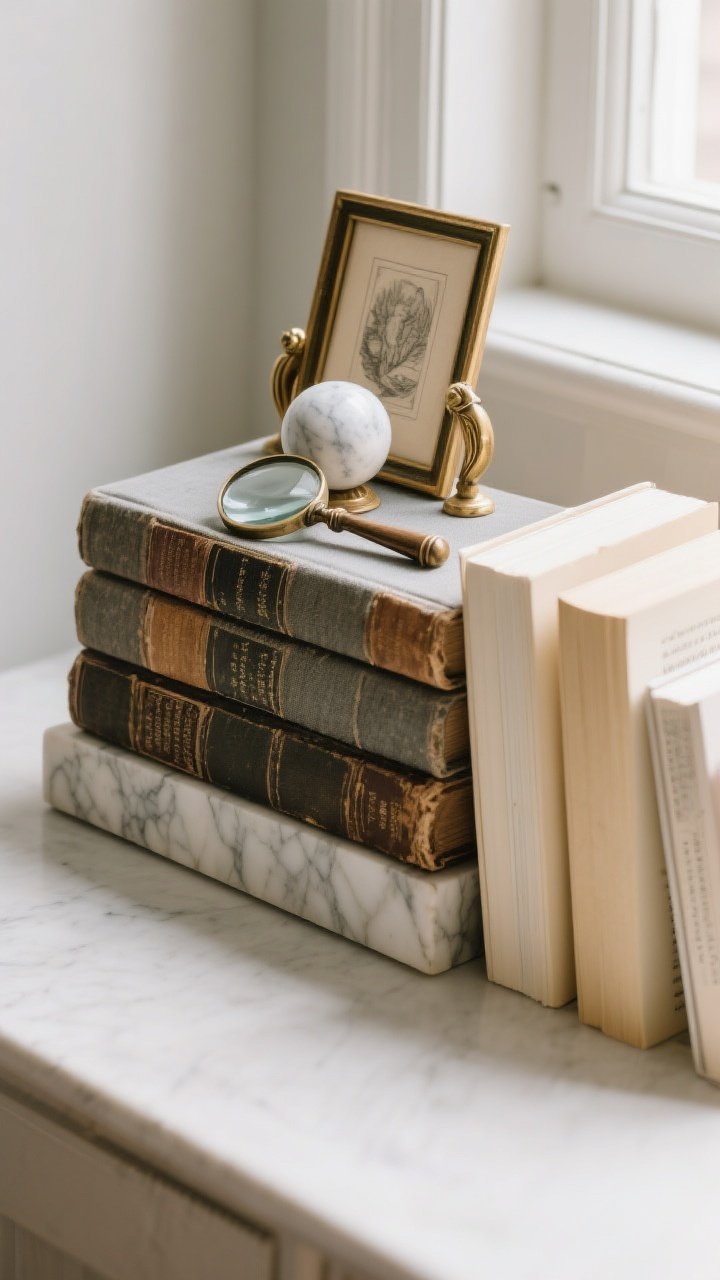
Books are the backbone of a maximalist shelf—and the easiest way to add height and color. Old books bring texture, new books bring brightness. Together, they’re perfection.
Book Styling Moves That Always Work
- Mix orientations: Go vertical and horizontal. Use horizontal stacks to raise smaller objects and break monotony.
- Spine styling: If spines are chaotic, turn a few books around for creamy page edges. Or group by color for a soft gradient.
- Layer with art: Lean a small framed etching slightly overlapping a book row. It creates depth with zero effort.
And don’t forget charming book accessories—vintage brass hands as bookends, a marble orb on a stack, or an antique magnifier perched casually like you’re about to read something scandalous.
6. Add Oddities And Personal Treasures For Soul
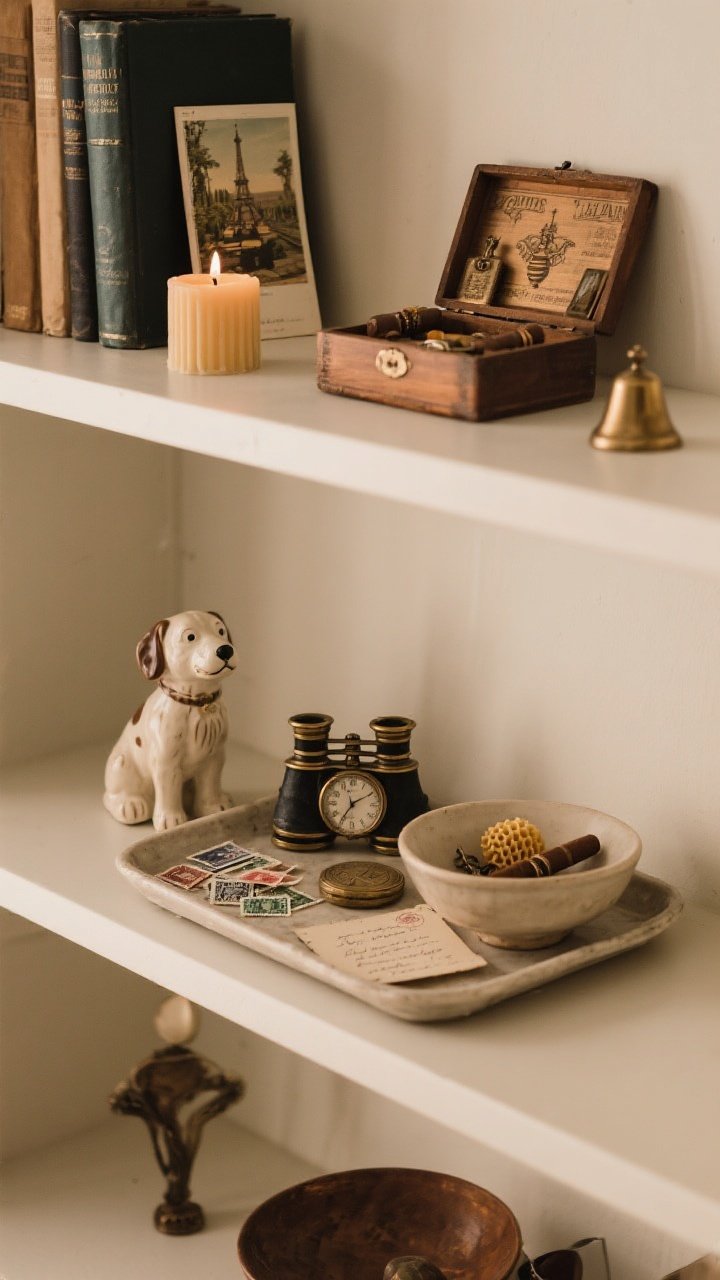
This is where your shelves become unmistakably yours. The weird little bits—the ceramic dog from your grandmother, the opera glasses you found at a flea market, that postcard from Paris—make the whole thing sing.
The “Show-And-Tell” Formula
- Rule of three(ish): Cluster small objects in threes or fives to avoid a scattered look.
- Contain the tiny: Use shallow trays, low bowls, or a vintage cigar box to corral miniature collectibles.
- Tell a story: Tuck in a handwritten note, a stamp collection, or a pocket watch. These quiet details add intimacy.
Also, play with scent and sound, subtly. A beeswax candle next to a brass bell or tiny wind-up music box adds sensory layers your shelves can’t show in photos—but guests notice IRL.
Quick Styling Checklist
- Do you have a strong backdrop on at least one shelf (art, mirror, chart)?
- Are heights varied—tall, medium, and low in each vignette?
- Is there a unifying element (color, metal, motif) repeating across shelves?
- Do at least two shelves have a theme or micro-collection?
- Is there clear negative space so objects can breathe?
Maintenance Without Losing the Magic
- Rotate seasonally: Swap textiles, flowers, and a few objets every few months to keep it fresh.
- Dust smart: Use a soft paintbrush around carvings and patina. Don’t over-polish—antique charm lives in the wear.
- Edit monthly: Remove one piece for every new piece added. Maximalism still needs boundaries, FYI.
Final nudge: trust your eye. If it feels good, it probably looks good. Stand back, squint, and adjust one thing at a time. Your shelves are a living artwork—let them evolve with you.
You’ve got this. Now cue the dramatic candlesticks, stack those books, and let your antiques do their very glamorous thing.