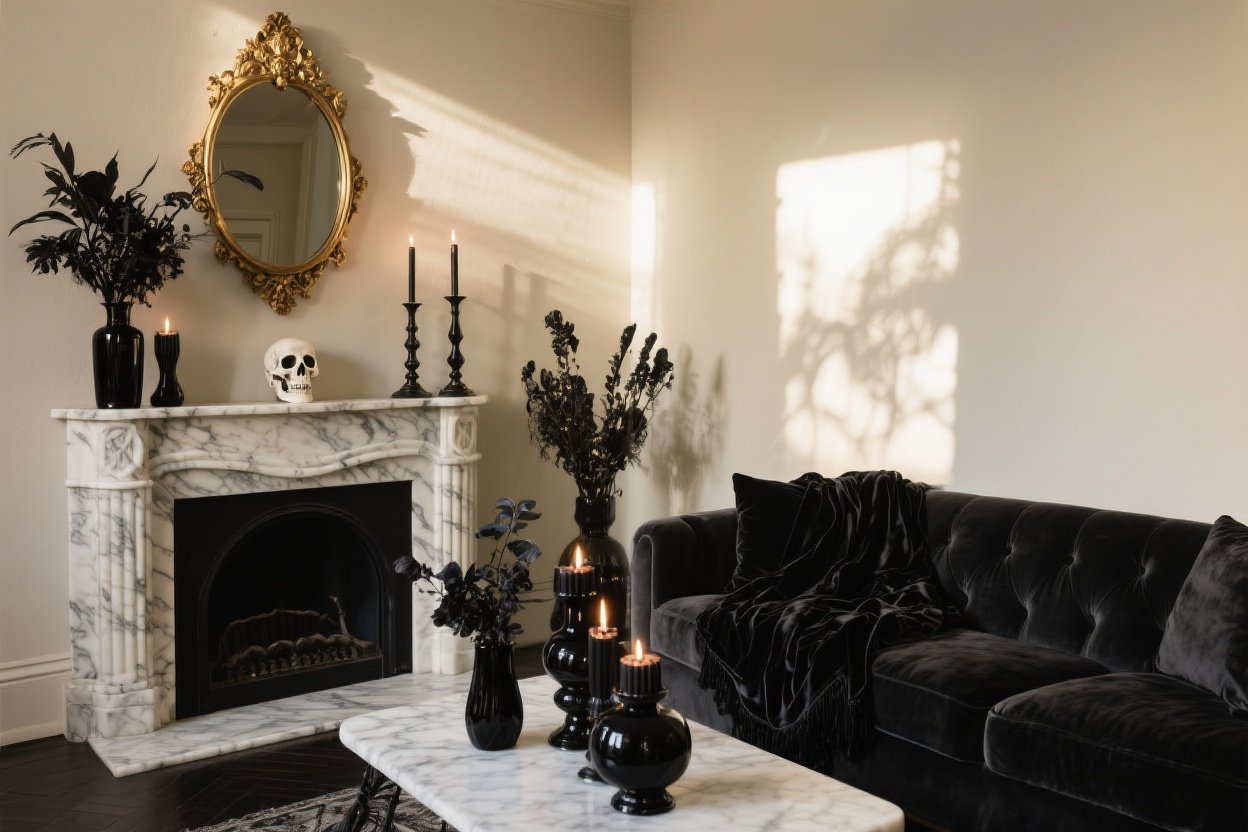
6 Gothic Accessories: Skulls, Candles & Moody Botanicals That Steal the Spotlight
Ready to flirt with the dark side of decor? Good. Gothic styling isn’t just for haunted mansions and Halloween pop-ups—it’s a vibe. Think rich textures, dramatic silhouettes, and tiny details that look expensive (even if they’re not). We’re talking skulls, candles, and moody botanicals styled in six smart ways that make your space feel luxe, mysterious, and ridiculously photogenic.
1. Curate Skulls With Taste (Yes, Really)
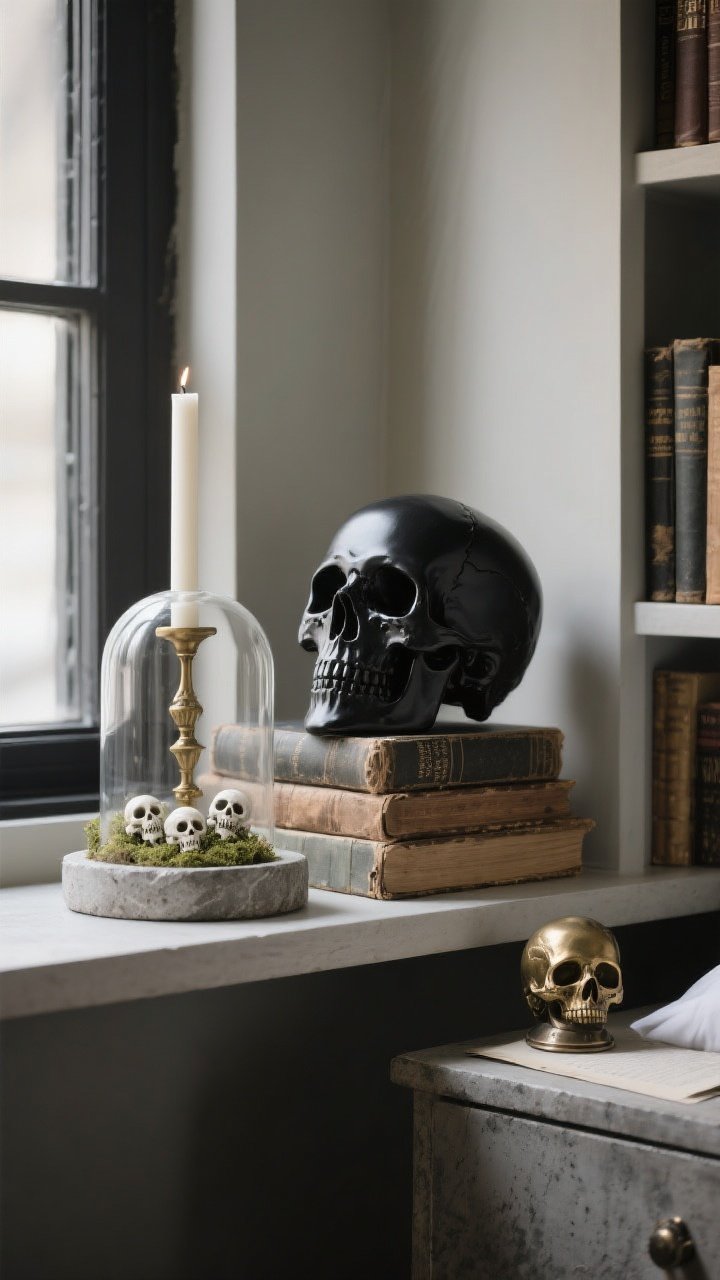
Skulls get a bad rap, but when styled thoughtfully, they look sculptural and chic. Treat them like art, not props. The key is quality over quantity—one striking piece beats a dozen novelty tchotchkes.
Where To Place Them
- Bookshelves: Perch a matte black skull on a stack of vintage books. Instant librarian-with-secrets energy.
- Console tables: Pair a stone or ceramic skull with a tall taper candle and a glass dome. Curiosity cabinet vibes.
- Nightstands: A small brass skull as a paperweight next to your favorite gothic novel? Chef’s kiss.
Material Matters
- Stone or concrete: Feels architectural and grounded.
- Matte ceramic: Minimal and modern—great for clean-lined spaces.
- Aging metallics: Antique brass, pewter, or oxidized finishes look storied (and expensive).
FYI: If you’re worried about going too dark, keep the skulls neutral and let your textures do the talking. Or go tiny—mini skulls mixed into cloche displays or terrariums look quirky, not kitschy.
2. Candlelight, But Make It Dramatic
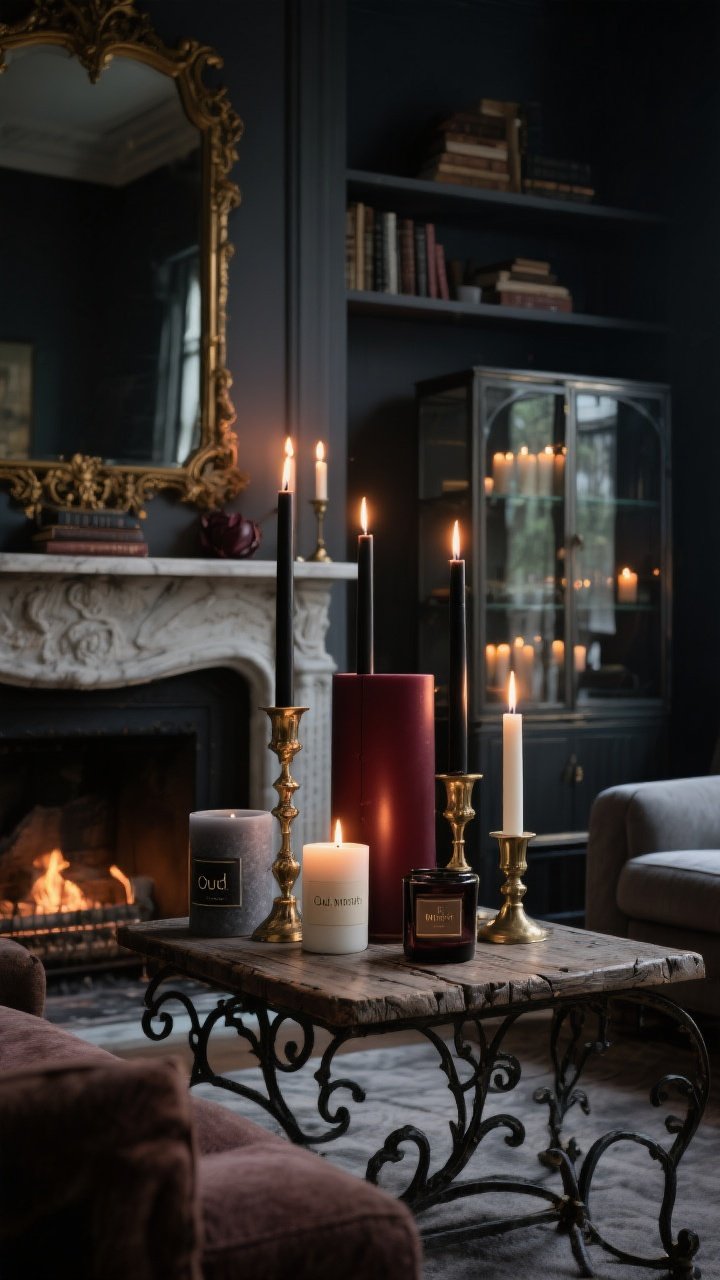
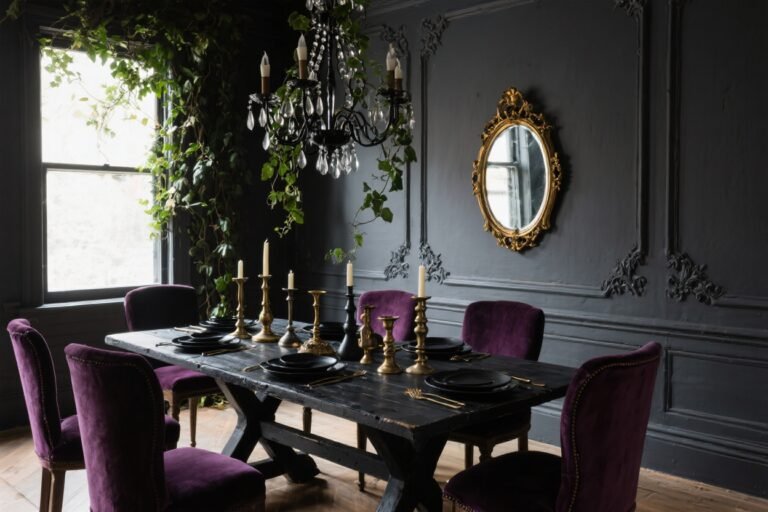
If your room doesn’t look better by candlelight, we need to talk. Candles are the fastest way to layer in warmth and shadow—which is basically the soul of the gothic aesthetic.
Build A Candle Scape
- Mix heights: Taper, pillar, and votive. The variety feels collected, not staged.
- Play with holders: Wrought iron, vintage brass, and distressed wood keep it moody.
- Color palette: Black, deep burgundy, bone white. Add a single smoky gray for dimension.
Scent Strategy
- Go resinous: Think myrrh, oud, smoke, leather, and dark florals like rose and violet.
- Layer scents: One heavy, one delicate, so the room smells complex not cloying.
- Safety first: Use LED tapers for bookshelves or tight corners. No one wants scorched shelves.
Pro move: Place candles near mirrors or glass-front cabinets. The reflections multiply the glow and make your room feel deeper and a little enchanted.
3. Moody Botanicals That Don’t Feel Like Halloween
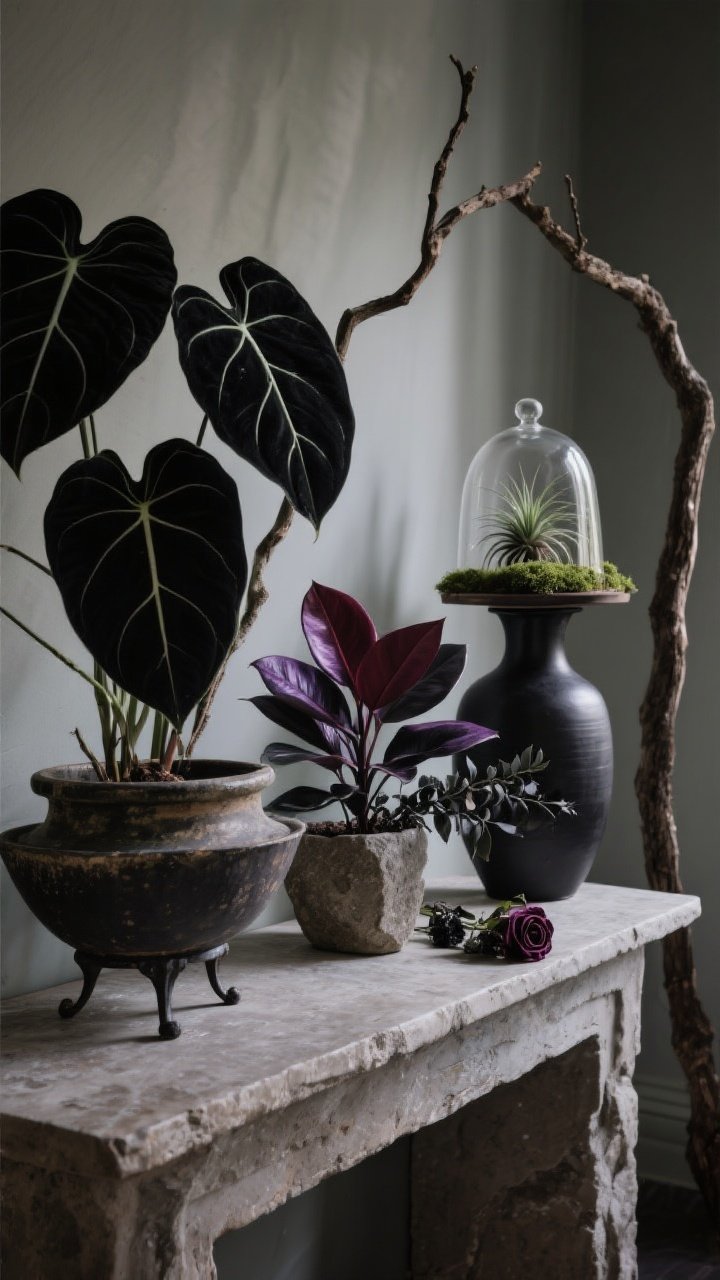
Plants, but make them mysterious. No neon pothos here—think inky foliage and odd textures that feel like they belong in a secret garden after dusk.
Plant Picks
- Black velvet alocasia: Matte leaves with pale veins. Dramatic without trying.
- Raven ZZ: Glossy, almost-black leaves. Low maintenance. Big payoff.
- Purple shamrock (Oxalis): Dark, fluttery leaves that move with light. Pure magic.
- Burgundy rubber plant: Tall, sculptural, and surprisingly easy to keep alive.
Vessels & Styling
- Urns and footed bowls: Go for stone, iron, or weathered ceramics.
- Herbariums and cloches: Tuck moss, air plants, or dried blooms under glass.
- Dried botanicals: Blackened eucalyptus, dried roses, and seed pods outlast fresh stems and look richly textured.
IMO, a single oversize branch in a black ceramic vase is the moody minimalist move. It’s giving “19th-century atelier” with zero fuss.
4. Dark Walls, Gilded Frames, And Oddities (The Gallery You Deserve)
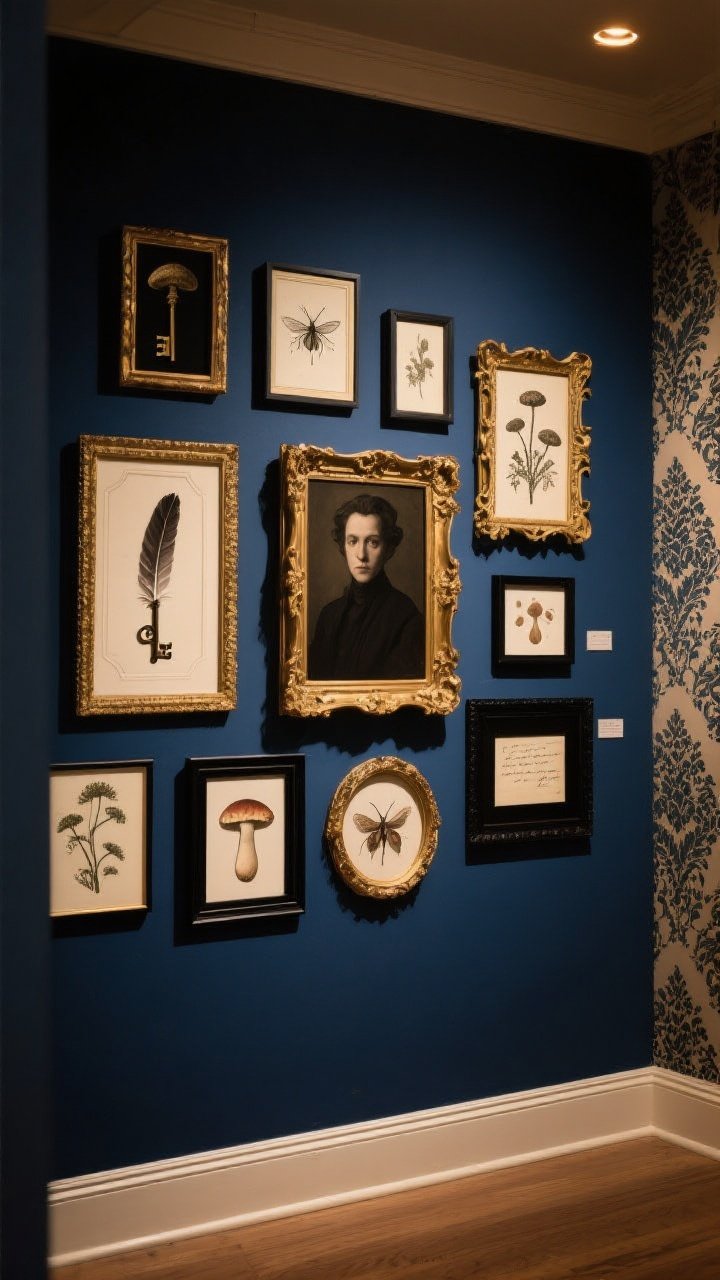
Want the quickest path to gothic elegance? Build a wall that looks like you inherited it from an eccentric great-aunt. It’s a blend of art, artifacts, and a little drama.
Start With The Backdrop
- Paint: Deep charcoal, forest green, oxblood, or midnight blue. Matte finish = instant sophistication.
- Wallpaper: Damask, toile with a twist, or subtle gothic florals. Keep patterns moody, not loud.
Layer The Art
- Gilded frames: Mix baroque curves with simple black frames for balance.
- Botanical etchings: Antique-style illustrations of fungi, insects, or poisonous plants.
- Oddities: Shadow boxes with keys, feathers, or handwritten letters. Keep it curated, not cluttered.
Pro tip: Anchor the gallery with one larger piece—like a moody portrait or oversized botanical print—then nestle smaller frames around it. The asymmetry keeps it fresh.
5. Velvet, Lace, And A Touch Of Metal: Textures That Whisper “Opulence”
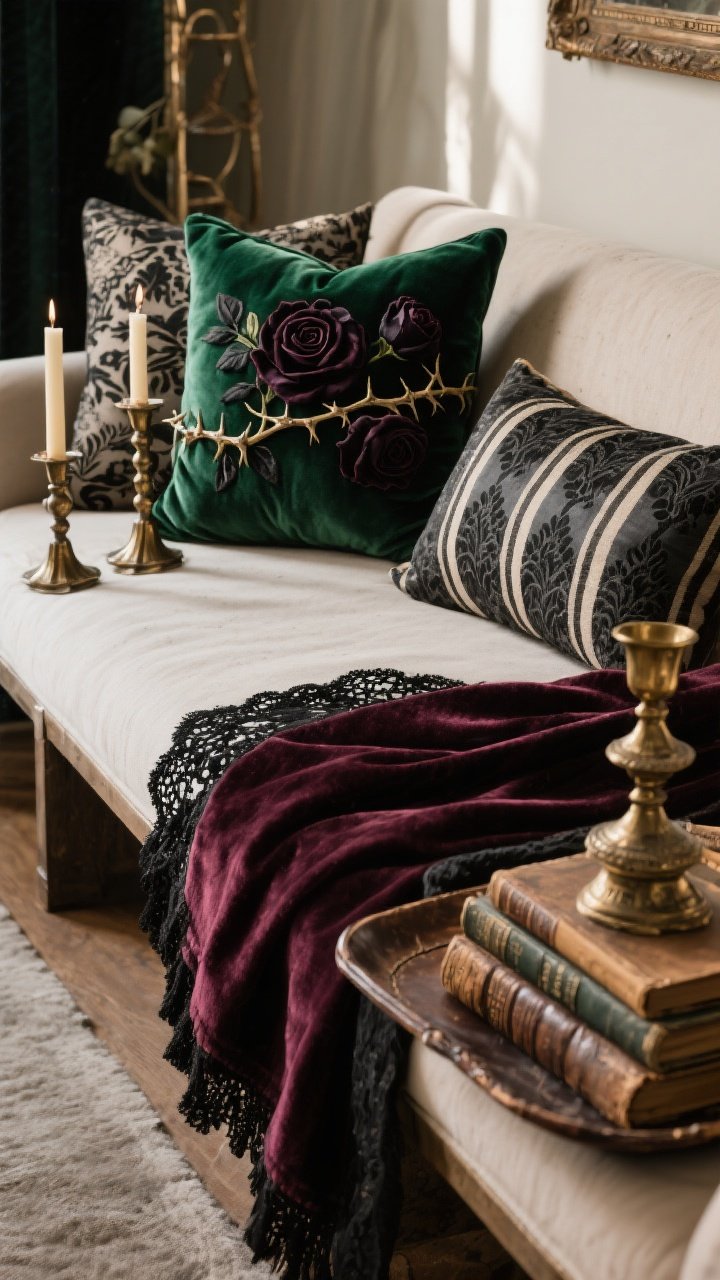
Gothic decorating is really a texture game. You want layers that feel plush, timeworn, and slightly theatrical. If your couch is basic, this is where you turn it into a throne.
Mix, Don’t Match
- Velvet: Pillows or a throw in emerald, wine, or onyx. It catches the light beautifully.
- Lace: Drape a lace runner over a console or layer it over linen. It softens the darkness.
- Leather: A worn leather tray or stack of vintage-bound books adds gravitas.
- Metal: Antique brass or iron candleholders and trays to break up soft surfaces.
Pattern Play
- Florals, but sinister: Dark roses, thorny vines, or stylized botanicals on textiles.
- Damask: Classic, but keep it on pillows or a single chair to avoid “castle cosplay.”
- Stripes: Thin, subtle pinstripes or ticking in charcoal and bone keep things grounded.
FYI: If you’re worried about dust magnets (hi, velvet), choose cotton-velvet blends and stick to removable covers. Your lint roller will thank you.
6. Tablescapes & Vignettes: Tiny Corners With Big Gothic Energy
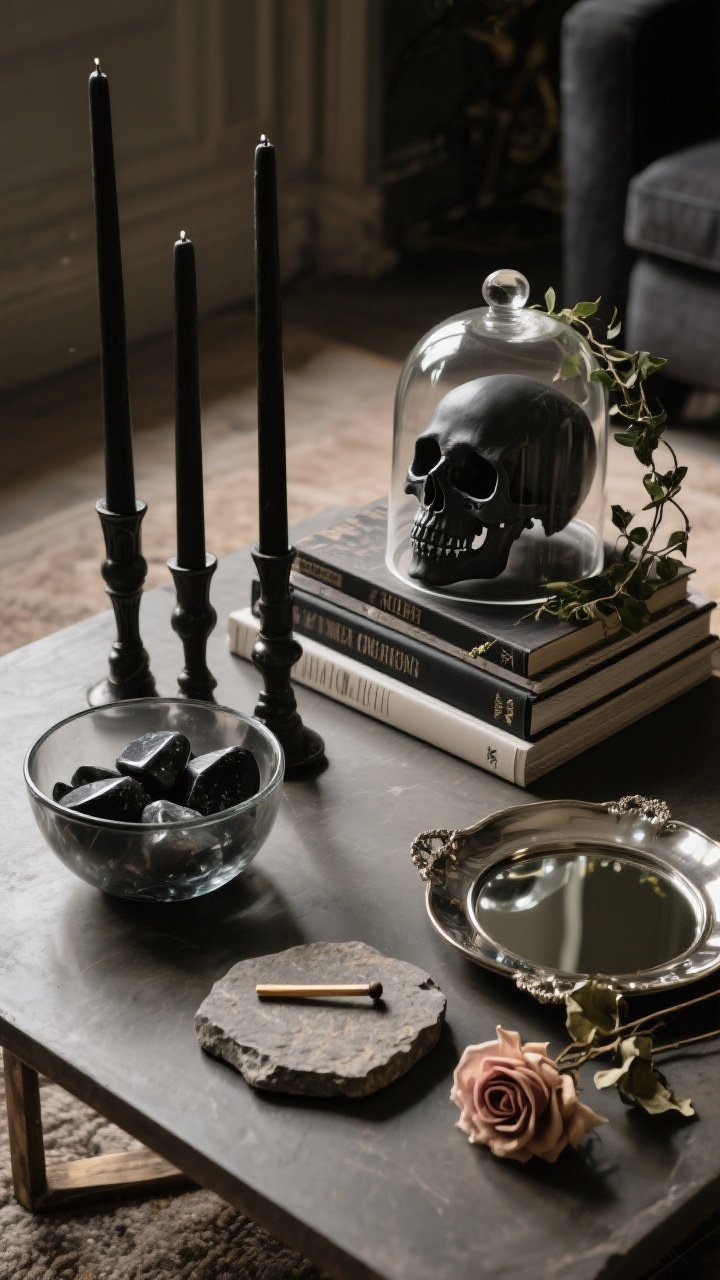
This is where your accessories actually sing. Build small, intentional scenes on coffee tables, mantels, and consoles that feel like little stories.
How To Compose A Vignette
- Choose a focal point: A skull under a cloche or a dramatic candelabra.
- Add height and shadow: Stacked books, tall tapers, and a trailing plant.
- Sprinkle in sparkle: A mirrored tray or cut-glass decanter for light play.
- Balance textures: Rough stone + polished metal + soft florals = chef’s kiss.
Easy Starter Combos
- Mantel: Black taper candles, gilded mirror, dried roses in a pewter bud vase.
- Coffee table: Stack of art books, matte skull, smoky glass bowl of obsidian or onyx.
- Entry console: Iron lamp, bowl for keys, framed botanical print, small potted Raven ZZ.
Remember scale: group in odd numbers, vary heights, and leave breathing room. Your vignette should look effortless, not like you raided a Halloween aisle at 2 a.m.
Here’s the bottom line: You don’t need a dungeon to go gothic. With skulls, candles, and moody botanicals—plus a few strategic textures and artful arrangements—you can turn any room into a darkly romantic sanctuary. Start small, edit often, and let the shadows do their thing. Your space, but with secrets. Now go light a candle and admire your excellent taste.