6 Earthy Home Accents for a Natural Vibe That Feel Effortlessly Chic
Craving a calmer, grounded home without turning your living room into a forest? Same. The trick is layering earthy accents that bring in texture, warmth, and those cozy “I live well” vibes—without the maintenance of a jungle. Ready to make your space feel like a serene retreat? Let’s do this.
1. Ground Everything With Natural Fiber Rugs
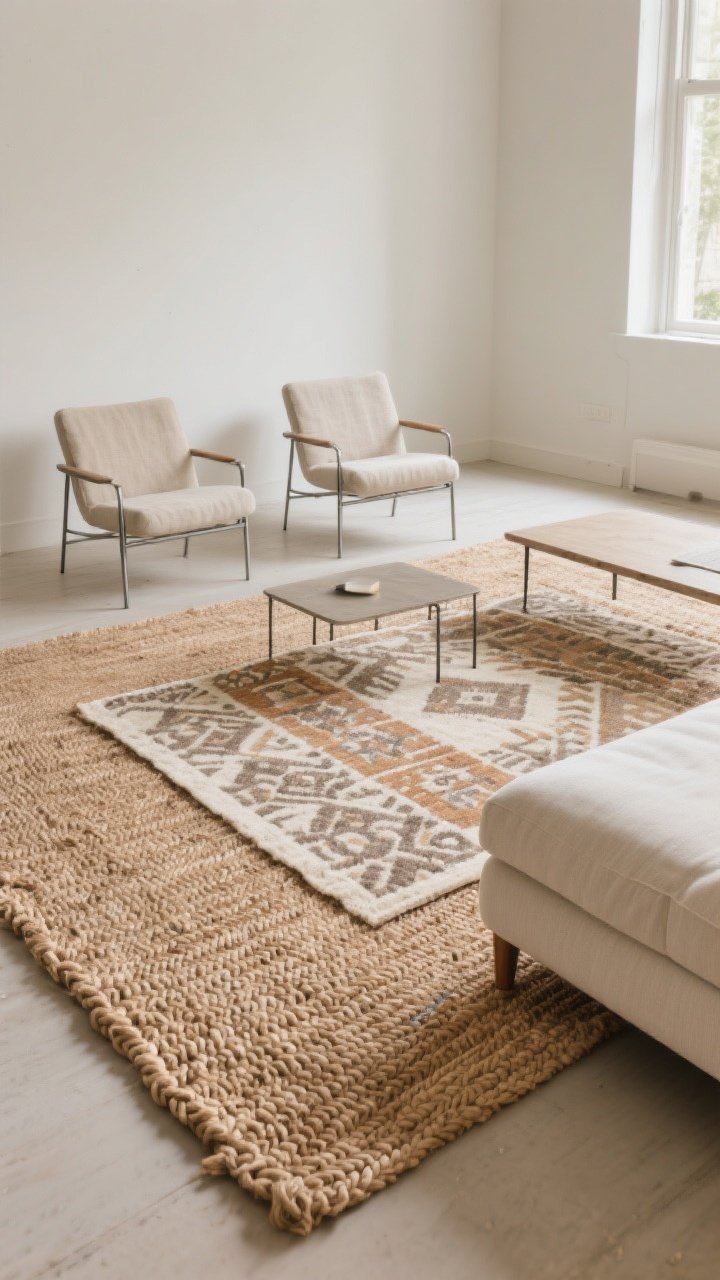
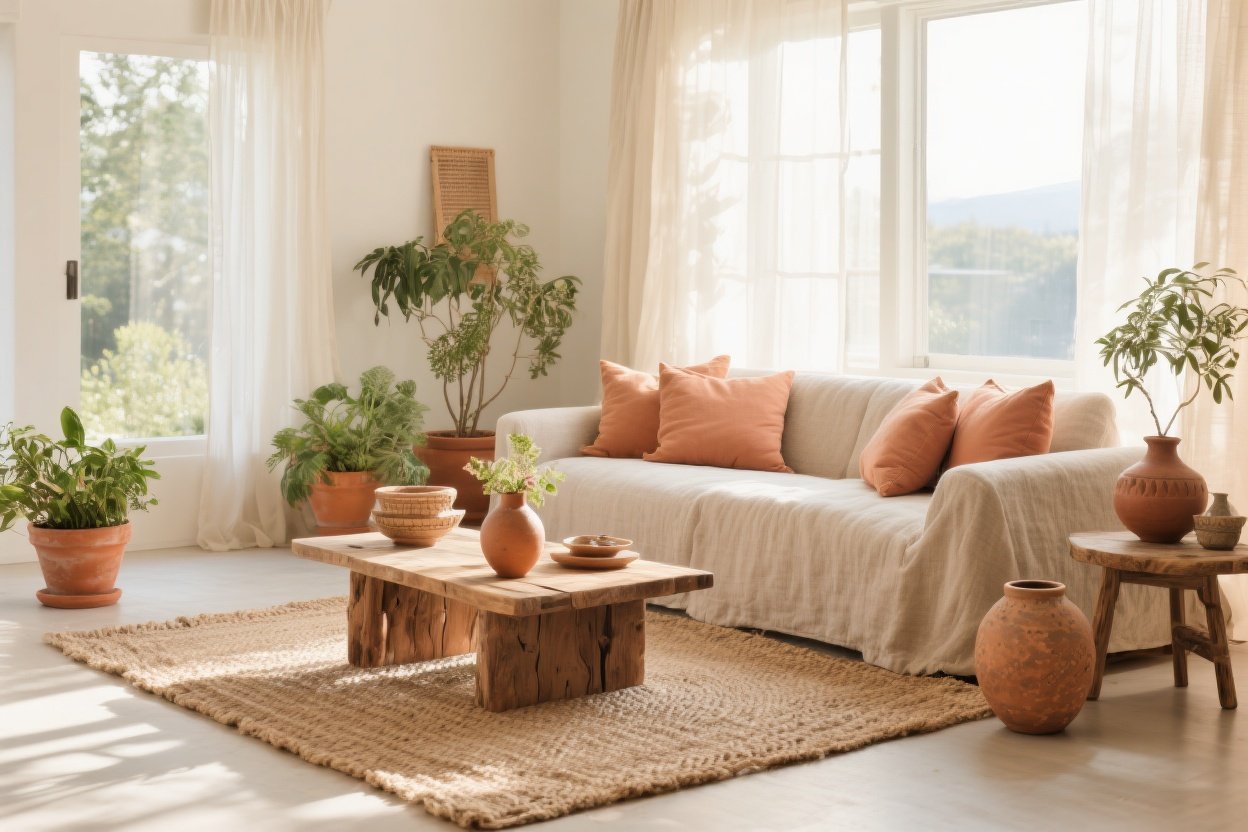
If your room feels a little chaotic, start underfoot. Jute, sisal, and seagrass rugs instantly add warmth and texture while giving your space that subtle, organic foundation. They’re basically the no-makeup makeup of decor—quiet, chic, and put-together.
Why They Work
- Texture = depth: Natural fibers bring in visual interest without loud patterns.
- Neutral but not boring: Earthy tones anchor your furniture and pull the room together.
- Durable: Great for high-traffic areas and layered looks.
Pro Tips
- Layer it: Put a smaller patterned rug on top of a large jute base for softness and style.
- Go oversized: The rug should frame your seating area; front legs of furniture on the rug = chef’s kiss.
- Balance texture: If you choose a chunky weave, pair it with sleek furniture for contrast.
FYI: Natural rugs aren’t stain-proof. A rug pad helps with grip and longevity, and a fabric protector spray is your friend.
2. Add Raw Wood Moments (Not Just Furniture)
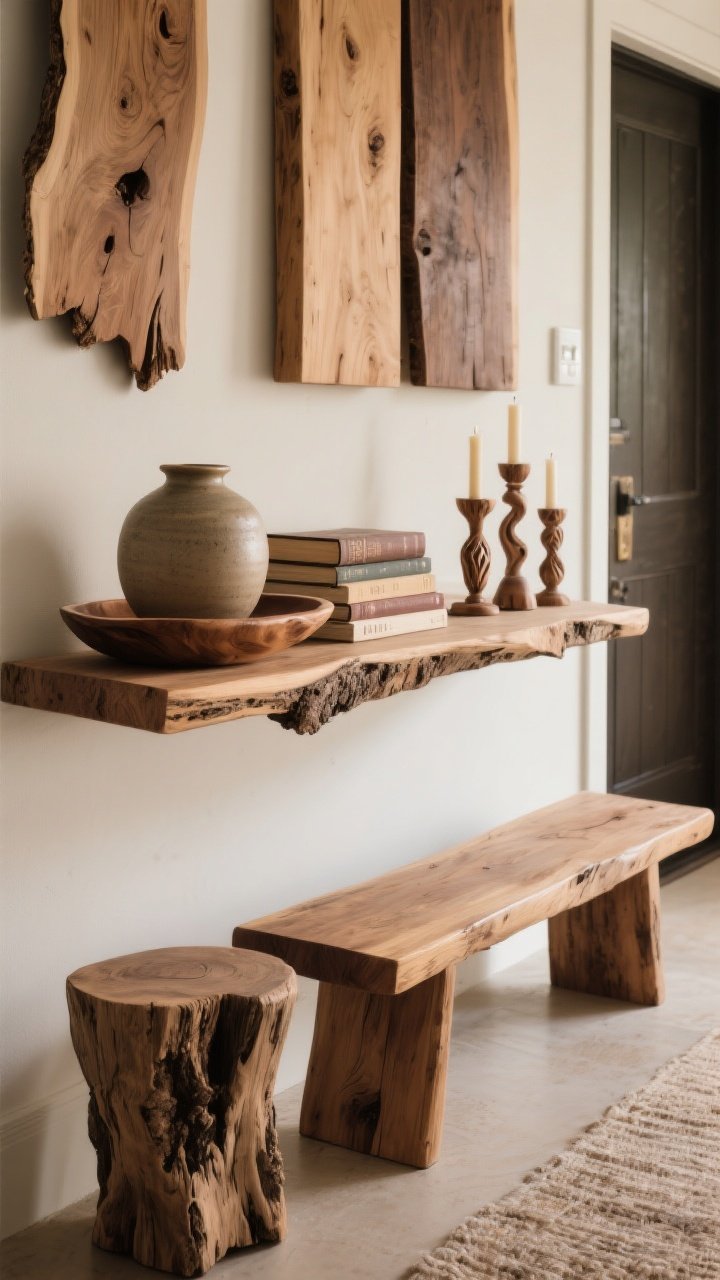
Yes, wood furniture is lovely, but the real magic happens in the details. Think live-edge side tables, wooden bowls, carved candleholders, or a rustic bench by the entry. These small, raw touches bring warmth and a lived-in feel—without making your space look like a log cabin.
Where To Add Wood
- Console styling: A wooden tray, ceramic vase, stack of books. Done.
- Dining table: A raw wood centerpiece bowl with fruit or moss.
- Bedroom: Wood peg rail for robes, hats, or linen totes—functional and pretty.
Finish Matters
- Matte or oiled finishes look more organic than glossy varnish.
- Mix tones: It’s okay to mix oak, walnut, and pine—just vary textures so it feels intentional.
- Avoid matchy-matchy sets: Eclectic pieces read richer and more natural.
IMO, a single live-edge piece can transform a room—like, instant “I travel and collect interesting things” energy.
3. Style With Stone, Clay, and Ceramic
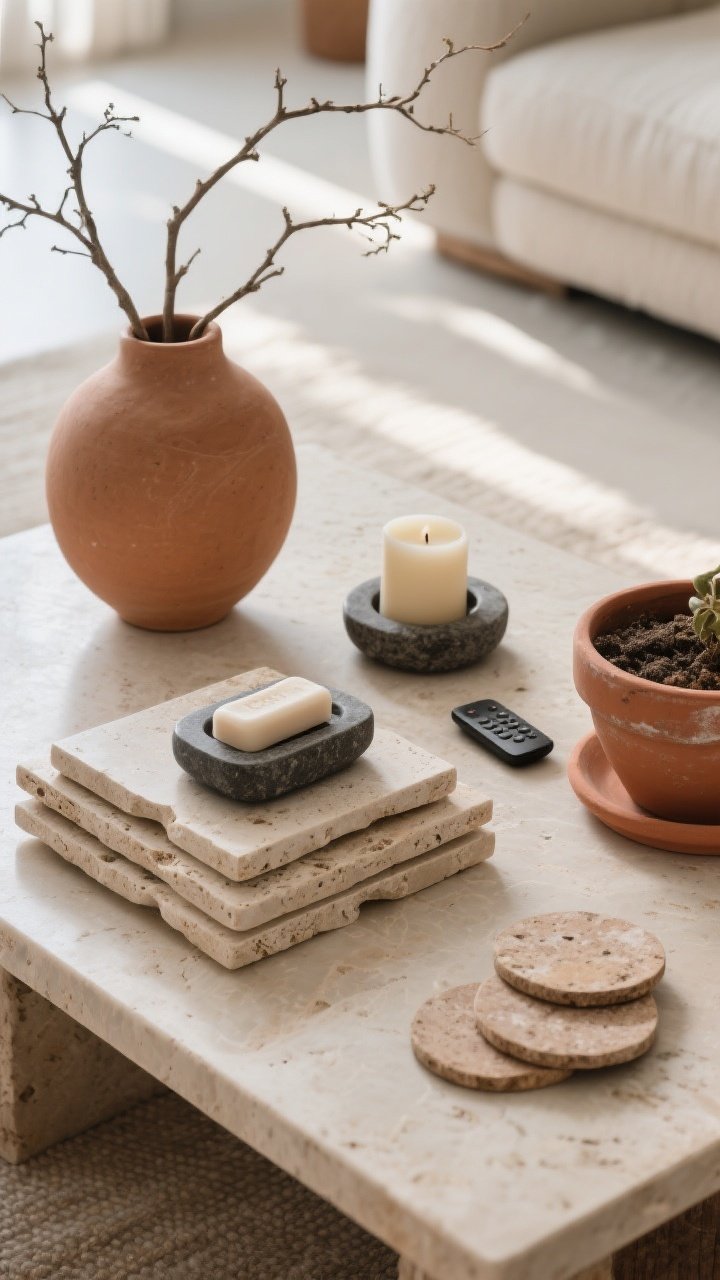
This is where things get quietly luxe. Travertine trays, terracotta planters, unglazed ceramic vases, even a small soapstone sculpture—these bring weight, patina, and that earthy vibe you can literally feel.
How To Use Them
- Vases with branches: Clip greenery from outside or use preserved stems for long-lasting texture.
- Stacked stone trays: On coffee tables for remotes, candles, and coasters—functional and grounding.
- Terracotta planters: Let them develop a mineral patina; it’s character, not a flaw.
Mix the Finishes
- Matte + glossy: Pair matte clay with a glossy ceramic to keep things dynamic.
- Light + dark stone: Travertine with basalt or black marble feels balanced and modern.
- Rounded shapes: Choose organic forms over sharp angles for a softer, natural look.
Pro move: A small travertine side table next to a linen chair. Minimal effort, maximum editorial vibes.
4. Go All-In On Cozy, Natural Textiles
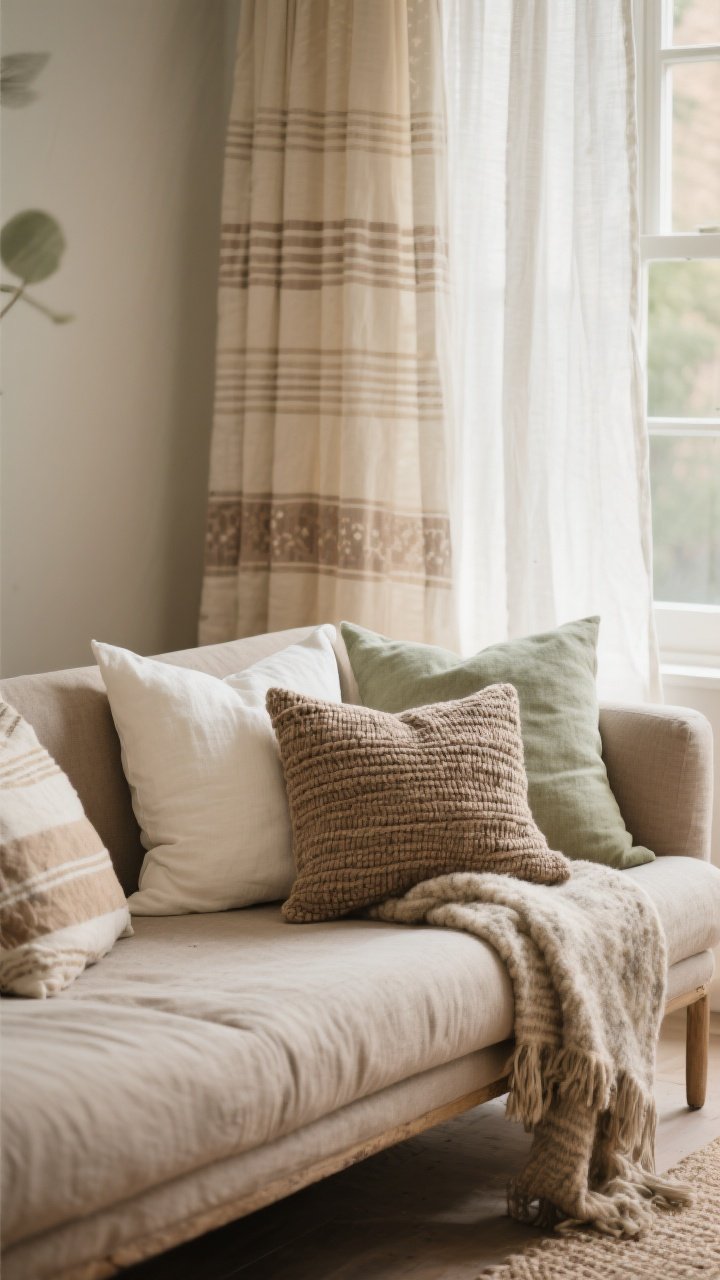
Textiles are where the earthy look gets ultra-inviting. Swap synthetics for linen, cotton, wool, and hemp. They breathe, they drape beautifully, and they age like a good leather jacket.
Where To Use Them
- Pillow party: Mix linen with a chunky knit and a woven lumbar. Three textures, one palette.
- Throws: A nubby wool throw over the arm of a sofa = instant cozy.
- Window treatments: Unlined linen curtains soften light and make everything look dreamy.
Color Palette
- Earth tones: Think clay, sand, olive, oat, taupe, and warm white.
- Keep it tonal: Choose two to three shades and repeat them around the room.
- Pattern with restraint: Subtle stripes or block prints add interest without chaos.
Pro Tip: If you’re worried about maintenance, choose performance linen or pre-washed cotton slipcovers. They’re life-proof and still look airy.
5. Bring In Greenery (Without Becoming a Plant Parent™)
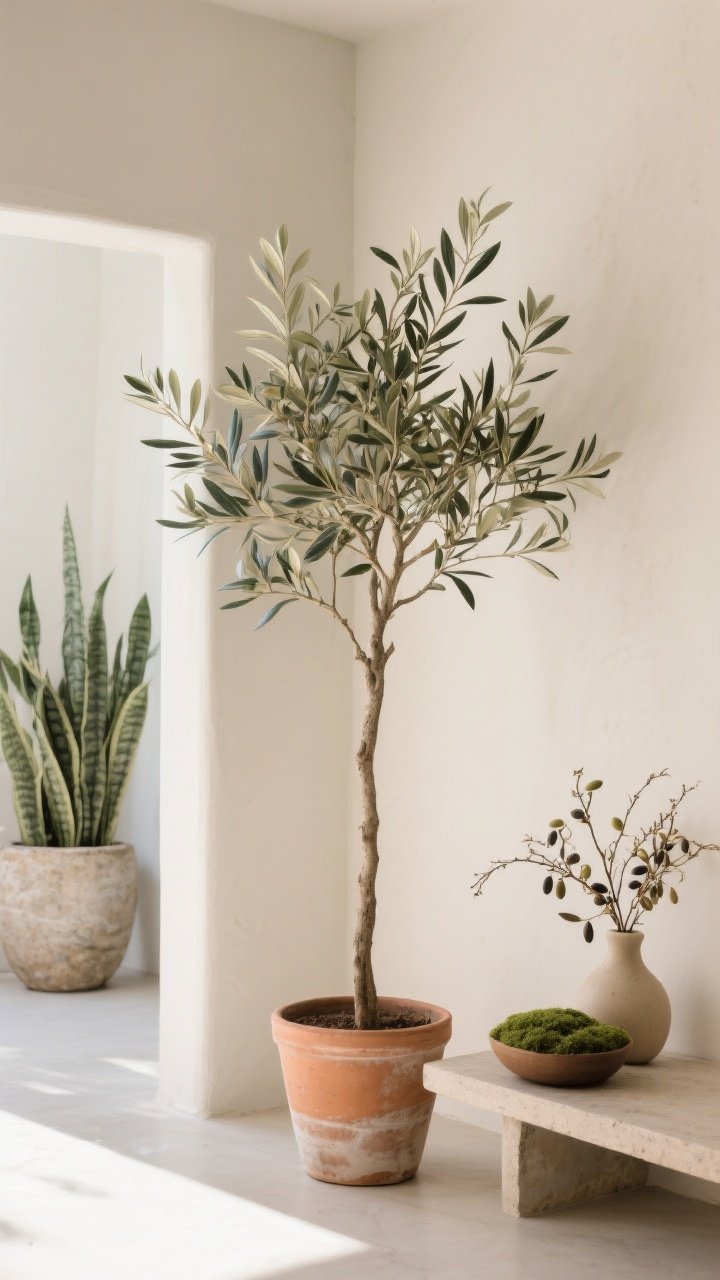
Plants are the most obvious earthy accent, but they don’t have to be high-maintenance. A few well-chosen statement plants or botanical elements will bring life and movement—no need for 27 pots and a misting schedule.
Low-Maintenance Favorites
- ZZ plant: Thrives on neglect. Truly unstoppable.
- Snake plant: Air purifying, sculptural, and forgiving.
- Olive tree (faux or real): Adds height and soft, airy leaves.
Greenery Alternatives
- Dried botanicals: Pampas, olive branches, or eucalyptus last ages and look gorgeous.
- Moss bowls: Zero care, major texture. Great for shelves or coffee tables.
- Herb pots: In the kitchen, basil and rosemary double as decor and dinner.
FYI: Bigger is better. One large plant makes more impact (and less clutter) than five small ones. Choose a beautiful pot in terracotta, stone, or raw ceramic for bonus earthy points.
6. Warm It Up With Natural Light And Earthy Lighting
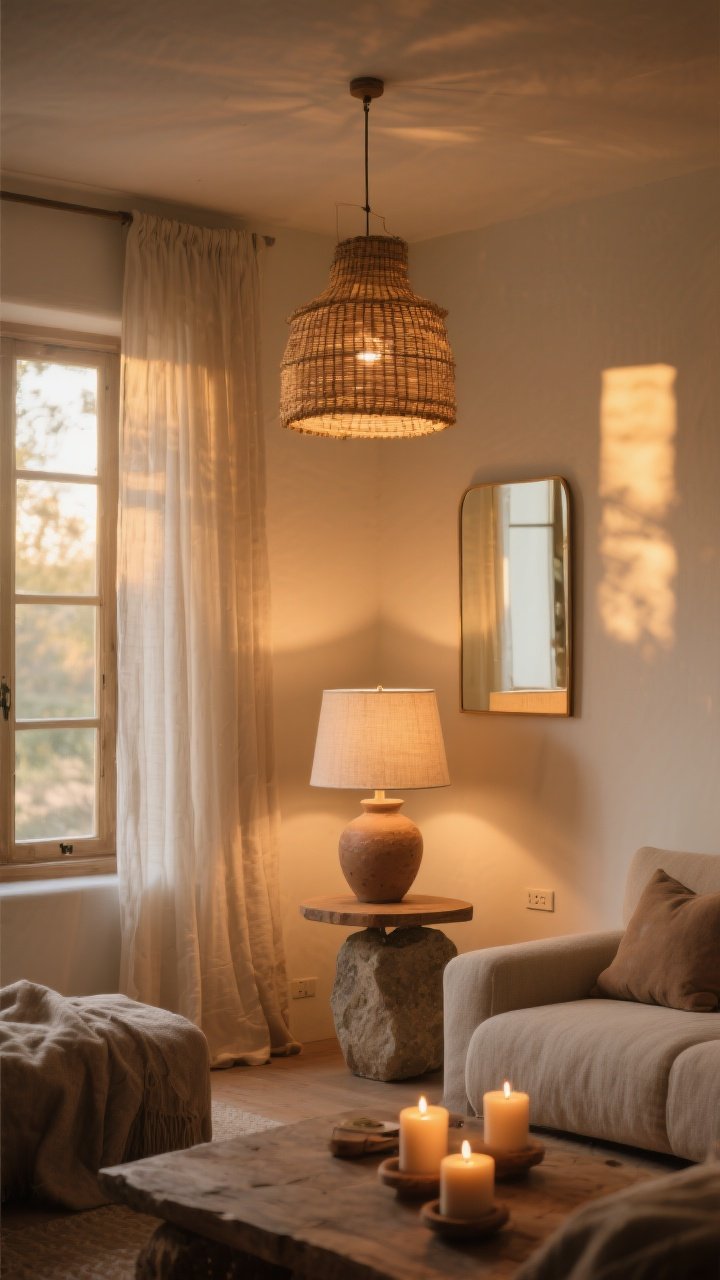
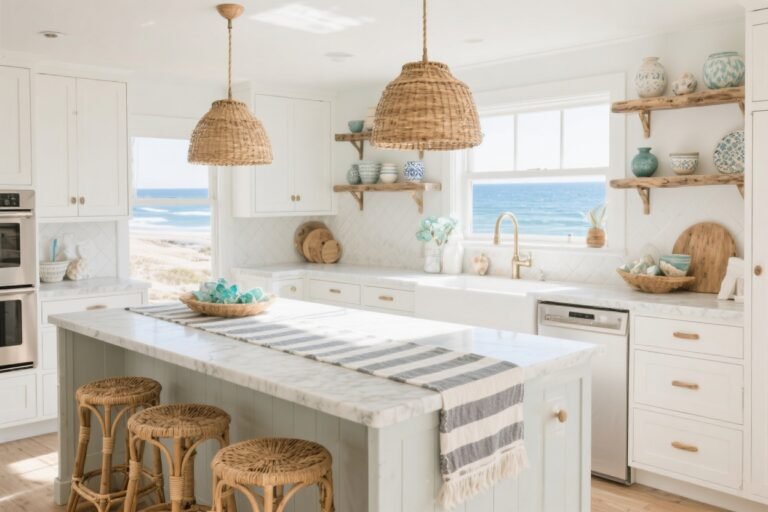
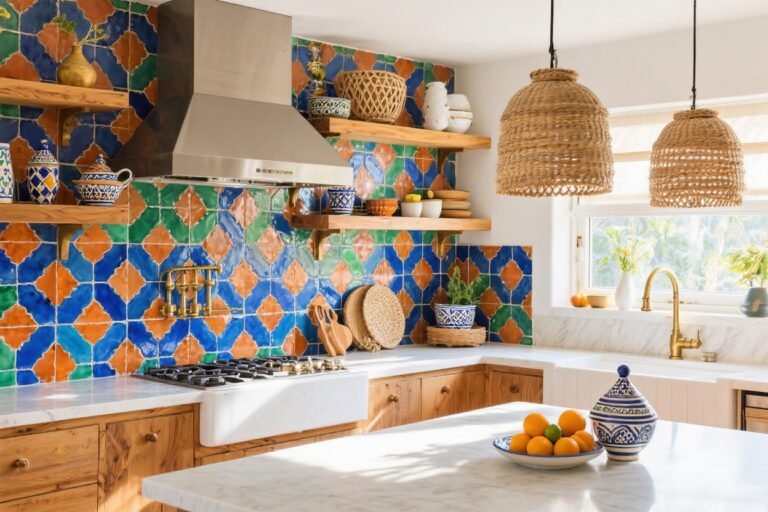
Lighting can make or break the natural vibe. Aim for soft, warm illumination that mimics sunlight. Think woven pendants, paper lanterns, linen shades, and dim, golden bulbs that flatter everything (including you).
Layer Your Lighting
- Ambient: Overhead pendant in rattan, bamboo, or woven grass.
- Task: A ceramic or wood-based table lamp with a linen shade.
- Accent: Candles in stone or clay holders—bonus for scented with cedar or vetiver.
Color Temperature Matters
- 2700K–3000K bulbs: Warm and cozy without going orange.
- Dimmer switches: Cheap upgrade, huge impact. Evening glow = instant serenity.
- Natural light helpers: Sheer linen curtains, mirrors opposite windows, and light walls to bounce daylight.
Small tweak that changes everything: swap harsh white bulbs for warm LEDs. Your room will feel calmer in, like, five minutes.
Quick Styling Formula (Copy-Paste This)
- Start with a natural fiber rug as your base.
- Add raw wood accents (tray, side table, or stool).
- Layer stone and ceramic pieces on surfaces.
- Refresh with linen and wool textiles in earthy tones.
- Introduce one anchor plant (plus a moss bowl if you’re extra).
- Finish with warm, layered lighting and soft bulbs.
There you go: six earthy home accents that bring calm, warmth, and “I have my life together” energy to any space. Start with one or stack them all—either way, your home’s about to feel like a breath of fresh air. Now go light that cedarwood candle and admire your good taste.