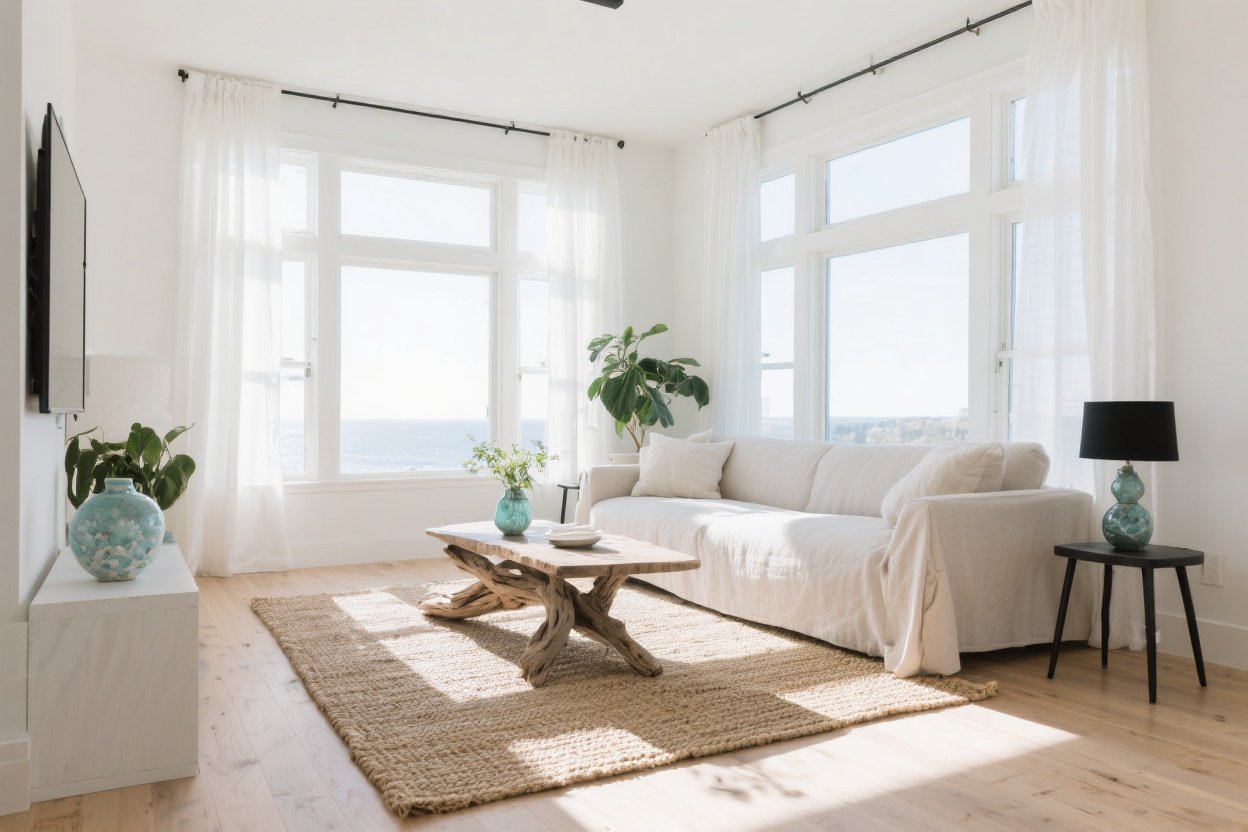
6 Minimalist Coastal Decor Ideas for Modern Homes That Feel Like a Vacation
You want the calm of the coast without turning your home into a beach souvenir shop. Totally doable. Minimalist coastal style is all about light, air, texture, and just the right amount of “I might own a sailboat” energy.
Ready to bring the breeze inside? Here are six polished, modern ideas that keep things simple, serene, and wildly chic.
1. Keep the Palette Calm (But Not Boring)
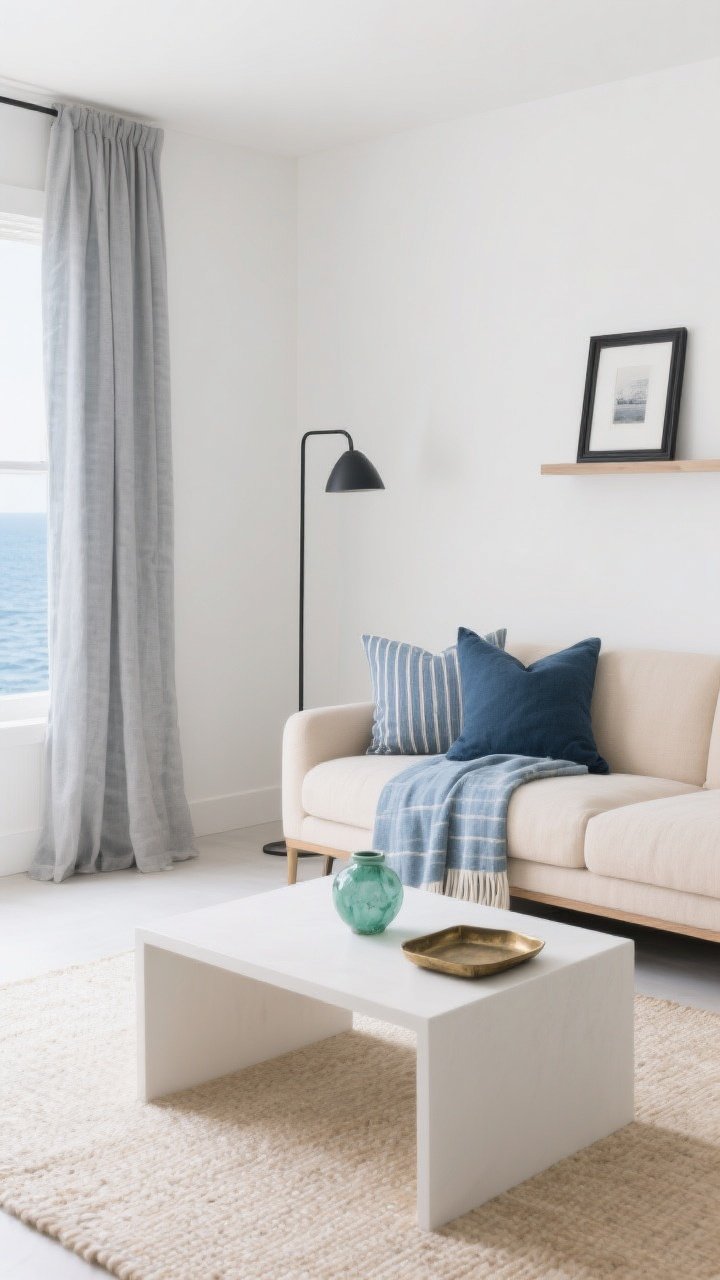
Minimalist coastal isn’t a free pass for all-white everything. Think layered neutrals with a whisper of ocean hues. Start with soft whites and warm sands, then add subtle blues and cool grays so it feels fresh—not frosty.
Color Blueprint
- Base: Creamy white, warm beige, pale oat.
- Accent: Misty blue, slate, sea glass green.
- Contrast: Charcoal, matte black, aged brass (sparingly!)
Pro tip: If you’re nervous about blue, pick one tone and echo it 2–3 times—pillows, a throw, a small piece of art. Instant cohesion without visual noise.
- Choose low-contrast patterns (pinstripes, micro checks) to keep things airy.
- Stick to matte finishes to avoid glare and keep the vibe relaxed.
- Use tone-on-tone layers to create depth without clutter.
2. Curate Natural Materials Like a Minimalist
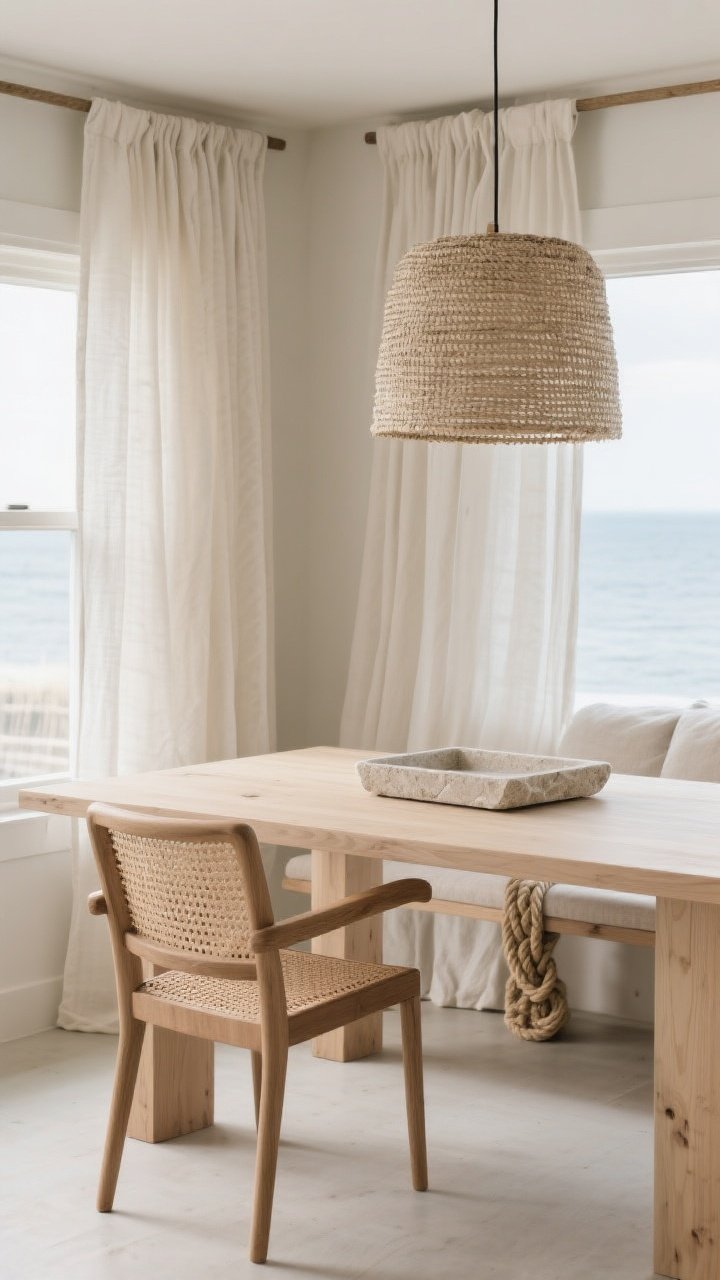
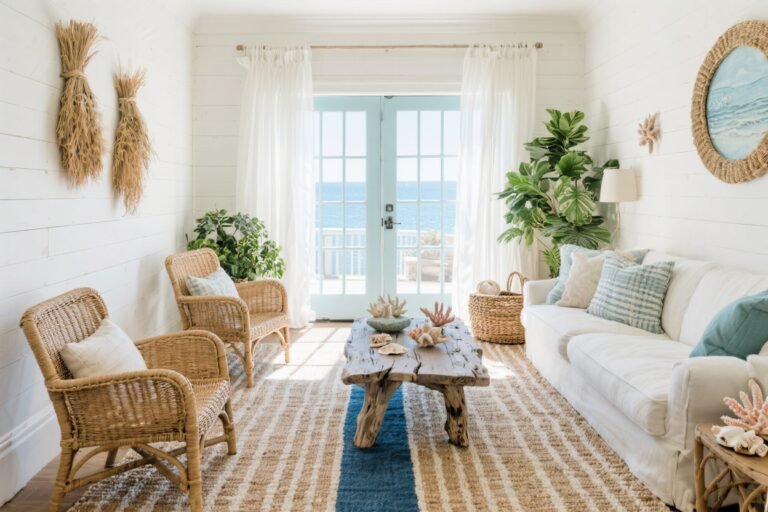
Nature does coastal best, and minimalism keeps it classy. Mix organic textures—think linen, jute, oak, and rattan—but edit like you mean it. One or two standout materials per room beats a buffet of textures.
High-Impact, Low-Clutter Materials
- Linen: Breezy curtains or slipcovers. Wrinkles are acceptable; they’re “lived-in.”
- Light wood: Oak, ash, or maple furniture with clean lines.
- Rattan or cane: A single accent chair or cabinet door fronts.
- Stone: Honed marble or limestone for coffee tables or trays.
FYI: You don’t need a rope-wrapped everything. Pick one tactile piece that does the talking, like a woven bench or a textured pendant, and let the rest play backup.
3. Edit Your Decor—Then Edit Again
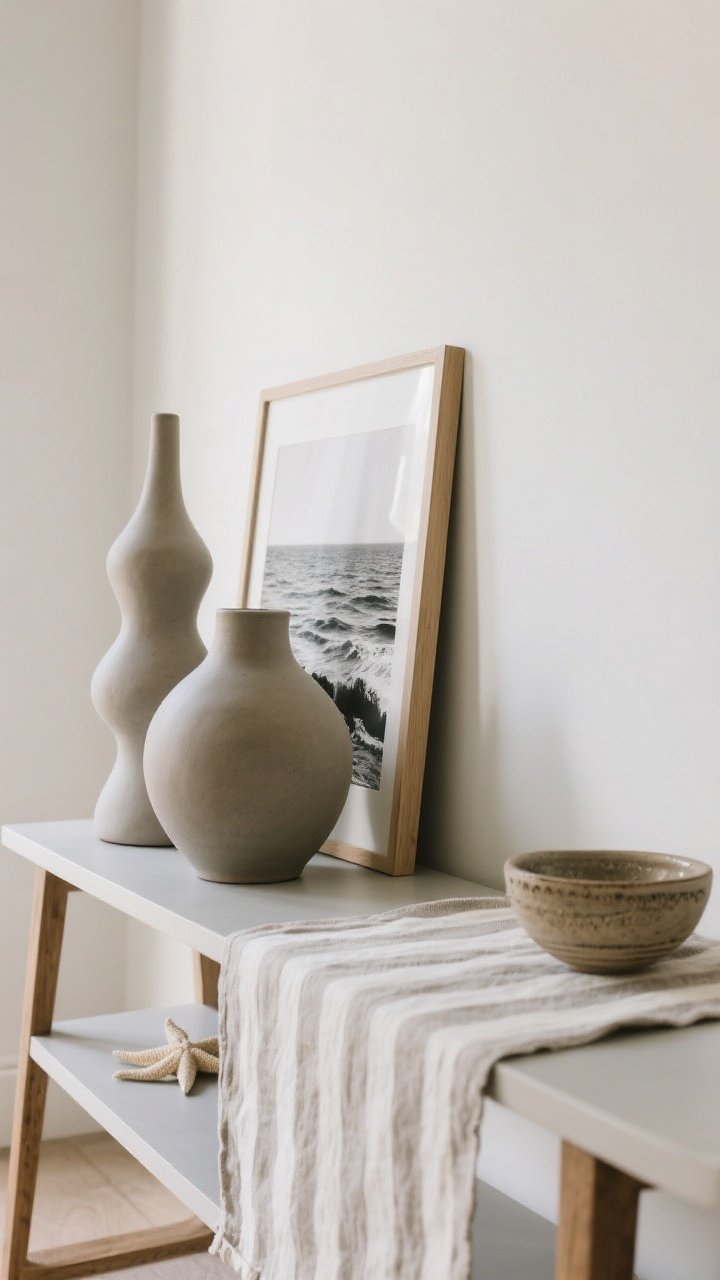
Minimalist coastal doesn’t shout “beach house.” It whispers. Skip the obvious anchors and starfish and go for subtle nods—handmade ceramics, driftwood tones, abstract ocean photography, soft stripes.
Styling That Feels Intentional
- Rule of thirds: Style surfaces in small clusters of three with varied heights.
- One hero per surface: A sculptural vase or bowl, not both.
- Quiet art: Oversized, abstract, or monochrome coastal-inspired prints.
- Negative space: Keep some shelves bare. Your eye needs room to breathe.
Box up anything kitschy for another life. Minimalist coastal should feel elevated, not themed. Your home: cool ocean breeze. Touristy boardwalk: not invited.
4. Let the Light Do the Heavy Lifting
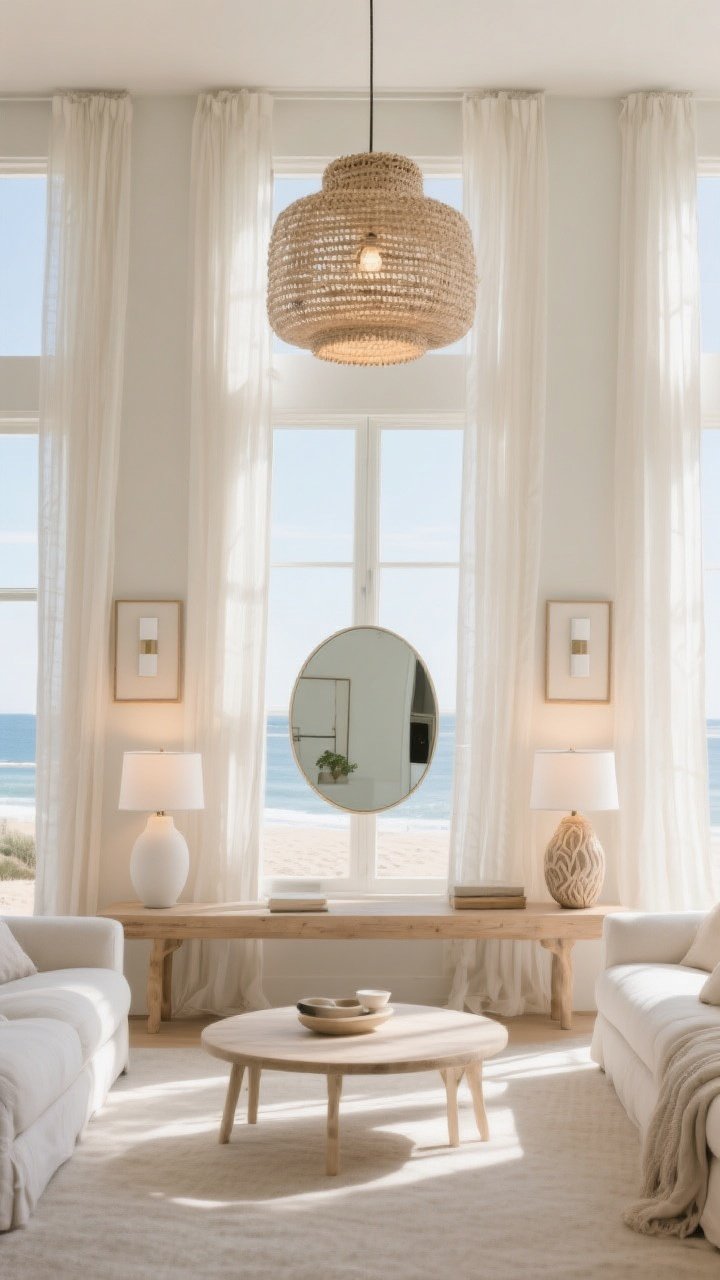
Coastal style lives and dies by light. Maximize natural light and keep window treatments soft and floaty. If your space is short on sun, layer lighting like a designer and keep the color temperature consistent (2700–3000K is your sweet spot).
Lighting That Loves the Coast
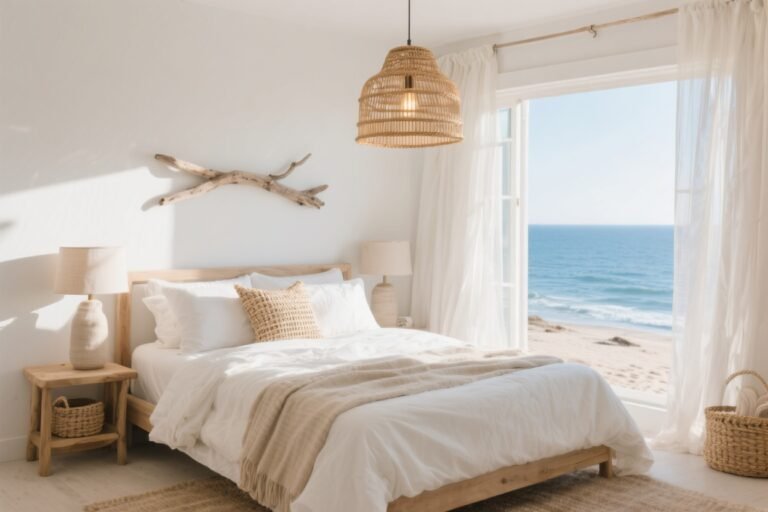
- Sheer linen panels: Hang high and wide to make windows look bigger.
- Textured pendants: Woven or paper shades for warmth without heaviness.
- Low-profile sconces: Matte white or aged brass for a modern coastal vibe.
- Table lamps with ceramic bases: Organic shapes > glossy finishes.
Mirrors are your secret weapon. Position a leaner or round mirror across from a window to bounce light and create that beachy glow—even when it’s cloudy.
5. Layer Textures Like a Pro (But Keep Lines Clean)
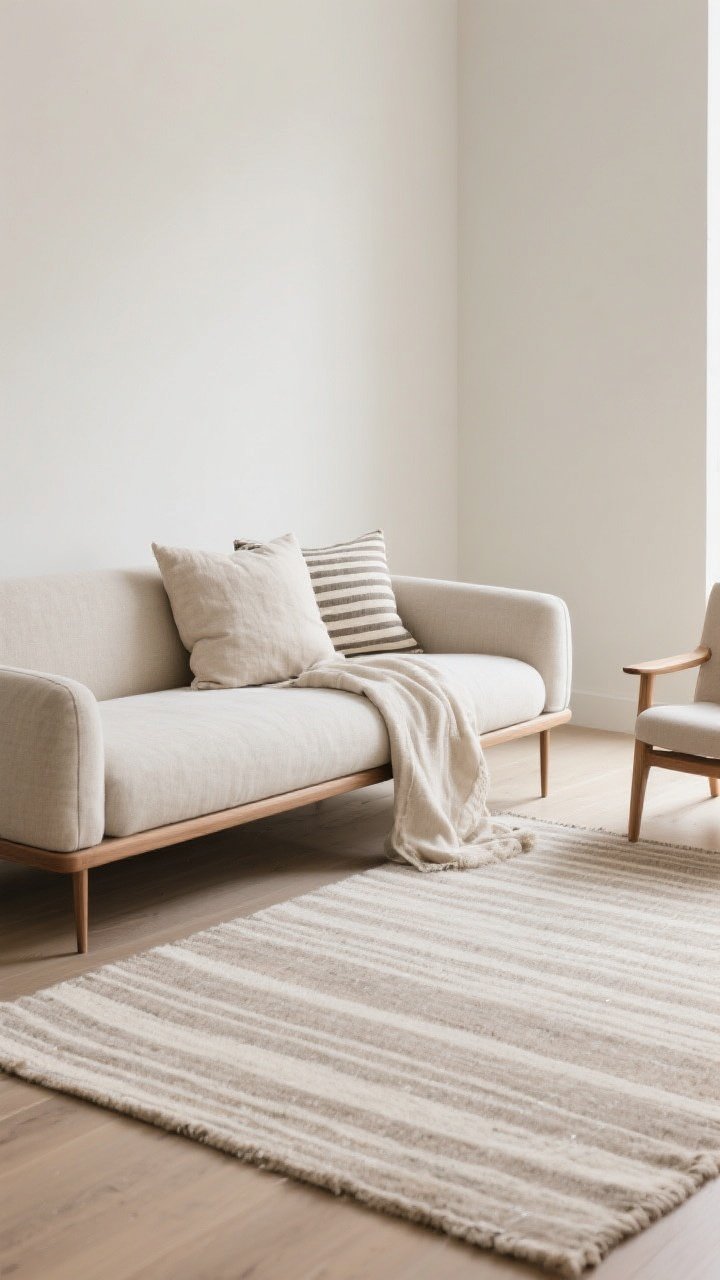
Texture = interest. Minimalism = restraint. Bring both. Think soft rugs, nubby pillows, and chunkier knits against sleek furniture silhouettes. It’s the contrast that makes it modern.
Texture Toolkit
- Rug: Flatweave or low-pile wool in a soft stripe or tone-on-tone pattern.
- Throws: Lightweight linen for summer, a chunky cotton knit for cooler months.
- Pillows: Mix two textures, one pattern, one solid. Done.
- Wood + fabric: Pair streamlined wood frames with airy upholstery.
Keep furniture silhouettes modern: straight legs, thin arms, simple profiles. The texture party happens on top; the bones stay minimal. IMO, that’s what keeps coastal from going shabby and makes it feel high-end.
6. Bring Nature In (Minus the Mess)
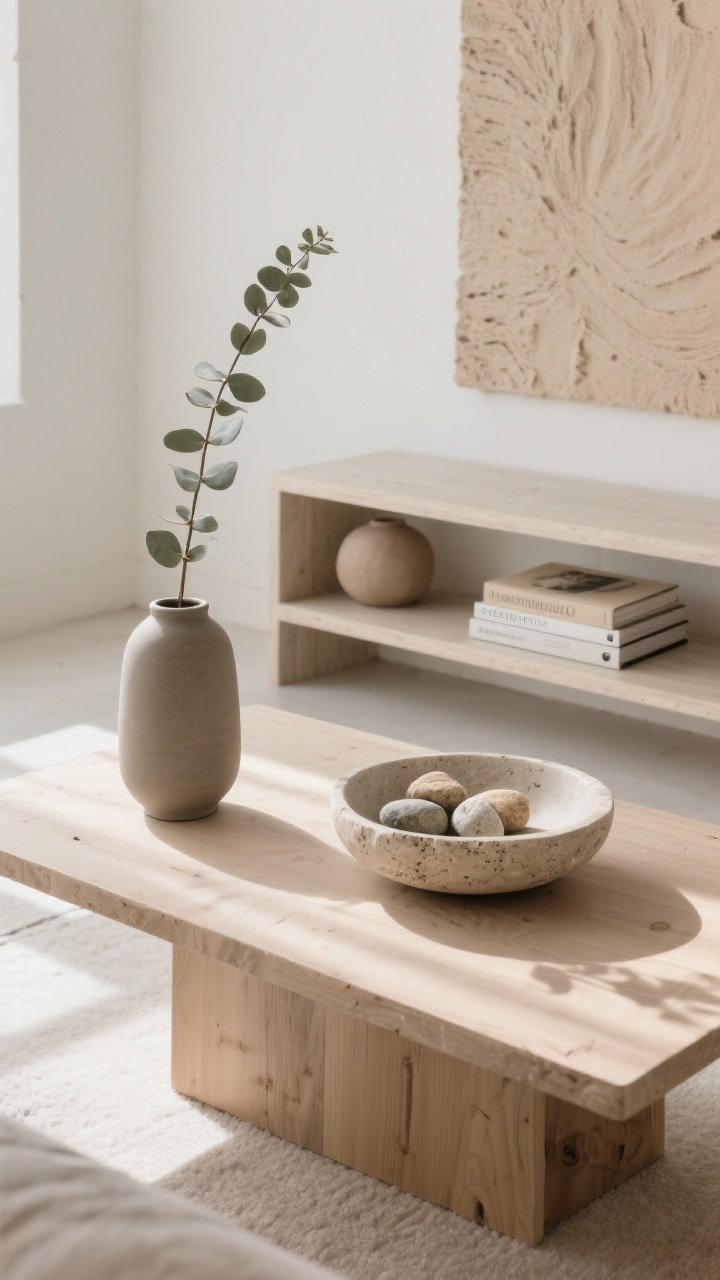
Greenery and organic accents give that beach-adjacent freshness. Choose plants with sculptural shapes and low drama—nothing fussy. Add natural accents sparingly so the room stays calm, not crunchy.
Living Finishes
- Plants: Olive trees, rubber plants, or eucalyptus stems in a tall vase.
- Bowls and trays: Stone, travertine, or bleached wood for coffee tables.
- Books: Neutral spines, design or travel themes—stacked, not stuffed.
- Textured art: Plaster, linen canvases, or sand-toned abstracts.
Beach finds? Curate, don’t collect. A single bowl of smooth stones or one piece of driftwood reads chic. A shelf of shells reads souvenir shop—no thanks.
Quick-Room Recipes
- Living Room: Linen curtains, pale oak coffee table, flatweave rug, ceramic table lamp, one big coastal abstract print.
- Bedroom: White or oat duvet, striped lumbar pillow, woven bench, soft sconce lighting, eucalyptus in a vase.
- Bathroom: Matte black or brushed brass hardware, waffle towels, stone tray with a single candle, oversized round mirror.
FYI: Scent matters. Go for clean coastal notes—sea salt, vetiver, or cedar. Subtle, not beach body spray circa 2007.
Bonus: Small Space Coastal, Simplified
- Choose leggy furniture to show more floor and keep things airy.
- Use hidden storage (lidded baskets, closed credenzas) to avoid clutter creep.
- Go vertical with art and mirrors to stretch the room visually.
Minimalist coastal decor is basically a mood: light, calm, and effortless. Start with a soft palette, add natural textures, edit like a minimalist, and let the light shine. Do that, and your home will feel like a quiet morning by the water—no sand in sight.