7 Best Coastal Rugs & Runners to Anchor Your Space Like a Design Pro
Let’s be honest: the right rug can make a room feel like a breezy beach house—even if your nearest shoreline is a bathtub. Coastal rugs aren’t just about seashell motifs (please, no). They’re about texture, tone, and that laid-back vibe that whispers, “Kick off your shoes.”
From sandy neutrals to soft stripes, I’ve rounded up the 7 best coastal rugs & runners to ground your space and pull everything together. Ready to set sail?
1. The Soft-Stripe Seaside Runner
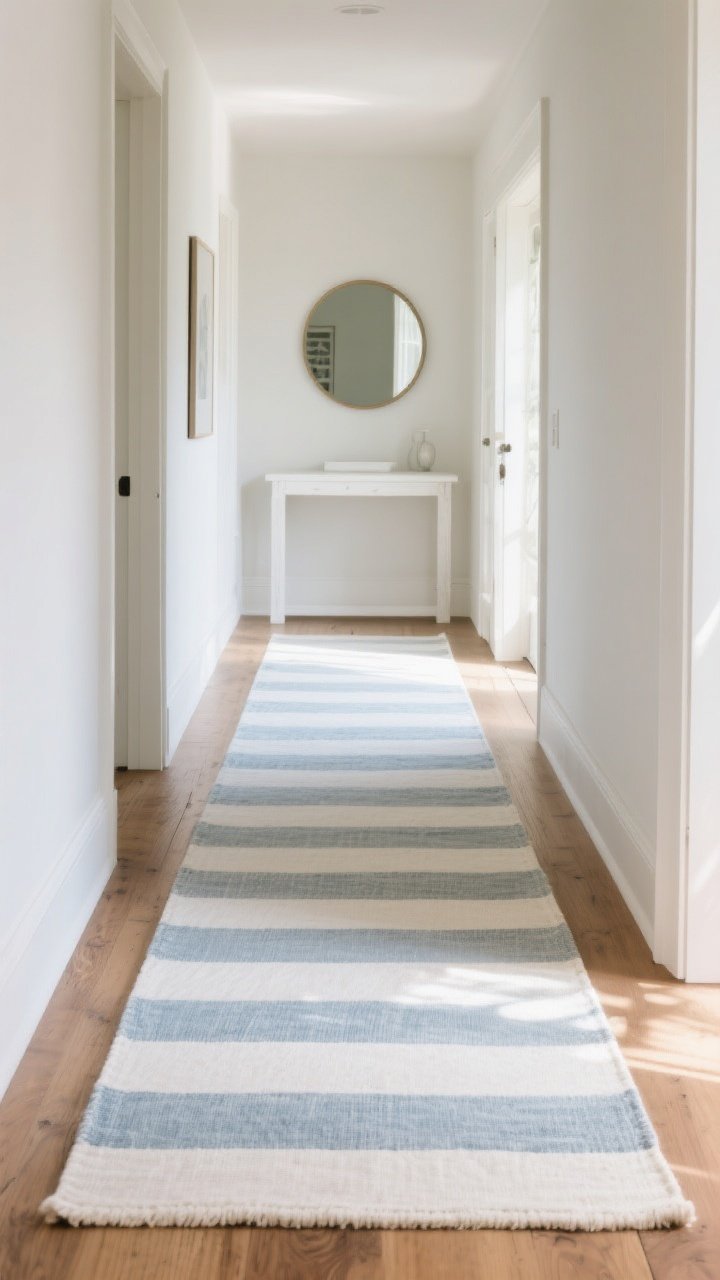
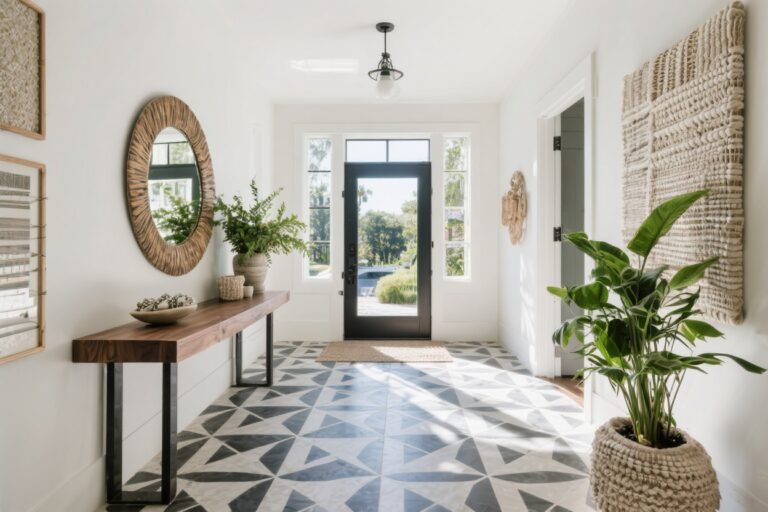
Think wide, relaxed stripes in muted blues, soft greys, and crisp ivory. A stripe runner instantly says coastal without screaming beach souvenir shop. It’s perfect for narrow hallways, kitchen galley zones, or the entryway you want to feel like a fresh ocean breeze.
Why It Works
- Visual flow: Stripes draw the eye through the space and make hallways feel longer.
- Easy palette: Navy, denim, and sand tones play well with almost any coastal scheme.
- Timeless: Stripes never feel dated—coastal or otherwise.
Pro Tips
- Choose flatweave or low-pile for high-traffic zones.
- Keep the pattern subtle so it doesn’t compete with art or entryway mirrors.
- Runner length should leave 4–6 inches of floor on each end—balanced and intentional.
2. The Natural Jute (With a Twist)
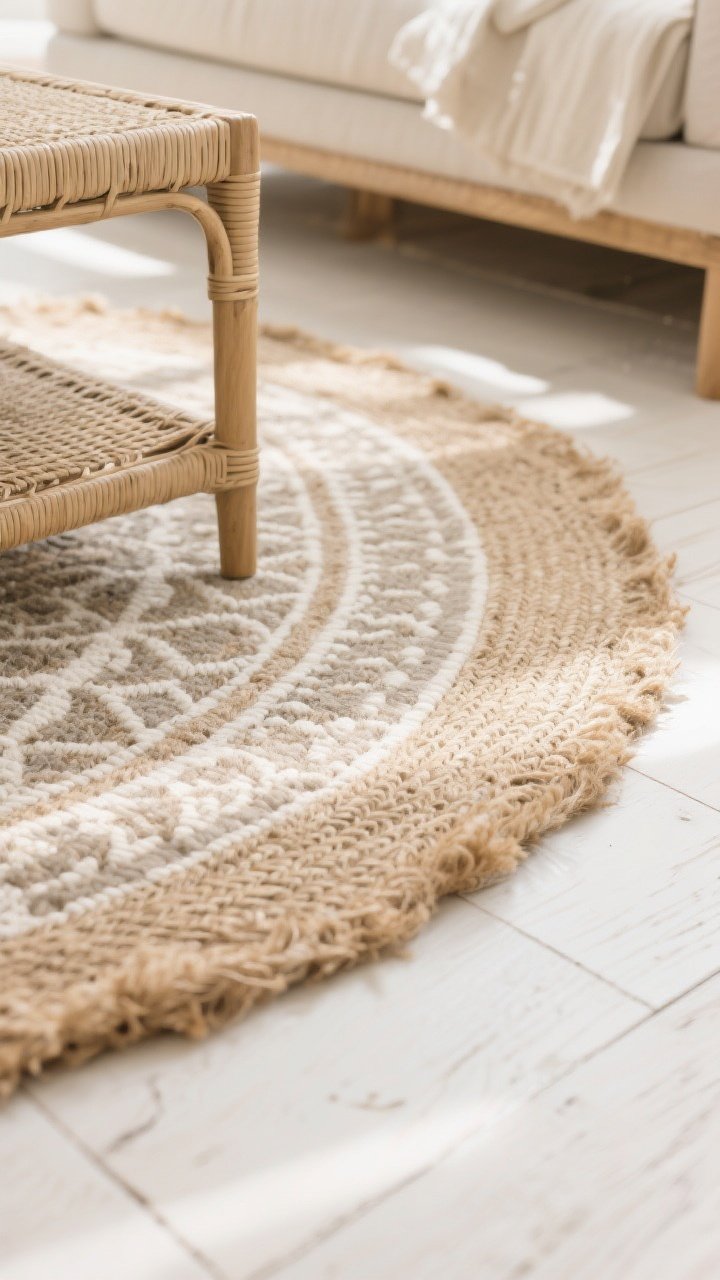
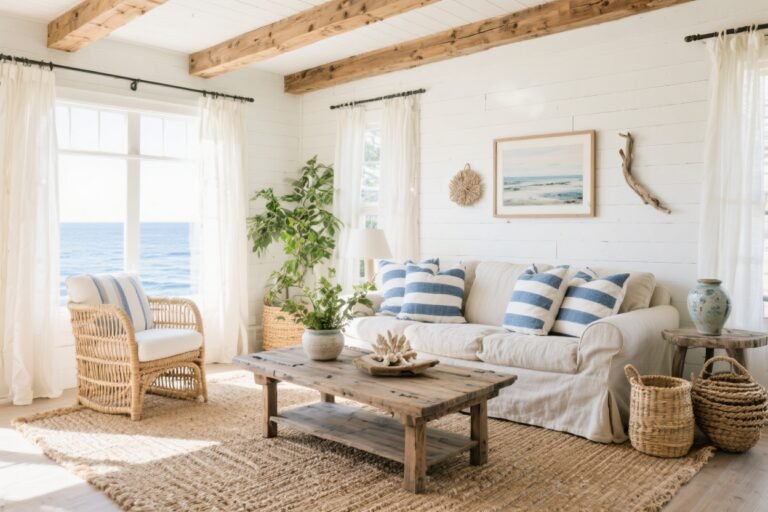
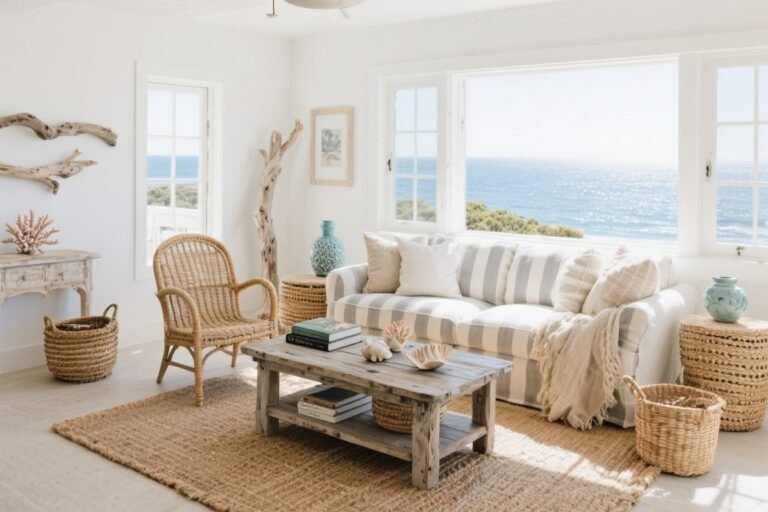
Jute is the friend who never tries too hard and still looks amazing. It gives that sandy, organic texture you want in a coastal space but plays nicely with modern, traditional, or boho rooms. The twist? Look for a jute blend (with cotton or wool) for a softer feel underfoot.
Why It Works
- Texture overload: Jute’s nubby weave mimics beach grasses—instant coastal.
- Chameleon energy: It layers beautifully under patterned rugs for depth.
- Neutral base: Pairs with rattan, whitewashed woods, and linen upholstery like a dream.
Pro Tips
- Go lighter jute for an airier look; darker weaves feel more rustic.
- Use a rug pad—jute can slide, and your shins will not appreciate it.
- Avoid humid bathrooms—natural fibers can absorb moisture and warp. FYI.
3. The Weathered Blue Vintage-Look Rug
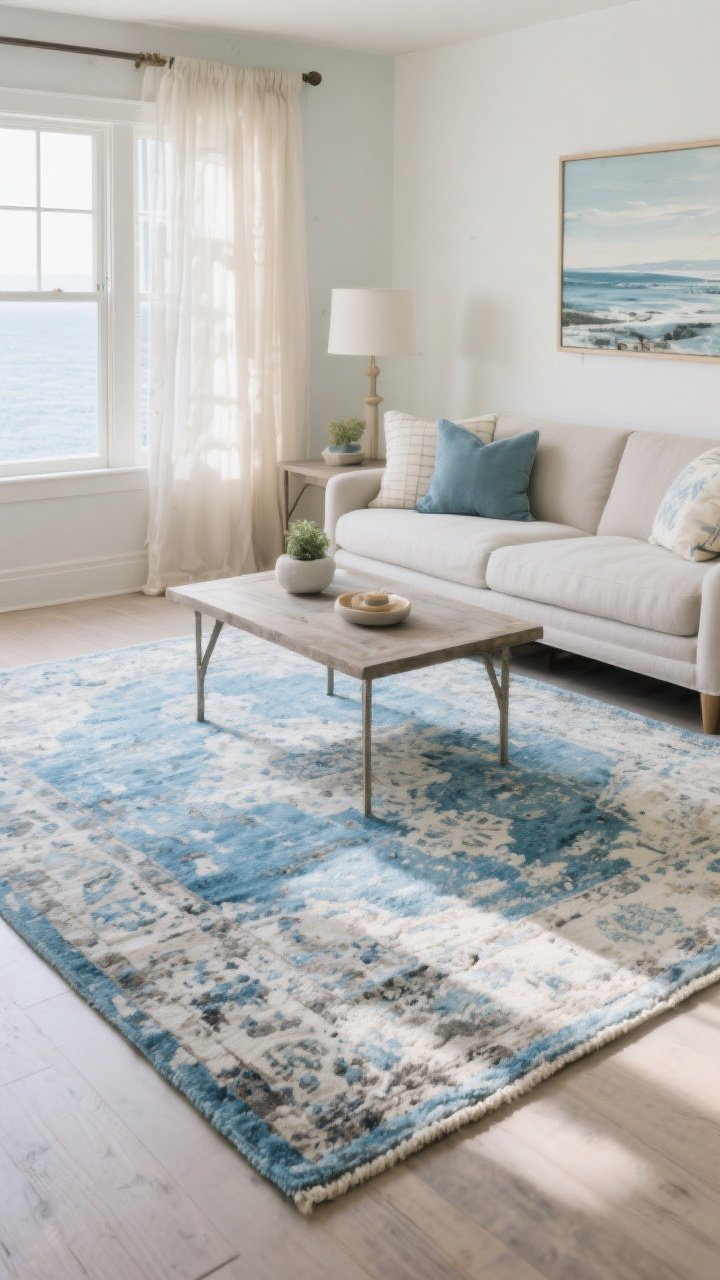
If you love the coastal vibe but want a little romance, go for a distressed, vintage-inspired rug in softly faded blues and greys. It has that “found at a seaside antique market” energy without the actual dust.
Why It Works
- Soft color story: Weathered blues anchor a room without overpowering it.
- Pattern patina: Slight fading hides wear and looks intentional—chef’s kiss for busy homes.
- Versatile placements: Great under a dining table, living room seating, or in a bedroom.
Pro Tips
- Pick a low to medium pile for easy cleaning and furniture movement.
- Balance the vintage vibe with clean-lined furniture so it doesn’t feel fussy.
- Echo the tones with throw pillows or a coastal art print for cohesion.
4. The Indoor/Outdoor Coastal Workhorse
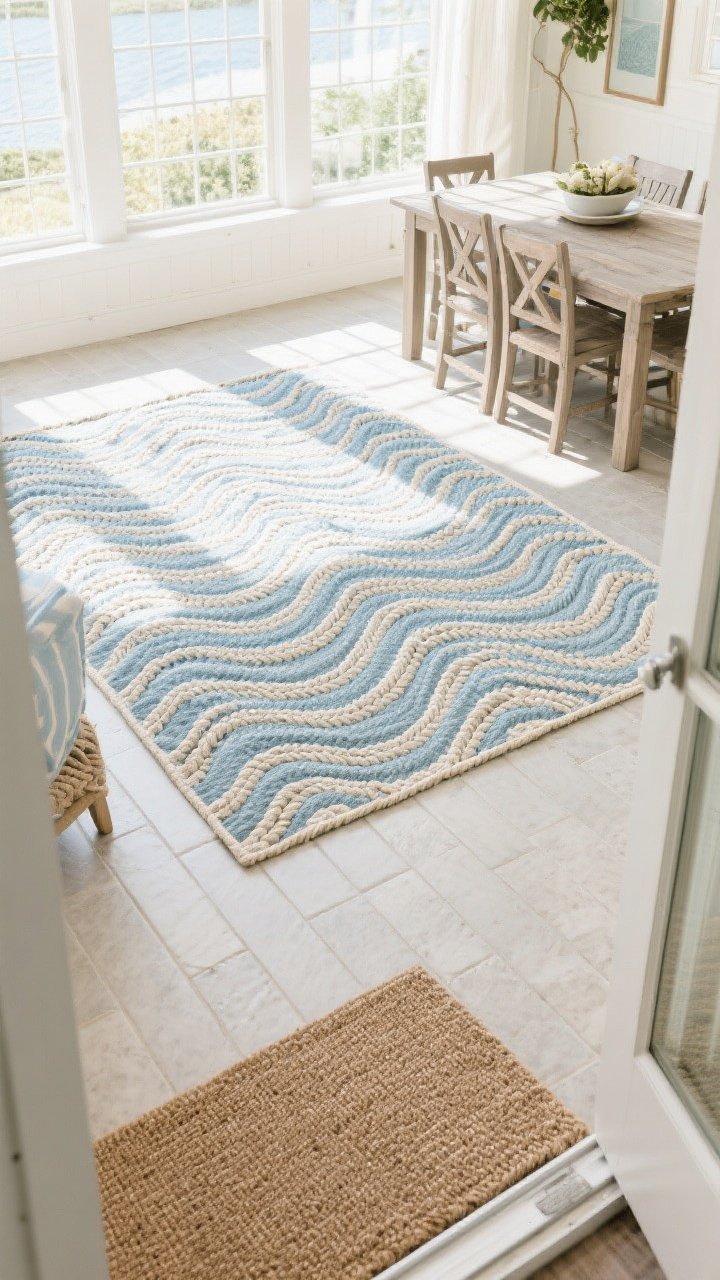
Kids, pets, sand, snacks—life happens. An indoor/outdoor rug with a coastal palette is your durable bestie. It looks like a real rug, but you can literally hose it off. Yes, even the red popsicle stain.
Why It Works
- Durable fibers: Polypropylene or PET stand up to spills and sun.
- Sun-safe hues: Colors don’t fade easily, even in bright rooms.
- Budget-friendly: You can go big without crying over maintenance.
Pro Tips
- Choose a subtle coastal motif (think tone-on-tone wave or rope texture) to keep it elevated.
- Layer over a thick rug pad indoors for a cushier feel.
- Perfect for porches, sunrooms, dining rooms, and high-traffic entries.
5. The Handwoven Wool Coastal Classic
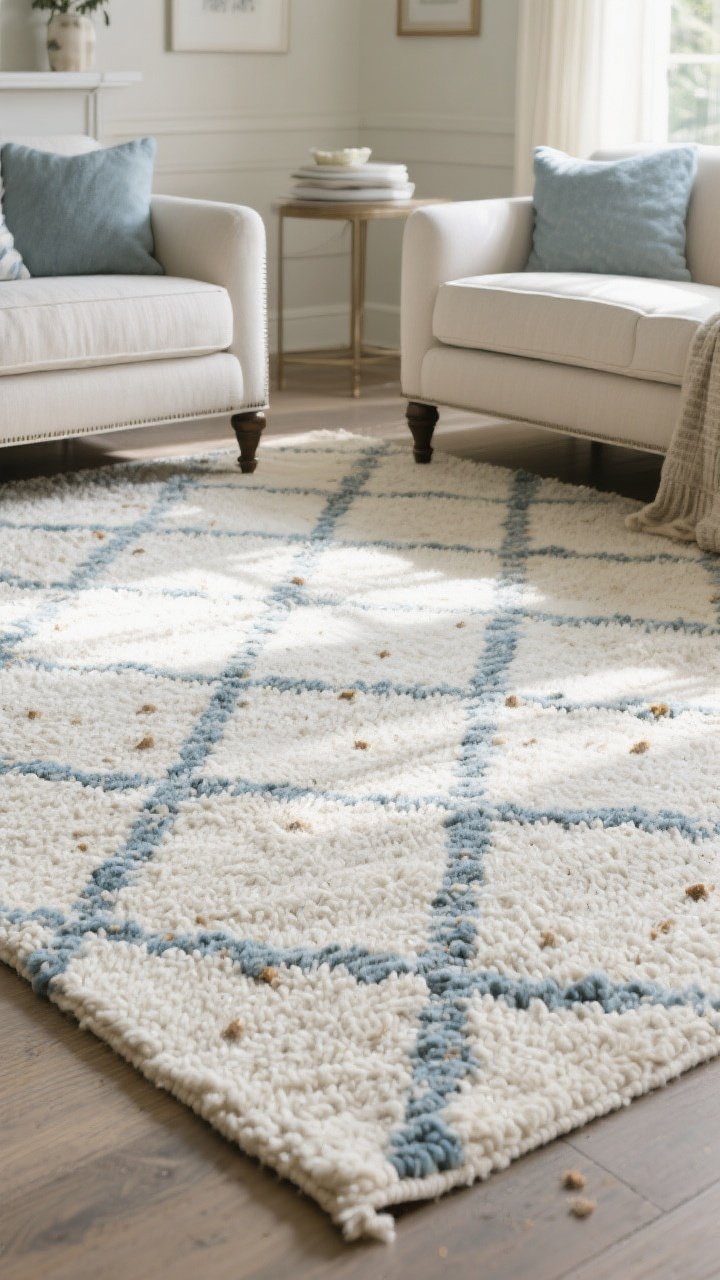
For a living room that needs a grown-up anchor, a handwoven wool rug in cream, stone, and watery blue is a slam dunk. Wool wears beautifully, regulates temperature, and has that “I invested in quality” energy without being precious.
Why It Works
- Lux texture: Soft underfoot and naturally resilient.
- Subtle pattern: Think heathered weaves, small diamonds, or herringbone—coastal but tailored.
- Long-term value: Wool cleans up well and ages gracefully.
Pro Tips
- Pick multi-tonal weaves to hide everyday crumbs and pet hair. You’re welcome.
- Size up—rug should fit front legs of your seating at least, or ideally all legs.
- Rotate every few months to even out wear and sun exposure.
6. The Coastal Runner Trio For Kitchens
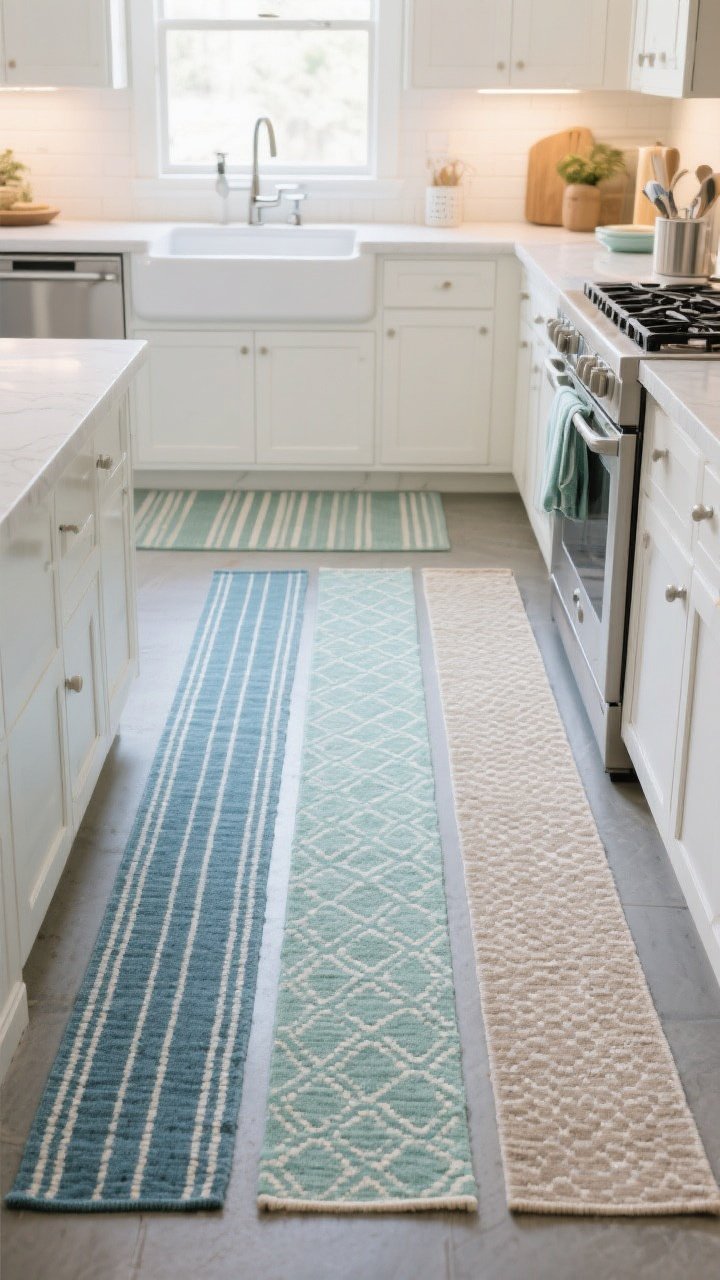
Why one runner when you can do a coordinated trio? Use matching or complementary runners along the sink, stove, and prep zones. It instantly makes a kitchen feel styled, and the added cushion is a game changer when you’re channeling your inner chef.
Why It Works
- Zoned design: Defines function and adds warmth to hard floors.
- Practical: Easy to lift and clean. Great for renters, too.
- Coastal palette: Think mineral blues, sea glass green, or sandy taupe.
Pro Tips
- Choose washable, low-pile runners for quick cleanup.
- Keep patterns cohesive—mix scales (thin stripe + micro-geo) within the same color family.
- Use grippy pads or rug tape so you don’t moonwalk while sautéing.
7. The Statement Natural Fiber With Border
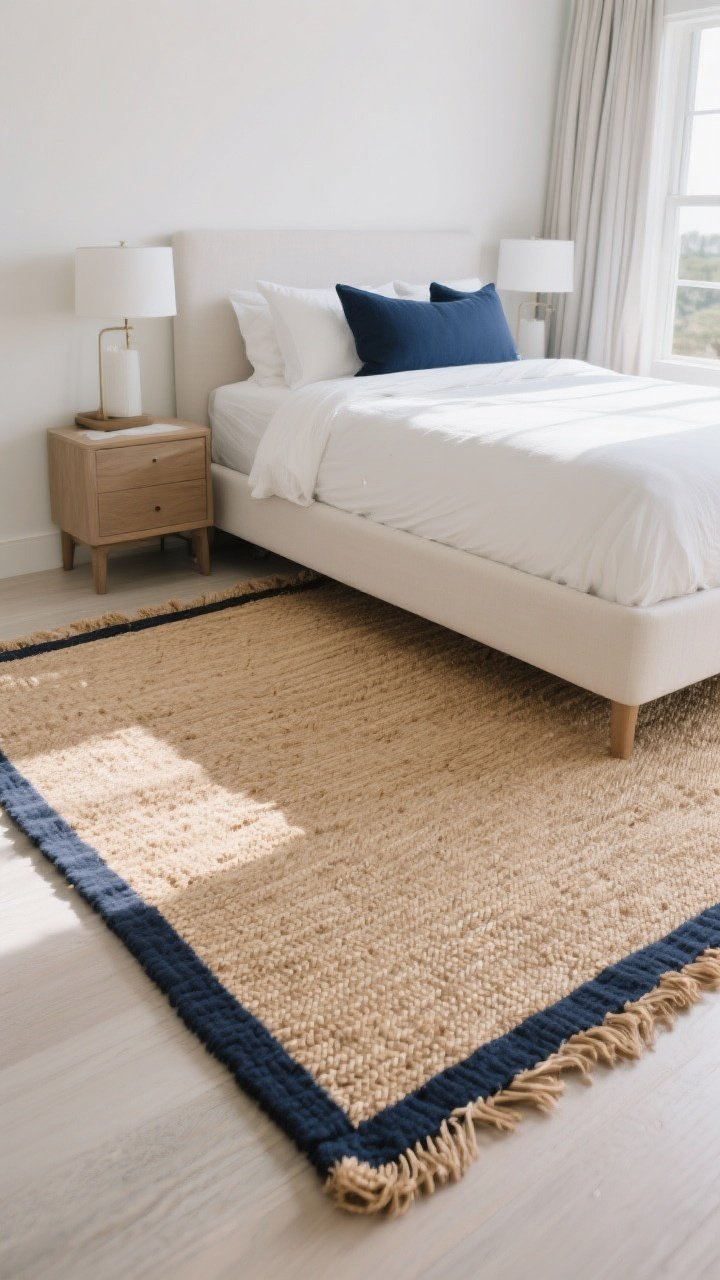
When you want simple but intentional, go for a sisal or seagrass rug with a fabric border. The dark navy, charcoal, or sand binding frames the rug like art and makes the whole room feel finished. It’s the quiet luxury of coastal style.
Why It Works
- Clean edges: The border creates definition under a bed, dining table, or sofa.
- Beach-meets-tailored: Organic texture + crisp trim = balanced coastal.
- Custom vibes: Border colors let you tie into drapes, pillows, or artwork.
Pro Tips
- Choose seagrass if you want a slightly shinier, more structured look; sisal for a softer, matte finish.
- Keep borders 2–3 inches wide on larger rugs for proportion.
- Avoid red wine parties on sisal. It’s… unforgiving. IMO, keep a stain kit handy.
How To Size Your Rug (So It Doesn’t Look Like A Bath Mat)
- Living room: Aim for at least 8×10; front legs of furniture on the rug is the minimum. 9×12 is chef’s kiss for larger seating groups.
- Dining room: Rug should extend 24 inches beyond the table on all sides so chairs sit fully on it when pulled out.
- Bedroom: Queen bed likes an 8×10; King often needs a 9×12. Or try two runners on either side for a boutique hotel vibe.
- Hallway: Leave 3–5 inches of floor showing on each side of a runner for balance.
Coastal Color Combinations That Never Fail
- Classic Nautical: Navy, crisp white, and natural jute.
- Soft Shoreline: Fog grey, seafoam, and bleached oak.
- Driftwood Calm: Sand, oatmeal, and pale blue.
- Modern Coastal: Charcoal, ivory, and muted teal.
Materials Cheat Sheet
- Wool: Soft, durable, naturally stain-resistant, great for living rooms and bedrooms.
- Jute/Sisal/Seagrass: Textural and coastal-forward; best in dry, lower-spill areas.
- Polypropylene/PET: Super durable, often washable; ideal for kitchens, entries, and patios.
- Cotton Flatweave: Lightweight and budget-friendly; use with a pad to prevent sliding.
Layering Like A Stylist
- Start with a large natural fiber rug as the base.
- Layer a smaller patterned rug on top to add interest and color.
- Keep the top rug about 12–18 inches in from the base edges for a balanced frame.
Care And Cleaning (So Your Rug Stays Pretty)
- Vacuum weekly with suction only; skip the beater bar on natural fibers.
- Blot, don’t rub spills; treat quickly with a mild solution or manufacturer-recommended cleaner.
- Rotate quarterly to even out sun fading and wear patterns.
- Use UV film or sheer curtains to protect blues and neutrals from bleaching.
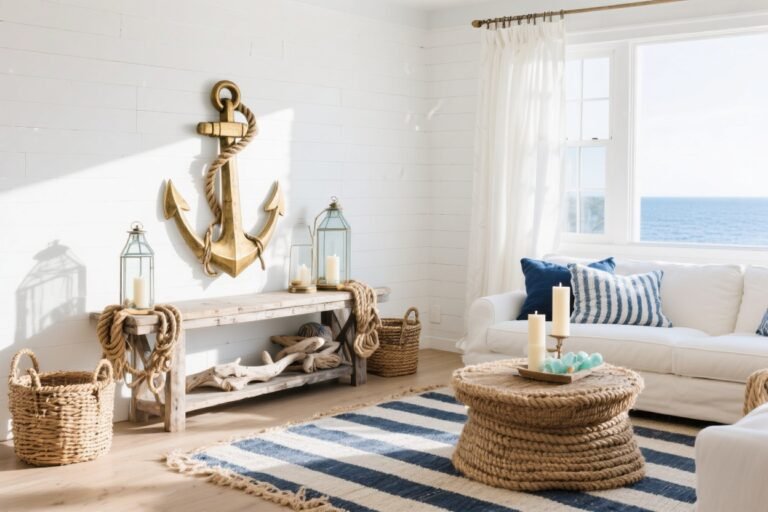
Here’s the bottom line: the perfect coastal rug doesn’t have to be literal seashells and anchors. It’s about texture, tone, and ease. Pick one of these seven styles, nail your sizing, and layer in a few natural materials—rattan, linen, driftwood—and you’ve got that relaxed, sun-washed look on lock.
Now go roll out something beautiful. Your space is about to feel like vacation—minus the sand in your shoes.